Penny shortage leaves retailers struggling to make change
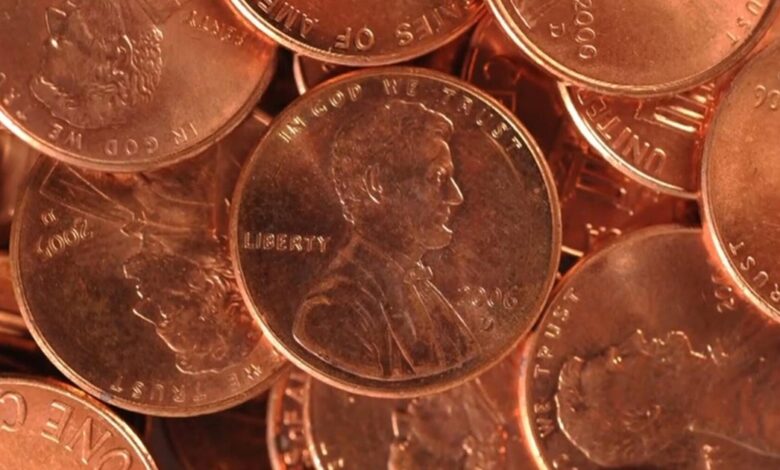
Businesses across the United States are facing a dire shortage of pennies, all thanks to President Trump’s decision to cease production of the one-cent coin earlier this year. The repercussions of this move are being felt far and wide, with merchants struggling to provide customers with exact change and banks rationing their penny supplies.
The scarcity of pennies has pushed some retailers to come up with creative solutions to make up for the shortfall. Giant Eagle, a grocery chain based in Pennsylvania, is hosting a special event where customers can exchange their pennies for gift cards worth double the coin’s value. Similarly, Sheetz, a convenience store chain, is offering a free soda to customers who bring in 100 pennies.
Troy Richards, the president and chief operations officer at Guaranty Bank & Trust Co. in Louisiana, shared his struggles in trying to keep enough pennies on hand for customers since August. The bank’s initial stock of $1,800 in pennies was depleted within two weeks, leaving branches with only small reserves for specific customer needs.
The shortage of pennies has also raised legal concerns for retailers, as some states and cities have laws prohibiting the rounding up of transactions to the nearest nickel or dime. To avoid potential lawsuits, many businesses are opting to round down instead, which could result in significant financial losses over time.
While the penny shortage may be causing chaos for retailers and banks, the truth is that pennies have long been a burden due to their high manufacturing costs. In fact, it costs about 3.7 cents to produce and distribute a single penny, making it more expensive than its actual value. President Trump’s decision to halt penny production was part of a larger effort to cut unnecessary expenses from the federal budget.
Despite the financial drawbacks of pennies, their absence is proving to be a logistical nightmare for the U.S. economy. The closure of coin terminals and distribution centers is exacerbating the penny shortage, preventing surplus coins from reaching areas in need. The lack of guidance from the Treasury Department on how to address these issues is only adding to the confusion and frustration for retailers and banks.
As the U.S. navigates this penny crisis, it’s clear that a long-term solution is needed to address the challenges posed by the absence of the one-cent coin. While other countries have successfully phased out outdated coins over time, the abrupt removal of the penny from circulation in the U.S. has left many industries scrambling for answers.
In the meantime, businesses are urging the federal government to provide clarity on how to handle the penny shortage and ensure a smooth transition away from the coin. While the penny may be a relic of the past, its absence is causing present-day problems that require immediate attention and resolution.