Poland accuses Moscow of ‘unprecedented’ aggression after downing Russian drones
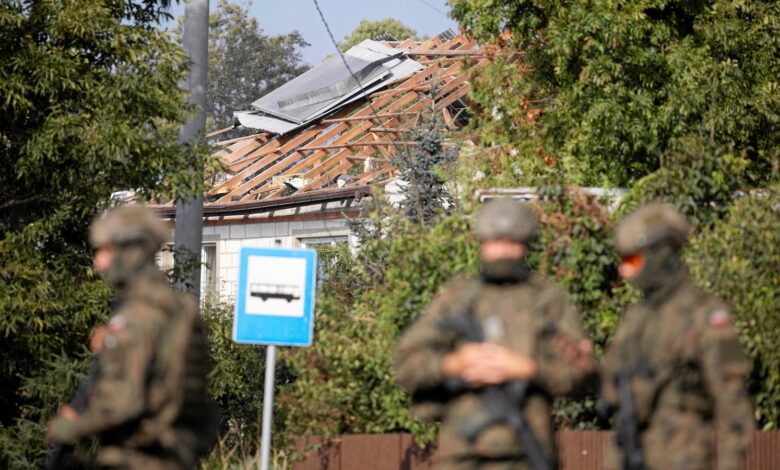
The violation of Polish airspace by Russian drones overnight has sparked a major response from the country’s military and its NATO allies. Prime Minister Donald Tusk confirmed that at least 19 Russian drones had entered Polish airspace, with some originating from Belarus. The drones posed a direct threat to the safety of Polish citizens, prompting the air force to scramble and down several of the drones.
Tusk took to social media to inform the public that any drones posing a direct threat were shot down, and that he was in constant communication with NATO allies. Dutch F-35 fighter jets were also deployed to help ensure the safety of Polish skies during the incursion. Despite the unprecedented nature of the drone violations, Polish authorities reported no casualties resulting from the incident.
The Polish military command described the drone violations as an act of aggression that posed a real threat to the safety of citizens. Tusk emphasized that this marked the first time Russian drones had been shot down on NATO territory, highlighting the seriousness of the situation. In response, Warsaw has requested the invocation of NATO Article 4, which allows for consultations among allies in the event of a security threat.
During a parliamentary session, Tusk stressed the importance of deeper cooperation for the security of NATO’s borders, emphasizing that words alone were not enough to address the threat. He called on the Western world and allies to recognize the gravity of the situation and work together to defend against Russian aggression. Tusk reiterated that the conflict was not just a war for Ukrainians, but a broader confrontation that Russia had declared against the free world.
NATO Secretary-General Mark Rutte confirmed that consultations were ongoing with Poland following the drone incursion. This latest incident comes amidst heightened tensions in the region, with Poland and its allies remaining vigilant in the face of potential threats to their security. In a startling turn of events, numerous drones breached Polish airspace, prompting NATO to activate its defenses. The Supreme Headquarters Allied Powers Europe confirmed that German Patriot surface-to-air missile systems stationed in Poland were put on high alert. Additionally, an Italian airborne early warning aircraft was swiftly dispatched, along with a NATO aerial refueling aircraft.
French President Emmanuel Macron swiftly condemned the incident as “simply unacceptable,” urging Russia to cease its reckless actions. He expressed solidarity with the Polish people and government. European Commission President Ursula von der Leyen echoed Macron’s sentiments, declaring that Europe is engaged in a battle for its freedom and autonomy.
Von der Leyen further denounced the violation of Poland and Europe’s airspace by over 10 Russian Shahed drones as “reckless and unprecedented.” She emphasized Europe’s unwavering support for Poland in the face of this brazen act.
European Union foreign affairs chief Kaja Kallas characterized the airspace breach as the most serious European violation by Russia since the onset of the conflict, suggesting that the incident was intentional rather than accidental. Ukrainian President Volodymyr Zelenskyy condemned the violation as another dangerous escalation, underscoring the gravity of the situation.
The incursion took place amidst a large-scale Russian assault on Ukraine, involving 415 drones and 35 missiles according to the Ukrainian air force. It remains unclear whether Russia deliberately directed the drones into NATO airspace, as such incidents are not uncommon during prolonged conflicts due to electronic warfare tactics utilized by both sides.
As tensions escalate and airspace violations continue, the international community remains on high alert, closely monitoring developments in the region. The brazen breach of Polish airspace serves as a stark reminder of the ongoing conflict’s far-reaching implications for Europe and beyond. Poland’s airspace was under attack as Russian drones and missiles were intercepted or suppressed by the country’s air force. A total of 386 drones and 27 missiles were neutralized, preventing potential damage and casualties.
Ukrainian President Zelenskyy condemned the violation of airspace, emphasizing that it was not an accident but a deliberate act of aggression. He called for consequences against Russia, urging for an end to the war and expansion of hostilities.
The Polish military took swift action in response to the attacks, scrambling jets and implementing preventative measures to protect the country’s airspace. Air defense systems were put on high alert, and allied aircraft were deployed to ensure the safety of Polish citizens.
In a show of solidarity with Ukraine, Polish Deputy Prime Minister Radoslaw Sikorski met with Ukrainian officials to discuss the escalating situation. The security of Polish citizens was highlighted as a top priority during these discussions.
Prime Minister Tusk reassured the public that there was no need to panic, emphasizing that the military response was effective in neutralizing the threat. He commended the actions of commanders, soldiers, and allies in swiftly responding to the attacks and ensuring the safety of the country.
The incident highlights the ongoing tensions in the region and the need for continued vigilance and coordination among neighboring countries to address security threats. As the situation unfolds, Poland remains on high alert to protect its citizens and maintain stability in the region. As I sit here reflecting on recent events, I am deeply grateful for the swift actions taken by the armed forces in response to the escalating tensions between Russia and Ukraine. The Defense Ministry in Belarus, a country aligned with Russia, reported downing drones that strayed off course due to electronic warfare interference. This information was shared with neighboring Poland and Lithuania, enabling them to react promptly by mobilizing their forces to counter the potential threat.
The cooperation between these countries in the face of adversity is truly commendable. Polish forces also notified Belarusian counterparts of unidentified aircraft approaching from Ukrainian territory, demonstrating a commitment to transparency and cooperation in the midst of crisis. In Lithuania, there were thankfully no airspace violations overnight, thanks to the vigilance of defense personnel.
Romania, another neighboring country to Ukraine, also took proactive measures to safeguard its borders. Two F-16 fighter jets were scrambled in response to a group of drones near the Ukrainian town of Valcov, situated on the border with Romania. Although no drones breached Romanian airspace, the readiness of the Defense Ministry highlights the importance of remaining vigilant and prepared for any potential threats.
The collaboration and communication between these countries serve as a beacon of hope in these tumultuous times. It is a reminder of the importance of unity and solidarity in the face of adversity. As we navigate through these challenging times, let us remember to be grateful for the dedication and bravery of those who work tirelessly to ensure our safety and security.
This article was originally reported by ABC News’ Dada Jovanovic, Morgan Winsor, Natalia Popova, Oleskiy Pshemyskiy, and Patrick Reevell. Their contributions shed light on the ongoing developments in the region and underscore the importance of staying informed and united in the face of crisis. The importance of mental health in today’s society cannot be overstated. With the growing awareness of mental health issues and the impact they can have on individuals, families, and communities, it is more important than ever to prioritize mental well-being.
Mental health is just as important as physical health, yet it is often overlooked or stigmatized. This can lead to individuals suffering in silence, not seeking the help they need, and ultimately worsening their mental health conditions.
One of the key reasons why mental health is so important is because it affects every aspect of our lives. Our mental well-being influences how we think, feel, and act, and it can impact our relationships, work performance, and overall quality of life.
When individuals prioritize their mental health, they are better able to cope with stress, manage their emotions, and make healthier decisions. This can lead to improved overall well-being and a better quality of life.
Furthermore, mental health issues can have a ripple effect on families and communities. When individuals are struggling with their mental health, it can strain relationships, impact work and school performance, and even lead to substance abuse or other harmful behaviors.
By prioritizing mental health, individuals can not only improve their own well-being but also contribute to creating a healthier and more supportive society. When individuals take care of their mental health, they are better equipped to support others who may be struggling and to advocate for mental health awareness and resources in their communities.
There are many ways individuals can prioritize their mental health, such as seeking therapy, practicing self-care, staying connected with loved ones, and engaging in activities that bring them joy and fulfillment. It is important for individuals to recognize when they may need help and to reach out for support when necessary.
In conclusion, mental health is a vital component of overall well-being and should be prioritized by individuals, families, and communities. By taking care of our mental health, we can lead happier, healthier lives and create a more supportive and understanding society for all.