President Donald Trump Reacts to Barack Obama Saying Aliens Exist
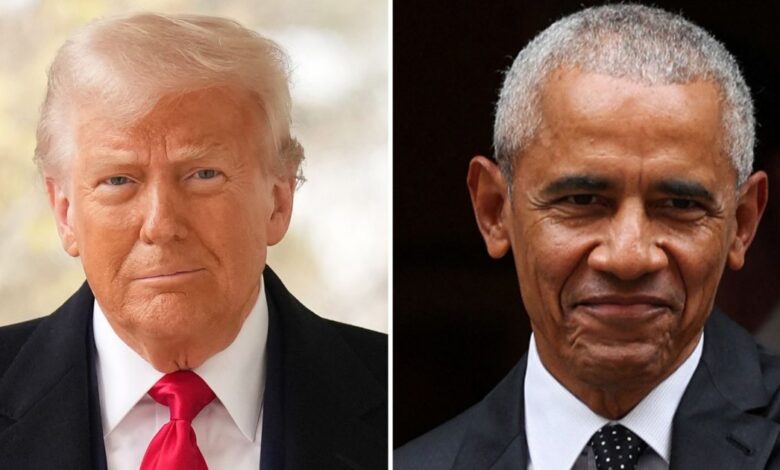
President Donald Trump has recently responded to comments made by former President Barack Obama regarding the existence of aliens. In an interview with Fox News, Trump criticized Obama for allegedly sharing classified information about extraterrestrial life. Trump emphasized that Obama’s actions were a breach of national security rules and suggested that Obama had made a mistake by disclosing classified information.
Despite Obama’s assertion that aliens are real, Trump remained non-committal on the topic, stating that he does not have a personal opinion on the matter. However, he acknowledged that many people believe in the existence of extraterrestrial life.
In a surprising turn of events, Trump hinted at the possibility of declassifying government files related to aliens. He mentioned that he might release information surrounding unidentified aerial phenomena (UAP), unidentified flying objects (UFOs), and other related matters. This decision came after Obama’s recent comments on aliens sparked widespread interest and speculation.
Obama, in a conversation with political podcaster Brian Tyler Cohen, confirmed his belief in the existence of aliens but clarified that he had not personally encountered any evidence to support this claim. He debunked conspiracy theories about aliens being housed in secret facilities and emphasized the vastness of the universe as a probable breeding ground for extraterrestrial life.
Following the media frenzy surrounding Obama’s remarks, the former president took to Instagram to clarify his stance on aliens. He reiterated his belief in the statistical likelihood of alien life but maintained that there is no concrete evidence to suggest that extraterrestrials have made contact with Earth during his presidency.
In a separate development, Congress conducted a hearing in September 2025, where witnesses, including former military personnel, testified about their encounters with Unidentified Anomalous Phenomena (UAPs). One witness, Alexandro Wiggins, a U.S. Navy member, recounted a sighting of a UAP off the California coast, emphasizing that the object was unlike any conventional aircraft or drone.
The conversation around aliens and UFOs has intrigued the public for decades, with high-profile figures like Obama and Trump adding fuel to the speculation. As discussions around extraterrestrial life continue to capture the public’s imagination, the possibility of declassifying government files on the subject remains a topic of interest for many. As technology continues to advance at a rapid pace, the possibilities for innovation seem endless. One area that has seen significant growth in recent years is the field of artificial intelligence (AI). AI is revolutionizing the way we live and work, with applications ranging from self-driving cars to personalized healthcare. One of the most exciting developments in AI is the creation of AI-powered virtual assistants.
Virtual assistants, also known as chatbots or conversational agents, are computer programs that simulate human conversation using natural language processing (NLP) and machine learning algorithms. These virtual assistants can perform a wide range of tasks, from answering customer inquiries to scheduling appointments and even providing emotional support.
One of the key advantages of AI-powered virtual assistants is their ability to handle a large volume of inquiries simultaneously, without the need for human intervention. This can significantly improve efficiency and customer satisfaction, as users can get their questions answered quickly and accurately.
Another benefit of virtual assistants is their ability to learn and improve over time. Through machine learning algorithms, virtual assistants can analyze data from previous interactions to improve their responses and provide more personalized assistance. This means that virtual assistants can adapt to individual preferences and needs, making them even more valuable to users.
Virtual assistants are also becoming increasingly sophisticated in their ability to understand and process natural language. This allows them to engage in more complex conversations and provide more nuanced responses. Some virtual assistants are even capable of detecting emotions in text and adjusting their responses accordingly, providing a more human-like interaction.
In addition to their practical applications, virtual assistants also have the potential to revolutionize the way we interact with technology. By providing a more natural and intuitive interface, virtual assistants can make technology more accessible to a wider range of users, including those who may not be comfortable with traditional interfaces like keyboards and touchscreens.
Overall, AI-powered virtual assistants are poised to transform the way we work, communicate, and interact with technology. As these technologies continue to evolve and improve, we can expect to see even more innovative applications that will further enhance our daily lives. From customer service to healthcare to personal productivity, virtual assistants are set to become an indispensable tool in the digital age.