Progress in women’s health runs up against funding cuts
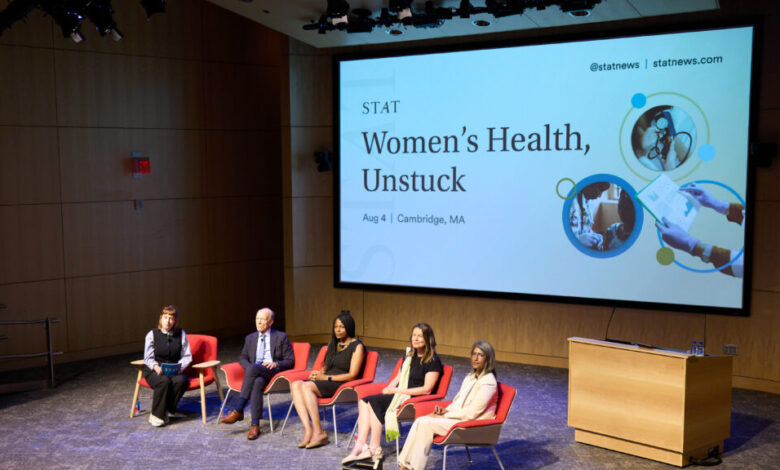
Scientific breakthroughs in women’s health are offering new hope for the future, with advancements in vaccines and medications paving the way for improved outcomes. However, experts caution that persistent gaps in funding and access could hinder progress in this crucial area.
One recent study led by Ruanne Barnabas, chief of the division of infectious diseases at Massachusetts General Hospital, showed that a single dose of the HPV vaccine could be just as effective as two doses. This breakthrough, supported by the Gates Foundation, led to the World Health Organization recommending a simplified one-dose schedule for the vaccine, reducing costs and improving vaccine delivery worldwide.
Despite these advances, challenges remain in securing funding for women’s health initiatives. Barnabas highlighted how federal funding changes and cuts to institutions like Harvard University impacted her research grants, disrupting longstanding partnerships and connections critical for advancing science.
Another notable advancement is the development of lenacapavir, an injection offering six months of protection against HIV infection. Jo-Ann Passmore, a professor at the University of Cape Town, praised the drug as a game-changer for women in sub-Saharan Africa facing high rates of HIV transmission. However, concerns linger about how the drug will reach those in need, especially with funding cuts to programs like PEPFAR.
PEPFAR, a leading provider of HIV prevention drugs, saw significant budget reductions under the Trump administration, affecting critical programs in countries like South Africa. The sudden loss of funding has forced many initiatives to seek alternative financial support or face closure, jeopardizing years of progress in combating HIV.
While medical advancements have surged, funding allocations for women’s health research still lag behind. Ru Cheng of the Gates Foundation highlighted the disparity in research funding for women’s health outside of oncology, with only 1% of global R&D funds dedicated to these issues. To address this gap, the Gates Foundation announced a $2.5 billion pledge to support innovative approaches in women’s health over the next decade.
Scott Johnson, CEO of Comanche Biopharma, stressed the importance of investing in novel drug development for women’s health. His company is working on an RNA-based therapy for preeclampsia, a serious pregnancy-related condition lacking targeted treatments. Johnson emphasized the need for successful outcomes to attract capital and interest in advancing women’s health research.
Bisola Ojikutu, Boston’s commissioner of public health, underscored the significance of funding behavioral science and implementation research to ensure lifesaving interventions reach those in need. Without adequate investment in these areas, crucial advancements in women’s health may remain unrealized. Lenacapavir is a groundbreaking drug that has the potential to significantly reduce the risk of HIV infection in women. Unfortunately, many women are unaware of this new development and remain at a high risk of contracting the virus. To address this issue, it is crucial for community research and engagement to work hand in hand with drug development efforts.
Dr. Ojikutu emphasizes the importance of tailoring research and interventions to specific communities. What works in one location may not be effective in another, so it is essential to invest in building infrastructure for behavioral science research. By understanding the unique needs and challenges faced by different communities, we can develop targeted approaches to prevent HIV transmission.
In order to make lenacapavir and other innovative treatments accessible to women at risk, we must prioritize community engagement. This involves not only raising awareness about new developments in HIV prevention, but also actively involving community members in the research and implementation process. By listening to the voices of those most affected by the epidemic, we can ensure that interventions are culturally sensitive and effective.
Ultimately, bridging the gap between drug development and community engagement is key to combating the HIV epidemic. By investing in research that is tailored to the needs of diverse populations, we can make strides towards reducing HIV transmission rates and improving the health outcomes of women worldwide. Let’s work together to ensure that every woman has access to life-saving treatments like lenacapavir.