Reba’s Christopher Rich Found It Embarrassing to Go Out After Stroke
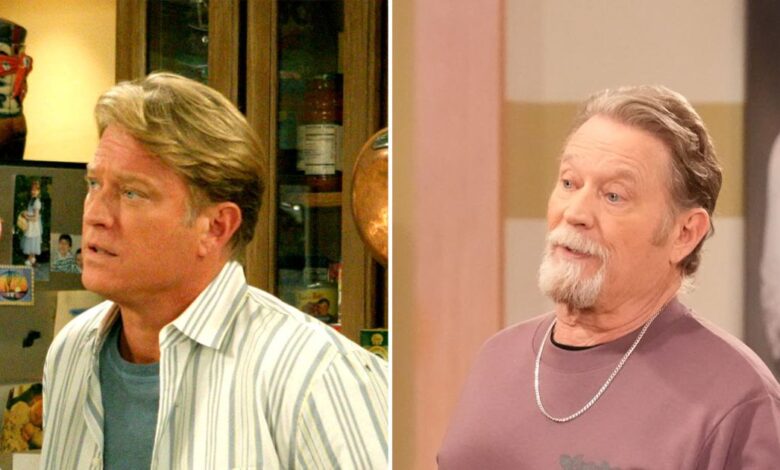
Christopher Rich Opens Up About Life After Stroke and Return to Acting
Reba actor Christopher Rich recently spoke out about the challenges he faced following a stroke and how it led him to take a step back from the public eye. In a candid interview with People, Rich, 72, shared how he initially found it embarrassing to reemerge but thanks to Reba McEntire’s encouragement, he has started acting again.
Rich expressed his joy at being back in the spotlight, saying, “She keeps bringing us in, and the audience loves it. It’s amazing.” The actor, known for his role as Brock in Reba, revealed that returning to the set has been a fulfilling experience for him.
Revisiting the Reba Legacy
The popular sitcom Reba, which aired from 2001 to 2007, followed the story of a single mother, played by McEntire, navigating the challenges of raising her children after her husband, portrayed by Rich, left her for his dental hygienist, played by Melissa Peterman. The show garnered a loyal fan base and featured a talented cast including JoAnna Garcia Swisher, Scarlett Pomers, and Mitch Holleman.
While some cast members took a step back from the spotlight after the show ended, many have found ways to reunite with McEntire and Peterman on their hit NBC series, Happy’s Place. Rich’s return to acting after his health struggles was particularly poignant, as he shared how his stroke and subsequent complications had taken a toll on him.
Despite the challenges he faced, Rich remained optimistic about his future in Hollywood, stating, “It’s great to be able to be a disabled person and play a disabled person. I’m hoping that when some of this gets out there, that people that I’ve worked with in the past are going to say, ‘OK, let’s bring him back. We can work with him.'” His resilience and determination to continue pursuing his passion for acting are truly inspiring.
A Heartwarming Reunion
McEntire expressed her gratitude for the opportunity to work alongside Rich again on Happy’s Place, highlighting the positive impact it had on him. She shared, “To bring Chris back in after his stroke, it really made a difference in his life. He got to come back to the work that he loved so much around the people that he loves so much. And we all love him. It’s been a huge blessing for all of us.”
Happy’s Place continues to air on NBC, showcasing the talents of the Reba alums and providing a platform for Rich to shine once again. The show’s success is a testament to the enduring bond between the cast members and their dedication to their craft.
As Rich embarks on this new chapter in his career, fans can look forward to seeing more of his work and witnessing his resilience in overcoming life’s obstacles. His story serves as a reminder of the power of perseverance and the importance of never giving up on one’s dreams.
The world of technology is constantly evolving, with new innovations and advancements being made every day. One of the most exciting areas of technology that is currently gaining traction is virtual reality (VR). Virtual reality is a computer-generated simulation of a three-dimensional environment that can be interacted with in a seemingly real or physical way by a person using special electronic equipment, such as a helmet with a screen inside or gloves fitted with sensors.
VR technology has been around for several years, but it has recently gained popularity due to advancements in hardware and software, as well as increased interest from consumers and businesses. VR has the potential to revolutionize many industries, from gaming and entertainment to education and healthcare.
In the gaming world, VR has opened up a whole new level of immersion and realism for players. With VR headsets, gamers can feel like they are actually inside the game, interacting with characters and environments in a way that was previously impossible. This has led to the development of a wide range of VR games that offer a truly unique and captivating experience.
In the entertainment industry, VR has been used to create immersive experiences for viewers. For example, some theaters now offer VR experiences that allow audiences to feel like they are part of the movie, rather than just watching it on a screen. This has the potential to change the way we consume entertainment, making it more interactive and engaging.
In the field of education, VR has the potential to revolutionize the way we learn. Imagine being able to take a virtual field trip to the pyramids of Egypt or the surface of Mars, all from the comfort of your own classroom. VR can make learning more engaging and interactive, helping students to better understand complex concepts and retain information more effectively.
In the healthcare industry, VR has been used to treat phobias, PTSD, and other mental health issues. By creating realistic simulations of stressful situations, therapists can help patients confront their fears in a safe and controlled environment. VR has also been used for medical training, allowing doctors to practice surgeries and procedures in a virtual setting before performing them on real patients.
Overall, virtual reality technology has the potential to change the way we live, work, and play. As the technology continues to advance and become more accessible, we can expect to see even more innovative uses for VR in the future. Whether it’s for entertainment, education, healthcare, or any other industry, virtual reality has the power to transform our world in ways we never thought possible.