Recession specials could be the latest sign of deteriorating consumer sentiment
In light of growing concerns about a potential economic slowdown, some businesses are revisiting the idea of offering “recession specials” to attract customers. This trend harkens back to the Great Recession of nearly 20 years ago when businesses across various industries rolled out discounts and deals to weather the storm.
While conducting a search for “recession specials,” one can stumble upon articles from the past that detail how restaurants and bars offered special deals to entice customers during tough economic times. Fast forward to 2025, and we see a resurgence of these recession specials as businesses subtly acknowledge the looming economic uncertainties.
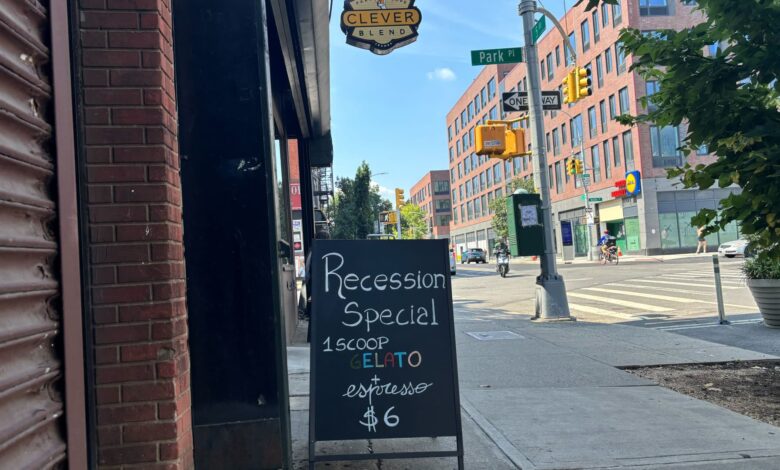
The term “recession indicator” has even made its way into social media discussions as a way to playfully gauge the possibility of an economic downturn. Some establishments have embraced this concept by offering recession-themed promotions. For example, a Brooklyn coffee shop named Clever Blend has introduced a $6 gelato and espresso “recession special” to attract customers.
In Manhattan, Wicked Willy’s bar hosted a “Recession Pop Party” recently, inviting patrons to dance and party all night long. Market Hotel, a concert venue in Brooklyn, also jumped on the bandwagon by promoting an event that combined economic anxiety with electro-pop music.
The trend is not limited to New York City alone. Super Duper, a burger chain with locations across the San Francisco Bay Area, launched its own “Recession Burger” as a seasonal special. The meal, which includes a burger, fries, and a beverage, is offered at a discounted price of $10.
According to Ed Onas, Super Duper’s vice president of operations, the idea for the burger’s name stemmed from the Depression-era origins of the Oklahoma-style smash burger. While the chain did not originally intend to capitalize on the buzzword, they decided to offer a discounted “Recession Combo” to provide value to customers in the face of rising inflation.
The success of the “Recession Burger” prompted Super Duper to add it as a permanent fixture on their menu. This move reflects a broader sentiment of waning consumer confidence, as evidenced by the University of Michigan’s consumer sentiment index showing a decline in August.
Joanne Hsu, director of the surveys of consumers at the University of Michigan, attributes this decline to concerns over trade policy and a general expectation of economic slowdown. The lack of consumer confidence may lead to a decrease in spending, affecting businesses across various sectors.
Overall, the resurgence of recession specials serves as a reminder of the cyclical nature of the economy and how businesses adapt to changing economic conditions. By offering value-driven promotions, businesses aim to attract customers and navigate through uncertain times.