Retail sales fall as Black Friday deals fail to lure shoppers
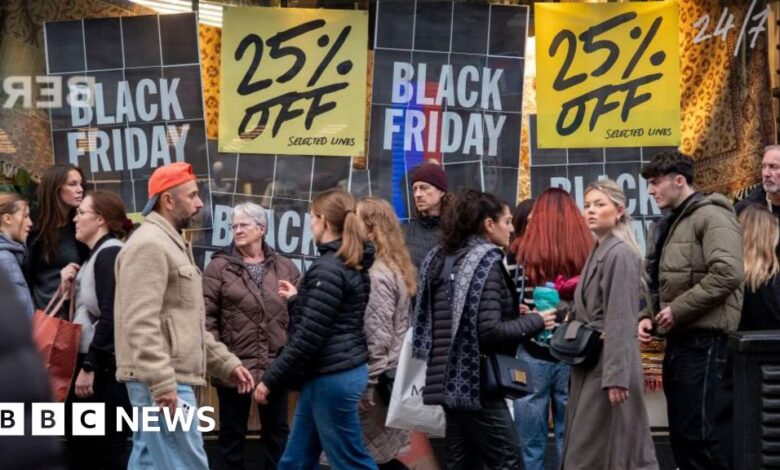
Retail sales in the UK took a hit in November, as Black Friday discounts failed to boost spending, according to official figures released by the Office for National Statistics (ONS). Supermarket sales saw a decline for the fourth consecutive month, while discounts offered by retailers throughout November did not have the expected impact on Black Friday spending.
Sales volumes dropped by 0.1% in November, contrary to analysts’ predictions of a 0.4% increase. Despite this setback, sales over recent months have seen a rise, driven by increased purchases of computers, clothing, and furniture.
On a positive note, a separate survey conducted in December indicated that consumers were feeling optimistic about their finances and were willing to spend in the lead-up to Christmas. Consumer confidence reached a 16-month high, with households expressing a positive outlook for the year ahead.
The GfK consumer confidence survey revealed that consumers were more confident about their financial prospects, although overall sentiment remained subdued. The recent cut in interest rates to 3.75% was expected to further boost consumer confidence, potentially leading to an increase in spending during the crucial pre-Christmas period.
However, speculation surrounding the Budget measures had a dampening effect on consumer spending, with many shoppers exercising caution despite the allure of Black Friday deals. Businesses surveyed by the Bank of England highlighted the importance of value for money in consumer decision-making, with the Budget being cited as a factor discouraging spending.
The uncertainty surrounding potential tax hikes and other Budget-related concerns led to a sense of caution among consumers, impacting their shopping behavior during the festive season. Despite these challenges, some retailers, like outdoors retailer Mountain Warehouse, reported record sales figures.
The ONS survey indicated that while 31% of adults planned to take advantage of Black Friday deals, 19% intended to spend less compared to the previous year. This mixed sentiment reflected the cautious approach adopted by consumers amid economic uncertainties.
In a separate announcement, the ONS revealed that UK government borrowing exceeded expectations in November. The borrowing, which represents the difference between public spending and tax income, stood at £11.7bn, higher than the anticipated £10bn. However, this figure was lower than the borrowing recorded in the same month the previous year, signaling a positive trend.
The government attributed the increase in borrowing to various factors, including the reversal of a decision to restrict winter fuel payments and higher public sector salaries. Despite the rise in borrowing, the government remained committed to reducing debt and borrowing levels, as highlighted by Chief Secretary to the Treasury James Murray.
While the government aimed to cut debt and borrowing to allocate more funds to public services, critics, like shadow chancellor Mel Stride, raised concerns about the rising debt levels. The EY Item Club’s chief economic adviser, Matt Swannell, emphasized the need for the government to achieve a significant slowdown in borrowing to meet the Office for Budget Responsibility’s target for the current financial year.
Overall, the retail landscape in the UK faced challenges in November, with mixed consumer sentiment impacting spending patterns. The government’s efforts to manage borrowing and debt levels will be crucial in navigating the economic uncertainties and supporting sustainable growth in the future.