Reviving this African game reserve meant catching, transporting hundreds of animals
CAPE TOWN, South Africa — CAPE TOWN, South Africa (AP) — Five decades ago, Banhine National Park in Mozambique was a thriving wildlife sanctuary, bustling with herds of giraffe, buffalo, and antelope. However, it fell victim to years of civil unrest and rampant poaching, which nearly decimated its animal population.
Fortunately, efforts are underway to restore Banhine to its former grandeur. The park’s fences have been reinstated, roads repaired, and now comes the challenging task of reintroducing the wildlife.
Collaborating with the Mozambican government, private conservationists have transported around 400 animals — including zebra, wildebeest, and various antelope species — to Banhine via truck. This initiative aims to revive a game reserve within the Great Limpopo Transfrontier Park, a network of reserves spanning Mozambique, South Africa, and Zimbabwe that serves as a wildlife corridor and vital conservation area.
The animals relocated to Banhine were sourced from Maputo National Park, which underwent a similar rejuvenation process 15 years ago.
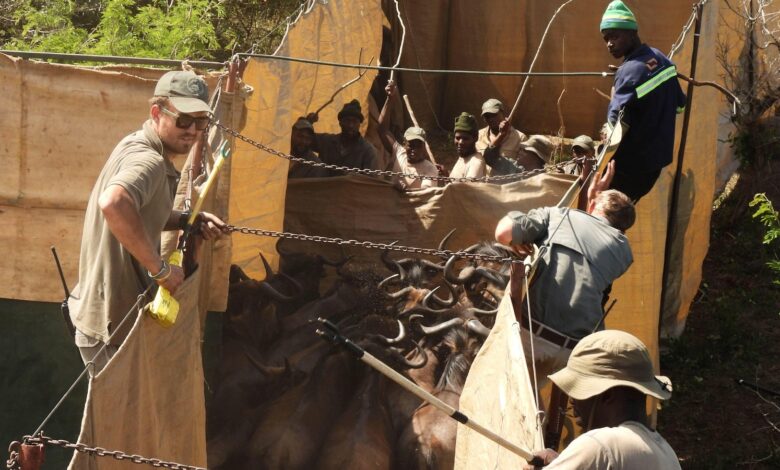
The intricate operation of transporting the animals to Banhine involved herding them into a large funnel-shaped enclosure with the aid of a helicopter. Subsequently, they were guided up a ramp and loaded into crates on trucks for an arduous 18-hour journey northward. The entire relocation process spanned 12 days.
The 385 animals were released into an 8-square-mile “sanctuary,” which will be gradually expanded as they acclimate to their new environment before being able to roam freely in the larger park, as explained by Donald Sutton, the head of operations and development at Banhine.
“By reintroducing these animals, we are enriching the biodiversity of Banhine National Park,” Sutton remarked. “As the animal population grows and they are integrated into the broader park, we anticipate a rise in tourism as well.”
Banhine is the latest addition to Mozambique’s roster of reserves earmarked for rehabilitation, following a period of desolation caused by poaching, drought, and a brutal civil war that spanned from 1977 to 1992.
The Peace Parks Foundation, dedicated to revitalizing cross-border conservation areas in southern Africa, played a pivotal role in the animal relocation efforts at Banhine.
The organization is also leading the initiative to restock Zinave National Park in Mozambique, another reserve within the Great Limpopo Transfrontier Park that had been depleted of wildlife over the years.
In Zinave, critically endangered black rhinos have been reintroduced after being translocated from South Africa, marking the first black rhino population in Mozambique in decades.
Peace Parks reports that over 18,000 animals have been relocated to previously degraded conservation areas, undergoing restoration.
Sutton reflected on the 2 1/2 years of strenuous efforts it took to prepare Banhine for the return of wildlife, expressing optimism for the sight of herds migrating freely within the reserve once again.
“I envision Banhine reclaiming its former glory from over 50 years ago,” Sutton shared.
___
For more AP Africa news, visit: https://apnews.com/hub/africa