RFK Jr. Is Doubling Down On Multiple Unproven Links To Autism
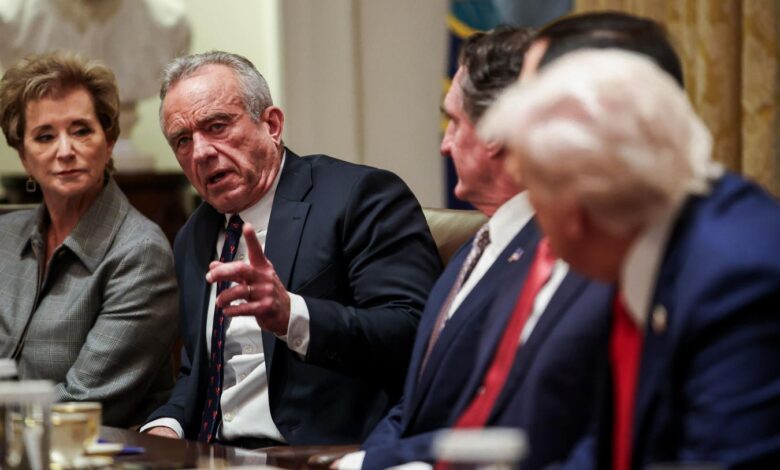
Health and Human Services Secretary Robert F. Kennedy Jr. recently came under fire for his controversial statements linking Tylenol (acetaminophen) to autism. During a cabinet meeting at the White House, Kennedy reiterated his belief that the use of Tylenol during circumcision procedures could increase the risk of autism in infant boys. Despite facing criticism from the media, Kennedy stood by his claims and even referenced a pre-print article raising concerns about acetaminophen exposure in infancy.
Kennedy’s assertions are not new. He has a history of making connections between various substances, such as acetaminophen, thimerosal, and aluminum salts, and autism. In the case of Tylenol, Kennedy cited a 2015 Danish national cohort study that found a higher rate of autism spectrum disorder among circumcised boys. However, the study authors themselves cautioned against drawing firm conclusions and called for further research.
Kennedy’s tendency to link substances to autism extends beyond Tylenol. He has previously raised concerns about thimerosal in vaccines, despite scientific consensus that it is safe. Kennedy’s Advisory Committee on Immunization Practices even voted against flu shots containing thimerosal, despite limited evidence of negative health effects.
Most recently, Kennedy has called for an investigation into aluminum in vaccines, suggesting a possible link to the rise in allergies since 1989. However, a study in Denmark involving over one million people found no correlation between aluminum and chronic conditions, including autism.
Critics argue that confounding factors may be influencing Kennedy’s claims, pointing out that the studies he references only show association, not causation. When controlling for these factors, the correlations often disappear.
Despite the controversy surrounding his statements, Kennedy remains steadfast in his beliefs. The debate over the supposed links between substances like Tylenol and autism continues to spark discussion and controversy in the medical community.