Scientifically grounded recommendations for stretching published for the first time
Stretching has long been a topic of debate in the world of fitness and sports. Questions like when to stretch, how long to stretch for, and whether it actually provides the benefits it claims have puzzled athletes, coaches, and therapists for years. However, a recent breakthrough in research has led to the development of evidence-based stretching recommendations that aim to provide clarity on the subject.
Led by Prof. Dr. Dr. Jan Wilke of the University of Bayreuth, an international research team has published their findings in the Journal of Sport and Health Science. The team’s goal was to dispel common myths and controversies surrounding stretching and provide practical, scientifically grounded recommendations for its use.
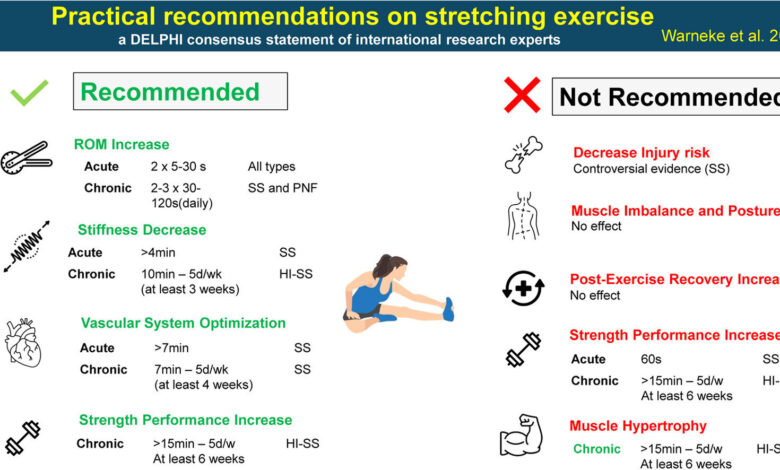
The recommendations cover a wide range of topics related to stretching, from flexibility improvement to injury prevention and pain treatment. While stretching is often hailed as a cure-all for various issues, the research team found that it may not live up to all its promises. For example, stretching alone may not correct postural issues or prevent injuries as effectively as believed.
Despite these limitations, stretching remains a simple, cost-effective form of exercise that is widely accessible. The team of researchers, consisting of 20 stretching experts from around the world, conducted a thorough review of existing research and developed clear recommendations based on the latest scientific evidence.
Their recommendations include guidelines for short-term flexibility gains, reducing muscle stiffness, and improving cardiovascular health through stretching. The team also provides advice on stretching to support muscle growth and strength development, while cautioning against using stretching for purposes like injury prevention or posture correction.
The research team’s work is crucial in bridging the gap between scientific evidence and practical application. By combining expert opinion with evidence-based insights, they aim to transform stretching into a valuable training method that is both targeted and effective. Their recommendations offer athletes, coaches, and therapists a clear roadmap for incorporating stretching into their routines in a meaningful way.
For more information on the research findings and detailed stretching recommendations, readers can refer to the full article published in the Journal of Sport and Health Science. The work of Prof. Dr. Dr. Jan Wilke and his team represents a significant step forward in understanding the benefits and limitations of stretching, providing valuable insights for the fitness and sports community.