Scientists Capture Incredible First Glimpse Of Planets Being Born Around A Baby Star
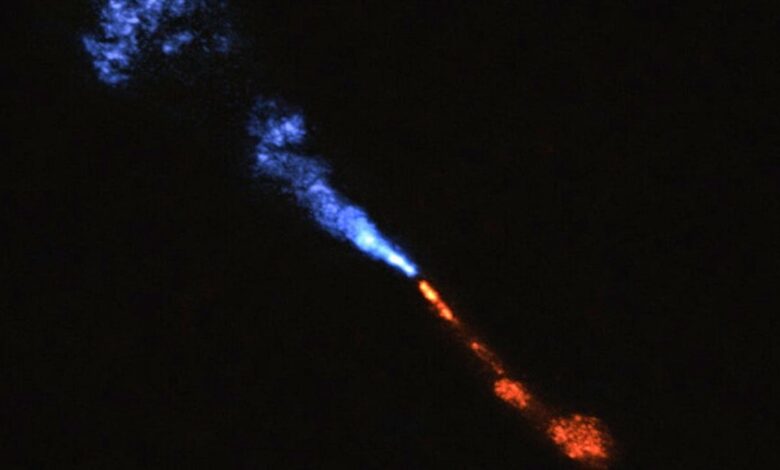
A recent discovery in the world of astronomy has unveiled the earliest stages of rocky planets forming around a sun-like star in the gas disk of a young protostar. This groundbreaking observation offers a rare glimpse into the initial steps of planet formation, shedding light on the birth of new worlds.
According to Leiden Observatory’s Melissa McClure, who led the international research team behind the discovery, this snapshot represents a pivotal moment in understanding how rocky planets like Earth come into existence. The detection of solid specks condensing in the gas disk around the young star provides valuable insights into the formation of planetary systems.
Through the collaboration of NASA’s Webb Space Telescope and the European Southern Observatory, astronomers were able to witness the formation of these early planetary materials around the star HOPS-315. The presence of silicon monoxide gas and crystalline silicate minerals mirrors the conditions believed to have kickstarted the formation of our own solar system billions of years ago.
This discovery marks a significant milestone in planetary science, as it provides evidence of a common process in the early stages of planet formation. By studying more emerging planetary systems, scientists hope to uncover the key processes involved in creating Earth-like worlds.
The mesmerizing image captured by the ESO’s Alma telescope network showcases the beauty and complexity of these emerging planetary systems, hinting at the vast potential for planet formation around young stars like HOPS-315.
As researchers continue to explore the mysteries of the cosmos, the quest to understand the formation of planets and the diversity of planetary systems remains a central focus of astronomical studies.
AP video journalist Javier Arciga contributed to this report. The Associated Press Health and Science Department receives support from the Howard Hughes Medical Institute’s Department of Science Education and the Robert Wood Johnson Foundation. The AP is solely responsible for all content.