Sharp fall in government borrowing in December, figures show
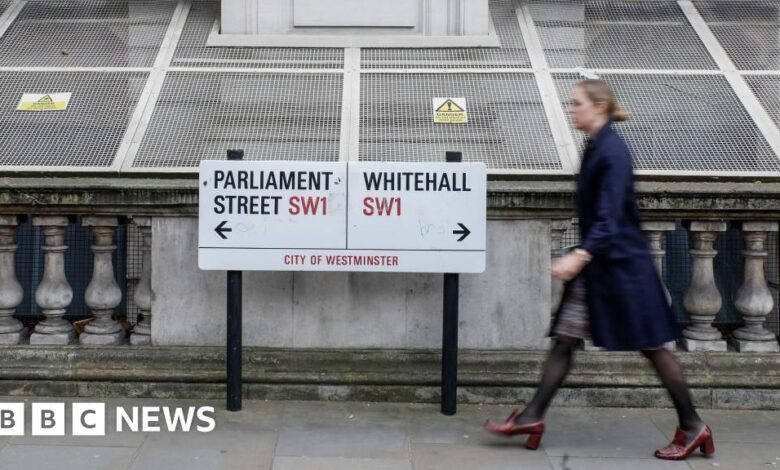
UK Government Borrowing Falls Sharply in December
Last month, the UK government saw a significant decrease in borrowing, attributed to higher tax income and National Insurance Contributions outweighing spending, according to figures released by the Office for National Statistics (ONS).
In December, government borrowing stood at £11.6 billion, marking a £7.1 billion (38%) drop from the previous December. While this figure was lower than economists’ predictions, it was still higher than the borrowing in December 2023.
Tom Davies, Deputy Director for the ONS public service division, explained that the decrease in borrowing was a result of “receipts being up strongly on last year whereas spending is only modestly higher”.
Despite the year-on-year decrease, December 2025 marked the tenth highest borrowing figure for that month since records began in 1993, without adjusting for inflation. It also exceeded the borrowing amount in December 2023, which stood at £8.1 billion.
The data revealed that the government received £7.7 billion more in taxes in December 2025 compared to the same month in 2024, representing an 8.9% increase. This increase was driven by higher income tax, corporation tax, VAT, and National Insurance contributions, with changes to the NIC rates for employers taking effect in April the previous year.
Furthermore, the ongoing freeze on income tax thresholds has led to more individuals being pushed into higher tax brackets as their incomes rise, a phenomenon known as fiscal drag.
While public spending in December saw an increase, mainly due to inflation-linked benefits, it was overshadowed by the surge in tax and NIC collections. Public spending was estimated at £92.9 billion, up by £3.2 billion (3.5%) from December 2024.
According to provisional estimates, borrowing for the financial year up to December totaled £140.4 billion, slightly lower than the corresponding period in 2024. This figure represented 4.6% of GDP, down 0.2 percentage points from the previous year and ranked as the third-highest level of borrowing for the April-December period on record.
James Murray, Chief Secretary to the Treasury, emphasized the government’s efforts in stabilizing the economy, reducing borrowing, and eliminating wasteful spending. He highlighted the forecasted decrease in borrowing, positioning the UK to have the lowest borrowing levels since before the pandemic.
Meanwhile, Shadow Chancellor Mel Stride criticized Labour for overseeing record borrowing for the second consecutive year outside of the pandemic. He pointed out the significant amount spent on debt interest compared to defense spending and lauded the Conservatives for their plan to restore fiscal stability.
The Office for Budget Responsibility (OBR) reported that public borrowing from April to December was £4.1 billion (2.8%) below its forecast. The OBR’s projections for the final quarter of the financial year anticipate a 50% increase in capital gains tax receipts in January, driven by asset disposals ahead of expected tax rate hikes in the November Budget.
Ruth Gregory, deputy chief UK economist at Capital Economics, noted an improvement in public finances in recent months, with expectations of a further boost in January from self-assessment tax and CGT receipts. However, she cautioned that deficit reduction progress remained slow overall.