Shaved bald: A Rastafari fight for justice at Supreme Court
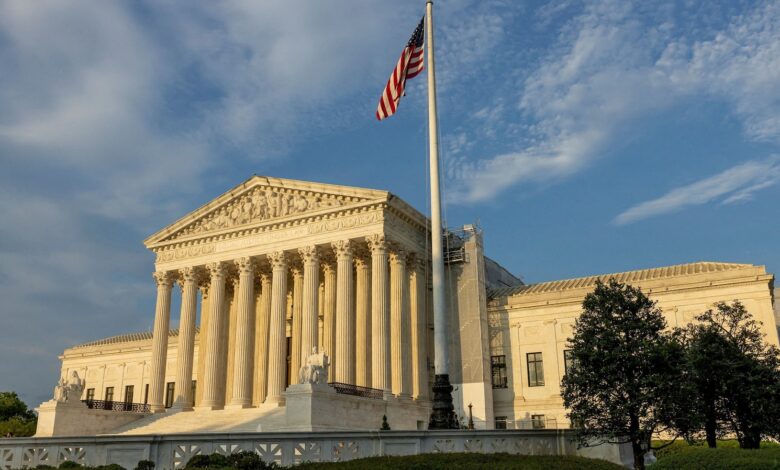
The case has now reached the Supreme Court, with Landor’s legal team arguing that his religious freedom was violated under the Religious Land Use and Institutionalized Persons Act (RLUIPA), which protects the religious rights of individuals in government custody.
Legal experts say the case could set a precedent for how religious freedoms are protected for inmates across the country. The outcome of the case could also have significant implications for how Rastafarians and other religious minorities are treated within the criminal justice system.
“This case is not just about one man’s dreadlocks. It’s about the fundamental right to practice one’s religion freely, even behind bars,” said Mary Johnson, a legal analyst following the case closely. “The Supreme Court’s decision will have far-reaching consequences for how religious freedoms are upheld in our justice system.”
Rastafarians have long faced discrimination and misunderstanding due to their unique religious practices and beliefs. The case of Damon Landor has brought national attention to these issues and sparked a larger conversation about religious freedom and cultural acceptance.
As the Supreme Court deliberates on this historic case, many in the Rastafarian community are hopeful that justice will be served and that religious freedoms will be protected for all individuals, regardless of their faith.
The decision in this case is eagerly awaited not only by Rastafarians but by all those who believe in the importance of religious freedom and equality under the law. It is a moment that could have a lasting impact on the rights of religious minorities in the United States.
I felt like I was in a hopeless situation,” Tafari said.
The Supreme Court is expected to decide whether prisoners can sue individual officials for damages under the Religious Land Use and Incarcerated Persons Act, with arguments set for December.
Marcus Myers, the former warden of the Raymond Laborde Correctional Center in Louisiana, is at the center of the case. Damon Landor, an inmate at the facility, claimed his religious rights were violated when he was forced to cut his dreadlocks. Myers, who was in charge at the time, is accused of using his authority to enforce the grooming policy that infringed on Landor’s religious beliefs.
Landor’s attorney, Zach Tripp, emphasized the importance of holding prison officials accountable for respecting the religious practices of incarcerated individuals. Without the possibility of damages, he argued, the law lacks the necessary enforcement mechanisms to ensure compliance.
On the other side, Louisiana Attorney General Liz Murrill defended the immunity of state prison officials, asserting that subjecting them to damages lawsuits could have severe financial implications for the state. While Murrill acknowledged the importance of protecting religious freedom, she highlighted the complexities of implementing such protections within a prison environment.
Civil rights advocates and former prisoners like Solomon Tafari are hopeful that the Supreme Court will provide clarity on the issue, allowing victims of religious discrimination to seek monetary accountability for violations of their rights. Tafari, who endured solitary confinement due to his refusal to cut his dreadlocks, expressed the emotional toll of being deprived of his religious expression while incarcerated.
As the legal battle unfolds, the outcome of this case could have far-reaching implications for the protection of religious freedoms within the prison system and the accountability of officials who wield authority over incarcerated individuals.
In a series of harrowing incidents that have sparked conversations about religious freedom and respect for cultural practices, Rastafarians in American prisons have faced challenges to their faith and identity. Two cases in particular shed light on the struggles faced by Rastafarian inmates and the legal battles they have had to fight in order to practice their religion.
Thomas Walker, a Rastafarian in an Illinois state prison, was forced to cut his dreadlocks in 2018 due to security concerns raised by prison officials. Similarly, Carlos Thurman in Kentucky faced a similar situation in 2022, despite his plea for a Rastafarian exemption. However, after a legal battle led by Corey Shapiro, the legal director for the ACLU of Kentucky, the state changed its policy and settled the case in Thurman’s favor. Shapiro emphasized the importance of justice in such cases, stating that compensatory damages and financial penalties can serve as deterrents for future violations of religious freedom.
The challenges faced by Rastafarians in prison extend beyond individual cases, as highlighted by a report from the U.S. Commission on Civil Rights in 2025. The report revealed that nearly 600 grievances related to various forms of religious practice were filed in federal prisons between 2017 and 2023, with only one resulting in a favorable outcome for the prisoner. Advocates argue that this lack of respect for religious freedom behind bars is a systemic issue that needs to be addressed.
Charles Price, a professor of anthropology at the University of North Carolina specializing in Rastafarian history and culture, emphasized the significance of reparations and damages in acknowledging and rectifying the harm caused by violating religious practices. He noted that while monetary compensation cannot fully undo the damage of forcibly cutting someone’s dreadlocks, it is a step towards recognizing and addressing the wrongs committed.
Amidst these challenges, Rastafarians like Ayubu and his band, Proverbs, are hoping that a Supreme Court case will help change societal perceptions of Rastafarians and their sacred hair. Ayubu reflected on the historical context of discrimination against Rastafarians, expressing hope that legal victories and cultural shifts will lead to greater acceptance and respect for their religious beliefs and practices. Ultimately, these cases highlight the importance of upholding religious freedom and cultural identity, even within the confines of the criminal justice system. It’s 2025, and many people thought that certain issues were a thing of the past. However, for the community of Rastafarians in the United States, the fight for their religious rights is still ongoing. With several hundred thousand believers in the country, they are eagerly awaiting a decision from the Supreme Court that could bring about a much-needed change.
Ziah Ayubu, a devout Rastafarian from Silver Spring, Maryland, is at the forefront of this battle. As the founder of the reggae band Proverbs, he has been vocal about the importance of upholding their religious beliefs and practices. Despite facing challenges and discrimination, Ayubu remains resilient, stating, “We’re still here, we’re still working, still loving each other and living together.”
The heart of the matter lies in the debate over whether federal law permits individual damages suits against prison officers for violating religious rights. This crucial issue is expected to be resolved by the Supreme Court by the end of June 2026. The outcome of this decision could have far-reaching implications for the Rastafarian community and their fight for equality and freedom of religion.
As we look towards the future, it is clear that the struggles of the past have not been fully resolved. The journey towards justice and equality continues, and individuals like Ziah Ayubu serve as beacons of hope and inspiration for their community. In a world where progress is constantly evolving, it is important to stand firm in our beliefs and fight for what is right. Let us hope that the Supreme Court’s decision will bring about a positive change for the Rastafarian community and pave the way for a more inclusive and accepting society. The world of technology is constantly evolving, and with each passing year, we see new and innovative advancements that change the way we live and work. From artificial intelligence to virtual reality, the possibilities seem endless. One of the most exciting developments in recent years has been the rise of blockchain technology.
Blockchain technology is a decentralized, secure, and transparent way of recording transactions across a network of computers. It was originally created as the underlying technology for Bitcoin, but its potential goes far beyond just cryptocurrencies. Blockchain has the ability to revolutionize a wide range of industries, from finance and healthcare to supply chain management and voting systems.
One of the key features of blockchain technology is its security. Each transaction is recorded in a “block” and linked together in a chain. Once a block is added to the chain, it cannot be altered or deleted, making it virtually hack-proof. This level of security is crucial in industries where data integrity is paramount, such as banking and healthcare.
Another important aspect of blockchain technology is its transparency. Because all transactions are recorded on a public ledger, anyone can access and verify them. This eliminates the need for intermediaries, such as banks or government agencies, which can reduce costs and increase efficiency.
Blockchain technology is also highly efficient. Transactions can be processed in a matter of seconds, compared to days or even weeks with traditional systems. This speed is especially important in industries such as supply chain management, where real-time tracking of goods is essential.
The potential applications of blockchain technology are vast. In finance, blockchain can streamline cross-border payments and reduce fraud. In healthcare, it can securely store patient records and ensure data privacy. In supply chain management, it can track the movement of goods from manufacturer to consumer, reducing inefficiencies and fraud.
Despite its many benefits, blockchain technology is still in its early stages of adoption. Many companies are still exploring its potential and experimenting with different use cases. However, as more industries realize the benefits of blockchain, we can expect to see widespread adoption in the coming years.
In conclusion, blockchain technology has the potential to revolutionize the way we conduct business and interact with each other. Its security, transparency, and efficiency make it an attractive option for a wide range of industries. As we continue to explore its capabilities, we can expect to see even more exciting advancements in the world of technology.