Shirt Salesman Is First-Time Actor
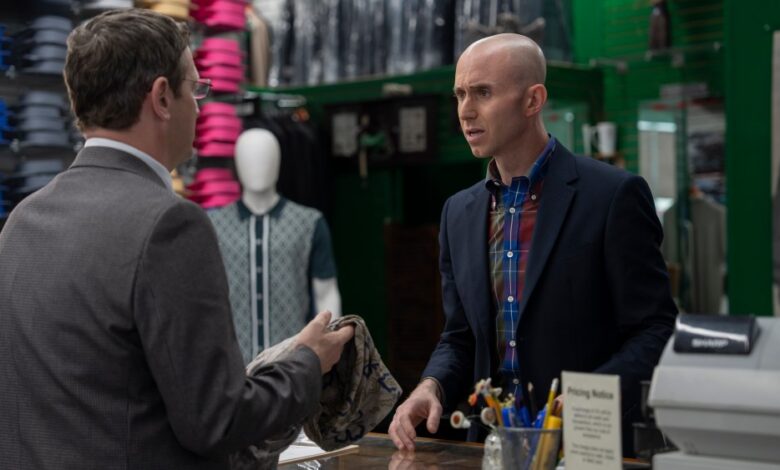
It’s not easy to upstage Tim Robinson. The comedian’s signature character is a man whose social unease leads him to act out in big, loud, obnoxious ways — like the hot dog guy from the sketch series “I Think You Should Leave,” or Marvel enthusiast Craig Waterman in the film “Friendship.” Ron Trosper, the protagonist of Robinson’s HBO conspiracy comedy “The Chair Company,” is no exception to this rule. But in Ron’s quest to find out what’s going on with Tecca, the namesake manufacturer of a faulty chair that leads the mall developer to take an embarrassing tumble in front of his colleagues, he encounters many characters who more than match his eccentricities. People like a certain shirt salesman who pitches Ron on his membership program.
In the second episode of “The Chair Company,” Ron visits the menswear shop Tamblay’s in an attempt to identify his assailant from the series premiere, who warned Ron to stop looking into Tecca before running off and leaving an article of clothing behind as a clue. The Tamblay’s proprietor agrees to help him out, confirming the shirt is one of theirs. The owner even models the item’s wear and tear using a ball he happens to have on hand: “It’s like a big belly and someone’s belly is pushin’ up into the buttons,” the man explains. “He’s about at his limit. I happen to know a guy who’s at his limit.” The emphases, cadence and delivery of this seemingly mundane dialogue combine to make the viewer sit up and ask themselves: Who is that?
The actor, it turns out, didn’t have to do much to get into character. Jared Lindner is the real-life co-proprietor of Suit Man, a small business located in the Westchester County suburb of Mount Vernon, New York. Lindner’s father founded the store nearly two decades ago, and the two still run Suit Man as a family operation. Robinson himself took notice of Lindner when he swung by the store to scout the location. Lindner didn’t recognize the “Saturday Night Live” alum, but struck up a rapport with the crew: “They started to chuckle, because I’m a pretty easygoing, somewhat young guy,” Lindner tells Variety. The next thing he knew, the production was calling to offer him the part.
Lindner is patching into our interview directly from Suit Man, where the racks of shirts, ties, and socks appear exactly as they do in “The Chair Company.” (During our conversation, Lindner walks around the store, iPhone in hand; at one point, a pair of hands appeared from offscreen to adjust his collar for the Zoom camera.) Lindner’s distinctive voice, a Christopher Walken-esque blend of New York accent, long vowels, and soft tone, is also identical to the one that appears in the show. The only real difference is that the actual Lindner is wearing a baseball cap — and instead of helping Robinson’s protagonist with a mystery, he’s singing the praises of the real Robinson to a reporter.
“It’s unbelievable how good they are,” Lindner says of Robinson, his creative partner Zach Kanin and their collaborators. “They took someone who had no idea what to do and made me feel comfortable enough to not be nervous,” despite the dozens of crew members crowding into the Suit Man space. Lindner had never so much as read a script before making his acting debut on HBO, but credits Robinson and his team with making him feel at ease.
“I think of it like sports,” Lindner says. “When a good team has a very good manager and head coach, they don’t need to yell. They don’t need to tell you what to do. They’re respected enough that everyone has the common goal to just get it done and make them happy.”
Director Andrew DeYoung first worked with Robinson on “Friendship” before coming aboard “The Chair Company” as an executive producer. Though the idea of casting Lindner came from Robinson, DeYoung didn’t require much persuasion. (HBO asked that Lindner at least read for the network before giving the green light, but he quickly came aboard.) “I was chatting with Jared and was like, ‘This guy is so unique and interesting,’” DeYoung recalls. “There’s something about him and his way of being that’s rare and captivating in the sweetest way possible. No one’s making fun of anybody at all, and I hope that’s clear.”
Though a total acting novice like Lindner is an extreme example of its casting strategy, “The Chair Company” generally avoided big names and recognizable faces when populating its strange, extreme world. Besides Robinson, Lake Bell and Sophia Lillis — who play Ron’s wife and daughter, respectively — are probably the best-known series regulars. Everyone else is much less likely to come with pre-existing associations for the audience, which is precisely the point.
“There’s an excitement when you don’t have the baggage of somebody that you know,” DeYoung explains. “There are so many brilliant people out there that are trying to be performers — or, in Jared’s case, not — who show up and electrify the screen because they bring something special and unique.” That’s what appeals to him, Robinson, and Kanin about figures like Lindner, who can make such an impression in such a short span of time. “What’s beautiful about Tim and Zach [is], even if a character has one line, they feel incredibly rich,” DeYoung says. “That, to me, is so exciting. When delving into the world of immersive storytelling, it’s not uncommon to come across a character that captivates your attention and makes you want to follow their journey. This is exactly the experience that “The Chair Company” aims to create, building an entire universe where the logic of characters like Ron feels strangely plausible.
One such character is Lindner, a figure who exudes authenticity and adds depth to the narrative. While Suit Man may not offer a membership program or a group chat with multiple Rons, Lindner emphasizes the importance of building long-lasting relationships with his clients. For him, it’s not just about making a sale, but about creating lifelong connections that go beyond mere transactions.
Despite his foray into acting with “The Chair Company,” Lindner remains committed to his day job. He values the friendships he has forged with his clients and sees them as more than just customers. This genuine approach to business mirrors the authenticity he brings to his role in the series, making him a valuable addition to the cast.
As Lindner awaits the premiere of “The Chair Company,” he expresses a mix of excitement and nerves. While he hasn’t yet seen his own performance, he has taken the time to watch previous work to prepare himself for what to expect. The thought of being introduced to a wider audience brings a touch of self-consciousness, showing a different side to the confident businessman we have come to know.
In the end, Lindner’s journey into the world of acting is a testament to the power of storytelling and the transformative effect it can have on individuals. As he eagerly anticipates the response to his performance, one thing is certain – his portrayal of a character with depth and authenticity is sure to leave a lasting impression on audiences.