Silicon Valley’s defense tech startups are booming as war shifts
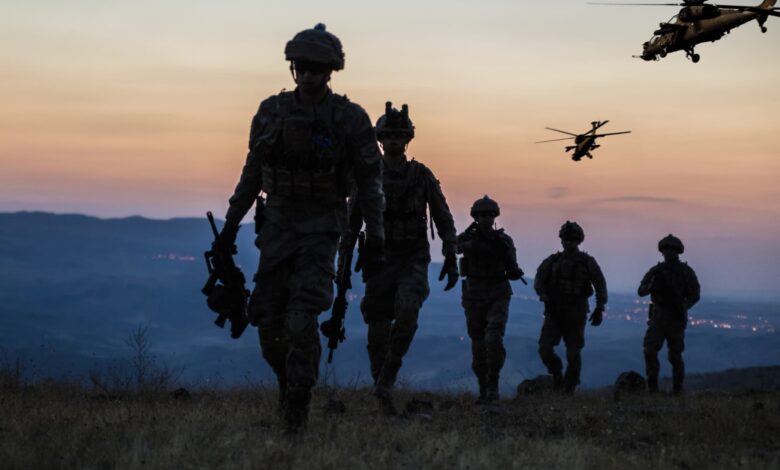
Guvendemir | E+ | Getty Images
A surge of defense technology startups in Silicon Valley is attracting billions in investments and reshaping America’s national security landscape.
Among the emerging companies challenging traditional defense contractors like Lockheed Martin and Northrop Grumman is Anduril Industries, recently valued at $30.5 billion after its latest funding round.
“There’s a growing amount of funding going to what we call the ‘neoprimes’,” said Jameson Darby, co-founder of MilVet Angels, an investment syndicate. “While still a small portion of the overall budget, the trend is very positive.”
Other notable startups disrupting the defense industry include SpaceX and Palantir Technologies, according to Darby, who is also involved with the U.S. Department of Defense’s Defense Innovation Unit.
Unlike traditional contractors, these startups are agile, tech-focused, and software-driven, addressing critical technology gaps crucial for national security, as noted by Ernestine Fu Mak, co-founder of MVA and Brave Capital.
Venture funding for U.S.-based defense startups reached approximately $38 billion in the first half of 2025 and could exceed previous records if the trend continues, as reported by JPMorgan.
‘The battlefield is changing’
As global warfare dynamics evolve, the U.S. Department of Defense has identified key technologies crucial for national security, including hypersonics, energy resilience, space tech, integrated sensing, and cybersecurity.
“The focus has shifted to deterring and competing with adversaries in high-tech, multi-domain conflicts,” noted Mak. “The battlefield is evolving, requiring new technologies as warfare expands to cyber and space domains.”
The battlefield is changing and new technologies are needed… warfare no longer being limited to land, sea, air. There’s also cyber and space domains that have become contested.
Ernestine Fu Mak
Co-founder, MilVet Angels
Today’s defense startups are not just developing weapons but also dual-use technologies with commercial applications, such as AI and autonomy, which are also valuable in military contexts.
Government support for these technologies has provided a strategic roadmap for investors and entrepreneurs, driving innovation in defense tech.
The ‘new guard’
MVA, a syndicate backing defense tech startups, emerged from stealth mode after backing leading companies in the sector. Their diverse members include tech founders, financiers, military leaders, and intelligence officials.
Together, they have invested in companies like Anduril Industries, Shield AI, Hermeus, Ursa Major, and Aetherflux.
Mak emphasized the need for a collaborative approach in modern national security, blending expertise from both warriors and innovators.
As new technologies reshape global battlefields, the focus remains on deterrence and peace, rather than conflict initiation, aligning with national security objectives.
following sentence:
“His job was to ensure that all safety protocols were followed during the experiment.”
He was responsible for ensuring that all safety protocols were adhered to during the experiment.