Solomon, Dimon, Pick weigh in on the state of the economy
America’s top financial services executives are raising concerns about the economy, with signs of “softening” or “weakening” becoming more apparent. Ahead of the Federal Reserve’s upcoming decision and with the U.S. Bureau of Labor Statistics revising job numbers lower, CEOs are speaking out about the current state of the economy.
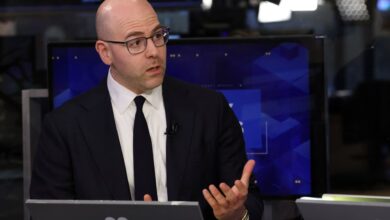
In a recent CNBC interview, Goldman Sachs CEO David Solomon acknowledged that while the economy is still moving forward, there are indications that a shift may be on the horizon. He mentioned that several CEOs have been discussing a softening economy and pointed to job data that suggests a slowdown.
The Bureau of Labor Statistics released a preliminary report this week, revising nonfarm payrolls data for the previous year, showing a significant decrease of 911,000 from initial estimates. This revision, the largest in over 20 years, has added to growing concerns about the economy. President Donald Trump has also criticized the BLS, raising questions about its data collection methods.
Solomon highlighted the impact of tariffs on economic growth and mentioned that there is still work to be done with current inflation levels. He predicted a slight adjustment in the policy rate as the economy moves into fall, including a potential 25-basis point cut by the Federal Reserve in the upcoming meeting.
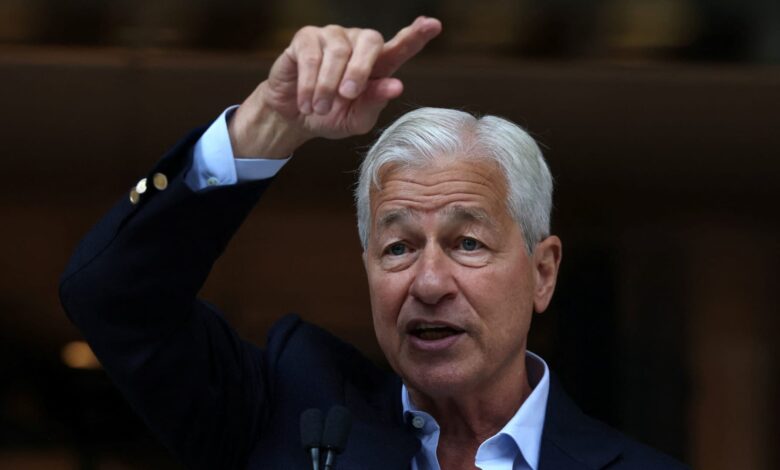
JPMorgan Chase CEO Jamie Dimon also weighed in, stating his belief that the Fed will likely lower interest rates at the next meeting. He expressed concerns about the slowing economy, but emphasized the need to wait and see how the situation unfolds.
Wells Fargo CEO Charles Scharf noted a divide between higher-income and lower-income consumers, with the latter facing financial struggles. He echoed concerns about the weakening economy and the disparities among American taxpayers.
Morgan Stanley CEO Ted Pick discussed the resilience of American CEOs and CFOs in navigating uncertain economic conditions. He acknowledged the challenges posed by policy uncertainty but expressed optimism about potential improvements.
Barclays CEO C.S. Venkatakrishnan highlighted the softness in the labor market as a factor influencing the Fed’s decision to cut rates. Traders are also anticipating a rate cut, with some expecting a deeper cut of 50 basis points.
PNC Financial Services CEO Bill Demchak pointed to underlying pressures in the economy, such as hiring challenges, labor shortages, and wage pressure. He supported the BLS’ revised report and anticipated further rate cuts by the Fed.
Overall, these executives are sounding the alarm about the economy, urging caution and preparedness for potential challenges ahead. As the Fed prepares to make its decision, the financial industry is bracing for a possible downturn while keeping an eye on long-term sustainability.