Son turns on his lawmaker dad for using ‘Epstein loophole’ to avoid jail for allegedly touching kids: ‘Inexplicable trauma’
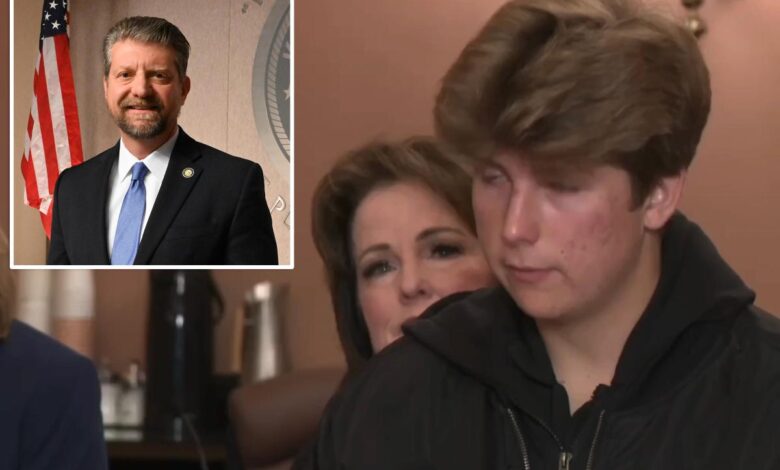
The son of a disgraced lawmaker, Robert Scrivner, has spoken out against his father for exploiting the “Epstein loophole” to avoid jail time for allegedly molesting children. Zack Scrivner, a former Kern County Supervisor, used California’s mental health diversion law to escape incarceration, sparking outrage and calls for legislative action.
During a press conference led by State Senator Shannon Grove, Robert Scrivner condemned the flawed system that allowed his father to evade punishment. He shared his family’s traumatic experience, revealing that his father had assaulted him and his siblings but was granted mental health diversion instead of facing the consequences of his actions.
In response to the controversy surrounding Zack Scrivner’s case, Senator Grove introduced Senate Bill 1373, which aims to restrict the eligibility of certain crimes for mental health diversion. The proposed bill would prevent individuals who commit violent offenses, such as child abuse, assault resulting in death, and domestic violence, from exploiting the loophole to avoid accountability.
Zack Scrivner was initially charged with child abuse and possession of assault weapons, but he managed to avoid more severe charges related to child sexual assault by entering the mental health diversion program. His estranged wife, Christina, also spoke out in support of Senator Grove’s bill, emphasizing the need for a reformed system that prioritizes justice and protection for victims.
Under California law, mental health diversion allows defendants with diagnosed mental health disorders to receive treatment instead of serving jail time. However, critics have raised concerns about the misuse of this provision, dubbing it the “Epstein loophole” after infamous sex offender Jeffrey Epstein.
Assemblymember Dr. Jasmeet Bains, a specialist in family and addiction medicine, acknowledged the value of mental health diversion but emphasized that it should not be used as a means to evade punishment for serious offenses like child abuse. Bains called for the closure of the loophole to prevent further exploitation by individuals seeking to escape accountability for their crimes.
The Scrivner family’s brave decision to speak out against the misuse of the mental health diversion law has shed light on the need for legislative reforms to ensure that justice is served and victims are protected. Senator Grove’s proposed bill represents a step towards addressing the loopholes in the current system and holding perpetrators accountable for their actions.