South African Utility Company Considers Cheap Power For Bitcoin Miners
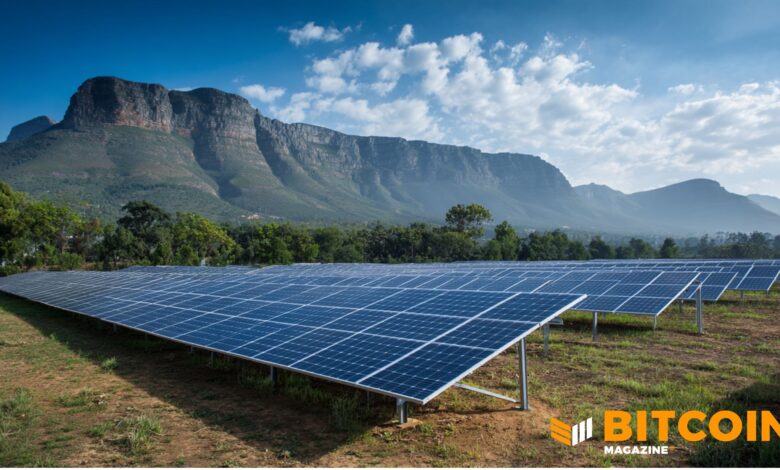
Exploring New Opportunities: Eskom Considers Selling Excess Daytime Electricity to Bitcoin Miners
Eskom, the South African electricity public utility, is in the process of examining potential plans to sell surplus daytime electricity to Bitcoin mining companies. This initiative comes as rooftop solar installations in the country continue to reduce grid demand during daylight hours.
During his speech at the Biznews Conference 2026 in Hermanus, Eskom chairman Mteto Nyati revealed that the utility is currently exploring ways to monetize the excess power generated in the middle of the day, as reported by local sources.
With the rapid uptake of rooftop solar systems in South Africa, there has been a significant shift in the country’s electricity demand profile. Many households and businesses now generate their own power during daylight hours, leading to Eskom having unused capacity once solar panels start producing electricity.
Nyati highlighted that this pattern has become increasingly predictable. Demand peaks in the early morning as households get ready for the day and businesses open. As solar generation increases later in the day, grid demand decreases, resulting in surplus electricity for Eskom.
Eskom is now exploring innovative approaches to utilize this excess capacity. One potential solution being considered is offering discounted electricity to Bitcoin mining companies operating in South Africa. The Bitcoin mining sector operates large data centers that require substantial energy for computations to secure the Bitcoin network.
Nyati emphasized that industries like Bitcoin mining are contributing to the global surge in electricity demand. He noted that while this technology was non-existent two decades ago, it now represents a significant source of power consumption.
By selling excess electricity to miners, Eskom could generate revenue from power that would otherwise go unused during solar-heavy hours.
Seizing Opportunities in South African Bitcoin Mining
This concept aligns with previous statements made by Eskom chief executive Dan Marokane, who mentioned that the utility is exploring opportunities associated with Bitcoin mining, as well as artificial intelligence infrastructure and large-scale data centers.
These sectors require consistent and substantial electricity supplies, presenting new demand opportunities for Eskom’s generation fleet.
Nyati positioned this initiative as part of a broader strategy to adapt to the structural changes in South Africa’s electricity market. The power sector in the country is opening up to private investment, enabling independent companies to construct generation capacity and compete in electricity distribution. Meanwhile, the increasing adoption of rooftop solar systems is redirecting demand away from the national grid.
To remain competitive in this evolving landscape, Nyati stressed the importance of Eskom adapting and implementing new revenue strategies. The utility is also focused on cost reductions, with plans to cut approximately R112 billion in expenses over the next five years.
These cost-saving measures could potentially lead to lower electricity prices for households and energy-intensive industries like mining and smelting.
Despite the changes in the energy sector, Nyati emphasized the critical role of Eskom in South Africa. He stated that Eskom’s coal and nuclear power stations provide the essential base-load electricity necessary to support industrial growth and economic development.
The proposal to offer discounted electricity to Bitcoin miners exemplifies how utilities are starting to view flexible energy consumers as tools for balancing supply and demand in a transforming power system.