Spectacular Myanmar lake festival shines amid political upheaval, natural disasters
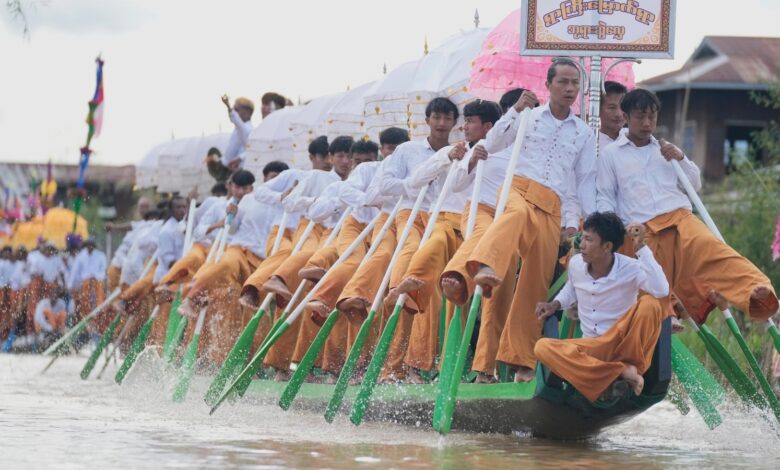
INLE LAKE, Myanmar — Myanmar’s Phaung Daw Oo Pagoda Festival, a significant Buddhist event and popular tourist attraction, has faced challenges that have dampened its celebratory atmosphere. Issues such as the impact of the COVID-19 pandemic, political unrest, and natural disasters, including a recent devastating earthquake, have affected the festival.
Despite these challenges, crowds gathered this week to partake in the festivities, witnessing the grand gold-gilded barge at the heart of the celebration. The barge, adorned with a golden image of the mythical Karaweik bird, carries four Buddha statues to 21 villages around the lake for devotees to pay their respects.
The picturesque festival spans over two weeks on Inle Lake in southern Shan state, a popular tourist destination located about 420 kilometers northeast of Yangon.
The festival was disrupted in 2020 due to the pandemic and was suspended again in 2021 following the military coup that led to civil unrest across the country. It is set to resume in 2023 after being canceled last year due to widespread flooding.
This year’s celebration was overshadowed by a powerful 7.7 magnitude earthquake on March 28, resulting in significant casualties and destruction. Inle Lake, although not the epicenter of the quake, suffered extensive damage with many houses collapsing into the water.
Local communities around the lake have begun rebuilding their homes in the traditional style, although challenges remain due to a shortage of skilled craftsmen and the urgency of repairs.
Nyi Nyi Zaw, an ethnic Intha resident, highlighted the series of hardships faced by the community, including the decline in tourism, political instability, and natural disasters. Despite these difficulties, the locals continue to uphold the festival as a cherished tradition passed down through generations.
Ma Win, a traditional textile seller from Inle Lake, expressed the community’s commitment to the festival despite economic hardships, emphasizing the importance of honoring the long-standing tradition.