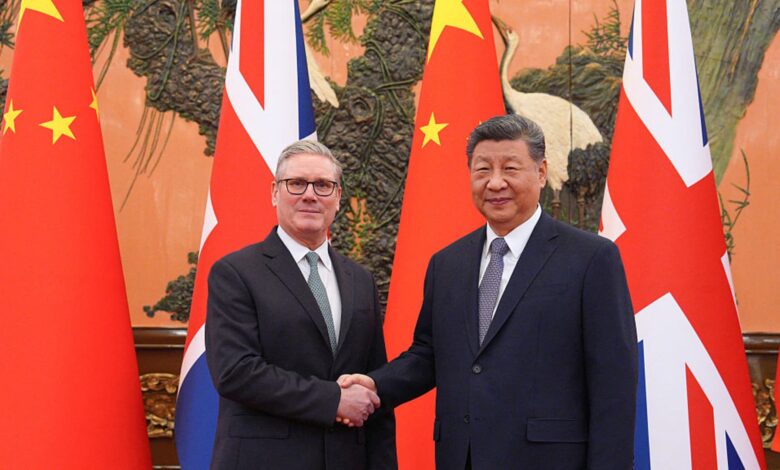
Starmer Carney Orsi visit Beijing China to strike deals.jpeg
The increased engagement between China and other countries comes at a time of shifting global dynamics, with the U.S.-China relationship at the center of much of the geopolitical tension. While the U.S. remains an important player in the global economy, China’s rise as a major economic power has led to increased interest from other nations in fostering closer ties with Beijing.
As Chinese President Xi Jinping continues to position China as a key player on the world stage, countries are recognizing the importance of maintaining strong ties with the Asian giant. Business deals and economic partnerships are being forged, signaling a new era of collaboration and cooperation between China and the rest of the world.
With the upcoming APEC forum and the potential for further high-level meetings between global leaders, the world is watching closely to see how the relationship between the U.S. and China, as well as China’s relationships with other countries, will develop in the coming months and years.
As countries navigate the complex web of international relations and economic partnerships, the role of China in the global economy is becoming increasingly prominent. The visits by national leaders to Beijing signal a new chapter in international diplomacy and economic cooperation, with China at the center of the action.
Visiting leaders face a delicate balancing act when it comes to navigating their relationships with China. This was evident recently when President Trump issued a threat of 100% tariffs on Canada if they were to strike a deal with China. He also warned Britain about the risks of doing business with China, citing it as “very dangerous.” French President Emmanuel Macron also joined in, issuing threats of tariffs against China following his state visit in December.
According to Jack Lee, a foreign affairs analyst at consultancy China Macro Group, these visits serve as a hedging strategy for leaders. They aim to keep the lines of communication open with China in order to maintain strategic flexibility. However, Lee emphasized that trust between the EU and China is still limited.
The dynamics between Western leaders and China are complex. On one hand, there is a recognition of the economic opportunities that China presents. On the other hand, there are concerns about issues such as human rights violations, trade imbalances, and national security risks.
As leaders navigate these complexities, it is crucial for them to consider the implications of their interactions with China. By maintaining open channels of communication while also being vigilant about their own interests, leaders can strive to strike a balance that serves their own countries’ interests.
In conclusion, the relationship between visiting leaders and China is multifaceted. By carefully managing their interactions and decisions, leaders can work towards a more stable and mutually beneficial relationship with China.