Stocks pare early losses as Trump says U.S. will offer insurance for ships in the Persian Gulf
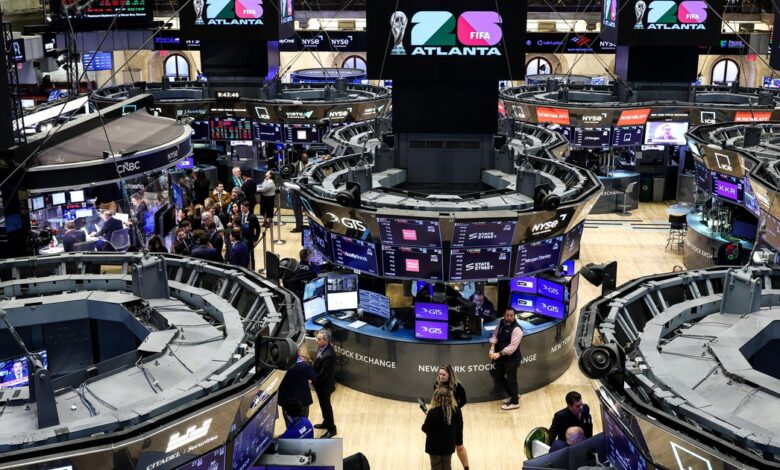
Stocks rebounded on Tuesday after initially dropping due to concerns about the economic impact of the Iran war and its potential effects on global oil supplies. The Dow Jones Industrial Average closed at 48,501, down 0.8%, while the S&P 500 fell 0.9% to 6,817, and the Nasdaq Composite dropped 1%. Earlier in the day, the Dow experienced its biggest decline since April 2025, shedding over 1,200 points.
Investor sentiment was lifted later in the day when President Trump announced on Truth Social that the U.S. would provide “political risk insurance” at a reasonable price to ships traveling through the Gulf. He also assured that the U.S. Navy would escort tankers through the Strait of Hormuz if necessary. This news led to a decrease in oil prices as fears of a major global supply shock eased.
The uncertainty surrounding the duration of the Iran conflict and its impact on energy markets has caused investors to become jittery. Questions about the leadership vacuum in Iran following the assassination of Ayatollah Ali Khamenei and other senior officials have added to the market’s unease.
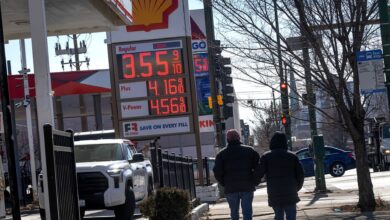
The world’s oil supply is a major concern for Wall Street as tanker traffic in the Strait of Hormuz stalls. Roughly 20% of the global oil supply flows through this waterway, connecting the Persian Gulf to the Gulf of Oman and the Arabian Sea. The price of Brent crude rose 4.5% to $81.13 per barrel, while Benchmark U.S. crude increased by 4.2% to $74.22 per barrel.
The rise in Treasury yields to 4.06% indicates that investors are preparing for potential inflation due to oil supply constraints. A long-term increase in oil prices to $90-$100 per barrel could further escalate U.S. inflationary pressures. This could also impact fixed-mortgage rates, which typically follow the bond market’s direction and may negatively affect the housing market.
To address the reduction in Iranian oil exports, eight OPEC+ countries have pledged to boost crude production. However, this additional supply of 206,000 barrels per day may not be sufficient to offset a significant or prolonged disruption in the Strait of Hormuz.
In conclusion, the economic risks posed by the Iran war and its impact on global oil supplies have created uncertainty in financial markets. Investors are closely monitoring the situation and its implications for inflation, oil prices, and global economic stability.