Stress alters metabolic hormone with health consequences, study shows
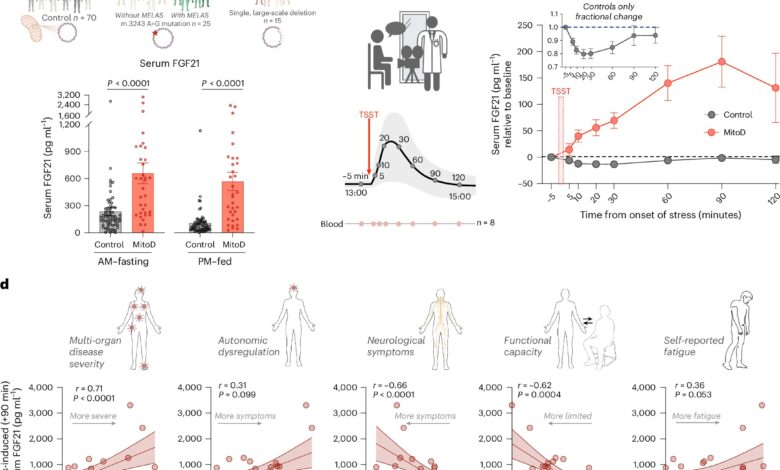
A groundbreaking study conducted by researchers at Columbia University Mailman School of Public Health, Columbia University Irving Medical Center, and the Butler Columbia Aging Center has revealed a new role for the metabolic hormone FGF21 as a stress hormone. This discovery sheds light on how psychological stress can lead to metabolic dysregulation and contribute to the development of physical diseases. The findings of this study, published in Nature Metabolism, highlight the potential link between mental states and metabolic responses, ultimately impacting overall health and biological aging.
FGF21, a fibroblast growth factor that has been extensively studied for its involvement in metabolism, glucose regulation, and diabetes, has now been shown to respond acutely to psychological stress. This study provides the first human evidence that FGF21 serves as a hormonal bridge connecting the mind and body, expanding the understanding of the neuroendocrine framework beyond traditional stress hormones.
The research tracked hormonal changes following acute psychological stress in both healthy individuals and patients with mitochondrial disease, a group of genetic disorders that affect cellular energy transformation. In healthy participants, FGF21 levels initially decreased after exposure to stress and returned to baseline within 90 minutes, demonstrating a well-regulated hormonal response. Conversely, individuals with mitochondrial dysfunction showed an increase in FGF21 levels following stress, peaking at 90 minutes, indicating a distinct stress response linked to mitochondrial biology.
The study also examined data from over 20,000 participants in the UK Biobank and the ongoing MiSBIE study (Mitochondrial Stress and Biomarkers in Emotion), revealing that psychosocial factors such as loneliness, childhood neglect, and relationship breakdowns were associated with higher FGF21 levels. On the other hand, individuals with strong social ties and emotional well-being had lower levels of FGF21, underscoring the impact of social and emotional experiences on metabolic biology.
The researchers believe that FGF21 could serve as a reliable biomarker for monitoring how psychological and social environments influence metabolic biology and the clinical course of mitochondrial diseases. By identifying FGF21 as a biological mediator of psychological stress, this study opens up new avenues for research and clinical monitoring in the field of precision mental health.
Overall, this study highlights the interconnectedness of mind and body, emphasizing how our lived experiences, relationships, and resilience can shape our biology. FGF21, once solely studied in the context of metabolic diseases, now offers valuable insights into the aging process, adaptation, and response to stress. This research represents an exciting advancement in the understanding of human health and sets the stage for future investigations into the complex interplay between mental and physical well-being.