Students rally in Dhaka, pledge to build a ‘new Bangladesh’
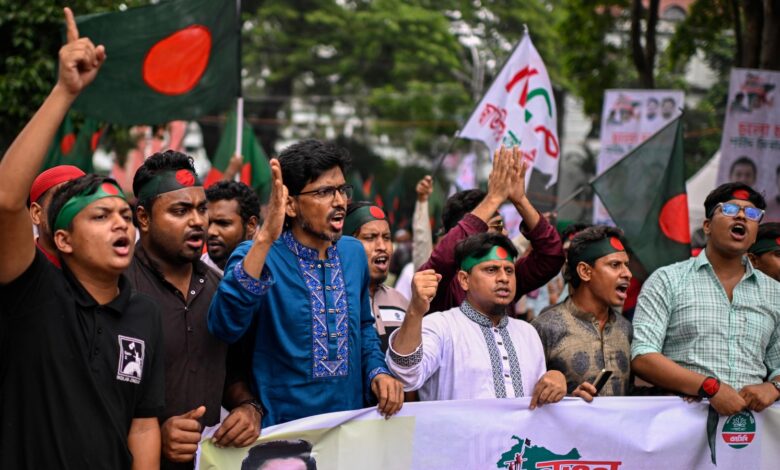
DHAKA, Bangladesh — DHAKA, Bangladesh (AP) — A group of students who were at the forefront of an anti-government movement that led to the ousting of former Prime Minister Sheikh Hasina have now formed a new political party in Bangladesh. The party held a rally in the capital city, Dhaka, where they pledged to work towards building a new future for the country amidst political uncertainty surrounding the upcoming election.
Simultaneously, supporters of the student wing of the Bangladesh Nationalist Party (BNP) also gathered for a rally in Dhaka, vowing to strive for the establishment of democracy following Hasina’s departure.
These rallies occurred just two days before the anniversary of Hasina’s fall, during the tenure of the current interim government led by Nobel Peace Prize laureate Muhammad Yunus.
The current political landscape in Bangladesh has seen significant changes since Hasina’s removal from power. With the Awami League disbanded and political divisions deepening, the country finds itself at a critical juncture. The emergence of new political entities and unresolved issues regarding the timing of the upcoming election raise concerns about the direction in which Bangladesh is headed.
During the rally of the student-led National Citizen Party, held in front of the Shaheed Minar national monument in Dhaka, party leader Nahid Islam outlined a 24-point agenda for a “new Bangladesh.” He emphasized the need for a new constitution to replace the one adopted in 1972, which was crafted under the leadership of independence hero Sheikh Mujibur Rahman, Hasina’s father.
Meanwhile, supporters of the Bangladesh Nationalist Party’s student wing also gathered in the city, with acting chairman Tarique Rahman urging his followers to engage young voters in the upcoming election. Rahman, who has been in exile in London since 2008, participated in the rally online and is expected to return to Bangladesh before the elections.
Since Hasina’s departure, Bangladesh has been grappling with challenges, and the interim government has faced criticism for its handling of issues such as mob violence and human rights violations.