Supreme Court rules most Trump tariffs illegal in major setback for economic agenda
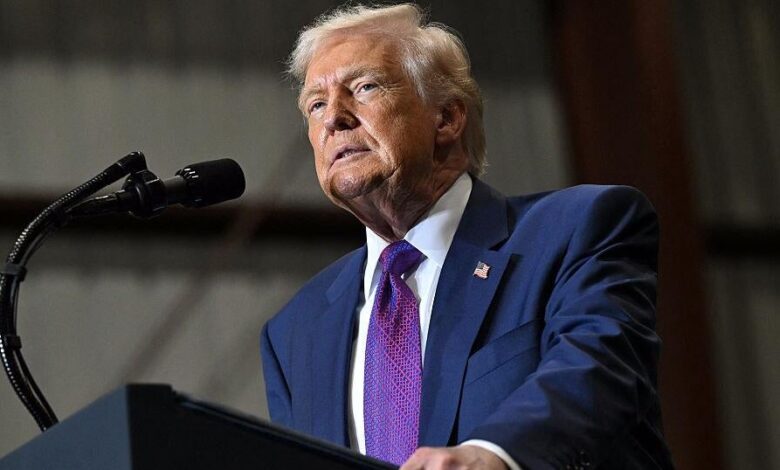
Supreme Court Rules Against President Trump’s Authority to Impose Tariffs
In a landmark decision, the Supreme Court ruled on Friday that President Trump does not have the authority to unilaterally impose sweeping tariffs on nearly every country under the International Emergency Economic Powers Act (IEEPA). This ruling dealt a significant blow to the president’s signature economic policy, marking the most significant loss of his second term so far.
Chief Justice John Roberts delivered the opinion for the court in a 6-3 decision, with Justices Brett Kavanaugh, Clarence Thomas, and Samuel Alito dissenting. The court held that IEEPA does not authorize the president to impose tariffs, as the law contains no reference to tariffs or duties. This decision marked the first time the Supreme Court evaluated the legal merits of one of President Trump’s second-term policies.
During remarks from the White House following the ruling, President Trump expressed his disappointment and criticized the justices in the majority. He called them a “disgrace to our nation” and thanked the dissenting justices for their strength and wisdom. President Trump announced a new 10% global tariff using Section 122 of the Trade Act of 1974 to address balance-of-payment deficits.
The court upheld a ruling from the U.S. Court of Appeals for the Federal Circuit that deemed President Trump’s tariffs illegal. The majority justices agreed that IEEPA does not authorize the imposition of tariffs, but differed in their reasoning. Roberts, Gorsuch, and Barrett emphasized the need for clear congressional authorization for broad assertions of power by the executive branch.
Justices Kagan, Sotomayor, and Jackson, the liberal justices in the majority, focused on the ordinary interpretation of the statute to strike down the tariffs. In a dissenting opinion, Kavanaugh argued that tariffs are a traditional tool to regulate importation and are lawful under the IEEPA.
While this ruling limits the president’s ability to use IEEPA to set duties, it does not prevent him from imposing tariffs under different trade authorities. President Trump has already utilized other laws to impose tariffs on various imports as part of his economic agenda. Tariffs have been a centerpiece of his second-term policies, used to negotiate more favorable trade deals for the U.S.
Overall, the Supreme Court’s decision represents a significant check on the president’s authority to unilaterally impose tariffs, emphasizing the importance of congressional authorization in matters of economic significance. household paid an additional $1,000 due to the tariffs in 2025, which represented a significant increase in costs for American consumers.
Boosting Domestic Manufacturing
Despite the court’s ruling, President Trump and his administration have argued that the tariffs are essential for boosting domestic manufacturing and protecting American jobs. They have maintained that the tariffs are necessary to address trade imbalances and protect national security interests.
The administration has pointed to the tariffs as a key factor in negotiating new trade agreements with multiple countries and blocs, including the European Union. They believe that the tariffs have given the U.S. leverage in trade negotiations and have helped bring manufacturing jobs back to American soil.
President Trump has often touted his America First agenda, which prioritizes American workers and businesses. He has argued that the tariffs are a crucial tool in leveling the playing field for American manufacturers and preventing unfair trade practices from foreign competitors.
Critics of the tariffs, however, argue that they have led to increased costs for American consumers and have strained relations with key trading partners. They believe that the tariffs have hurt American businesses that rely on imports for their operations and have disrupted global supply chains.
Despite the controversy surrounding the tariffs, President Trump has remained steadfast in his support for them. He has vowed to continue fighting for American workers and businesses by using tariffs as a tool to protect domestic manufacturing and ensure a level playing field in the global marketplace.
As the court’s decision reverberates through the business community and political circles, the debate over the future of tariffs and their impact on domestic manufacturing is likely to continue. President Trump’s America First agenda will undoubtedly remain a central focus as the administration seeks to navigate the complex landscape of global trade and economic policy.