Supreme Court ruling against Trump tariffs will offer relief, business owners say
The recent Supreme Court ruling striking down the sweeping U.S. tariffs imposed by President Trump under the International Emergency Economic Powers Act (IEEPA) has sparked a mixed reaction among business owners. While some see this ruling as a potential relief that could lower their costs and lead to refunds, others have expressed concerns about the implications it may have on their businesses.
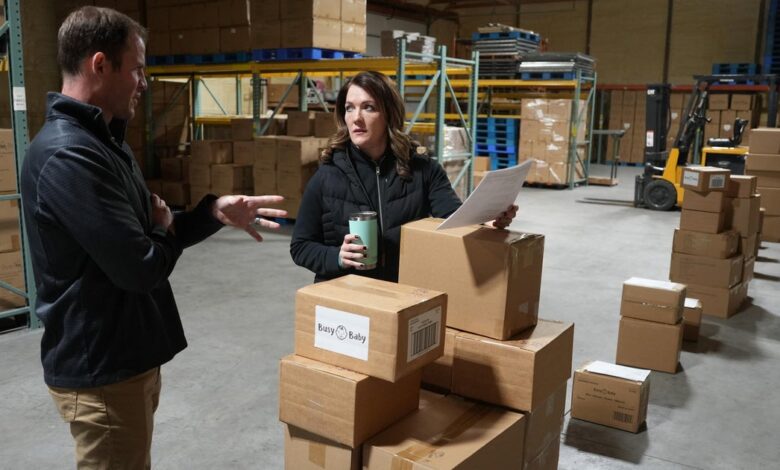
One such business owner, Beth Benike, co-founder of Busy Baby, a company that produces mealtime accessories for babies, had been grappling with the uncertainty surrounding the legality of the IEEPA tariffs. The ruling has now allowed her to resume imports from China, where her products are manufactured, potentially saving her from paying an additional $48,000 in tariffs. Similarly, Rachel Rozner, owner of Elden Street Tea Shop in Reston, Virginia, hopes that the ruling will alleviate the stress of uncertain pricing and availability of products sourced from countries like China, India, Japan, and Nepal.
On the other hand, Drew Greenblatt, owner of Maryland manufacturer Marlin Steel, supported the higher tariffs imposed by Trump, citing a level playing field that allowed his company to compete with overseas steelmakers. However, with the average U.S. tariff rate set to drop to the 7% range following the scrapping of the IEEPA duties, businesses like Marlin Steel may need to reassess their competitive strategies.
The potential refunds resulting from the Supreme Court ruling could amount to billions of dollars, with economists estimating that businesses could be eligible for refunds of up to $150 billion. However, there are concerns about the process and timeline for distributing these refunds, with experts suggesting that legal challenges could delay the refunds for several months.
Overall, the Supreme Court ruling on the IEEPA tariffs has brought both relief and uncertainty for business owners across various industries. While some see it as an opportunity to lower costs and potentially receive refunds, others are wary of the potential challenges that may arise in the process of refund distribution. As businesses navigate these changes, the impact of the ruling on the broader economy remains to be seen. The recent Supreme Court decision regarding the IEEPA tariffs has sparked concerns among many small businesses and advocacy groups. We Pay the Tariffs, a group representing 800 small businesses, expressed worries that the uneven distribution of refunds and the potential for abuse of the system could have detrimental effects on businesses.
According to the group’s executive director, Dan Anthony, small businesses have been struggling to cope with the financial burden imposed by the tariffs. Many have been forced to take out loans and halt hiring in order to stay afloat. The group is calling on the White House to issue prompt and full refunds to those affected by the tariffs.
In response to the Supreme Court ruling, President Trump announced the implementation of new tariffs under Section 122 of the 1974 Trade Act. Initially set at 10%, the tariffs were quickly raised to 15% the following day. Additionally, the administration plans to expand existing tariffs under Section 301 and Section 232 of trade legislation.
While these new tariffs may provide some relief to businesses, consumers may not see a decrease in prices. Companies like Walmart have already announced price hikes due to import duties, indicating that any potential savings from the removal of IEEPA tariffs may not be passed on to consumers.
There are concerns that the process of issuing refunds to businesses could be lengthy and complex, potentially taking years to complete. Even if refunds are eventually distributed, there is skepticism about whether companies will prioritize passing on those savings to consumers.
Overall, the uncertainty surrounding the transition from IEEPA tariffs to new import duties raises questions about the future impact on small businesses and consumers. It remains to be seen how the administration’s tariff policies will play out in the coming months and how businesses will navigate these changes.