Supreme Court tariff ruling boosts China’s leverage before Trump-Xi summit
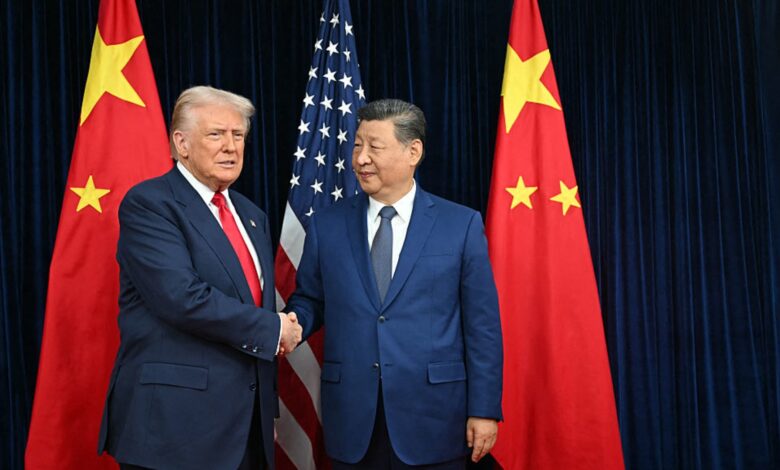
The recent ruling by the U.S. Supreme Court striking down President Donald Trump’s tariffs has shifted the balance of power in favor of China as the two nations gear up for a crucial summit between Trump and Chinese President Xi Jinping. This ruling, which deemed Trump’s use of the International Emergency Economic Powers Act (IEEPA) to implement broad tariffs as wrongful, has significantly weakened Trump’s bargaining position as he prepares to visit China in April.
Wendy Cutler, a senior vice president at the Asia Society Policy Institute and former U.S. trade representative, noted that this ruling has clipped Trump’s wings on his signature economic policy. Trump’s upcoming visit to China, scheduled from March 31 to April 2, will mark the first trip by an American president since his last visit in 2017. Xi is also expected to reciprocate with a state visit to Washington later in the year.
Analysts predict that the ruling could impact efforts to extend a trade truce negotiated last year and complicate Trump’s demands for increased Chinese purchases of U.S. goods like soybeans, Boeing aircraft, and energy exports. Dan Wang, China director of Eurasia Group, highlighted that the ruling limits Trump’s ability to impose tariffs at will, reducing pressure on Beijing and giving China leverage in negotiations.
On the other hand, Beijing could leverage this opportunity to push Washington to ease technology export controls, remove certain Chinese entities from U.S. sanctions lists, and reduce arms sales to Taiwan. Xinbo Wu, director at Fudan University’s Center for American Studies, believes that the ruling strengthens China’s negotiating position with the U.S.
Although Trump’s tariff authority has been somewhat diminished, experts suggest that he could still use non-tariff measures like technology controls and sanctions against Chinese entities as negotiating tools. Despite the ruling, the U.S. stance on issues like Taiwan, the South China Sea disputes, and security ties with Japan and Korea still largely rest with Trump.
In response to the Supreme Court ruling, Trump has imposed a 10% global tariff under Section 122 of the Trade Act of 1974, with plans to raise it to 15%. This move comes after the court invalidated his previous tariff implementation. The White House indicated that the original 10% tariffs would go into effect on February 24, which could lead to a net reduction in U.S. tariffs on China.
While the ruling may impact broader U.S.-China relations, it is unlikely to significantly alter the dynamics between the two nations, given the existing tensions beyond tariffs. China has expressed its commitment to safeguarding its interests in light of the U.S.’s use of trade investigations to maintain higher tariffs. As both countries navigate these challenges, the upcoming summit between Trump and Xi remains crucial in determining the future of their economic relations. The upcoming U.S.-China summit in April is expected to yield limited results, according to experts. While there may be an extension of the ceasefire and potential sales of U.S. products, progress on more complex issues such as export controls and China’s economic restructuring is unlikely.
In a recent phone call between President Xi Jinping and President Trump, Xi emphasized that Taiwan is the "most important issue" in U.S.-China relations, overshadowing the trade deals that were highlighted by Trump. This indicates that the upcoming talks between the two leaders may have more political implications than economic ones.
Minxin Pei, a professor of political science at Claremont McKenna College, suggests that Xi may be willing to offer Trump a better trade deal in exchange for a statement on Taiwan that Beijing can spin as a victory. This strategic move could shift the focus of the negotiations and potentially lead to a more favorable outcome for both parties.
Overall, the summit is expected to be a delicate balancing act between economic interests and political considerations. It remains to be seen how the discussions will unfold and what agreements, if any, will be reached. Stay tuned for updates on this developing story.
Key Points:
- Limited results expected from upcoming U.S.-China summit in April
- Taiwan emerges as a key issue in U.S.-China relations
- Political considerations may overshadow economic discussions
- Potential for a trade-off between trade deals and statements on Taiwan
This article was written with contributions from CNBC’s Elaine Yu.