Synchron’s $200 Million Signals Revolution By Evolution
Synchron, a pioneering company in the field of brain-computer interface technology, has been making significant strides since its inception. In 2019, Synchron was two years into a $10 million series A funding round when they announced their first human implant. Founder and CEO Thomas Oxley expressed his vision for the future of the industry, stating, “This industry is going to unlock the brain’s computational power in ways that are hard to imagine now. This is just the beginning.”
Fast forward to last week, and Synchron has announced a $200 million Series D funding round to advance their pivotal clinical trial and expand to San Diego. This expansion will focus on developing their next-generation brain-computer interface system. I had the opportunity to speak with Oxley to gain insight into Synchron’s future plans and the evolution of brain-computer interface technology.
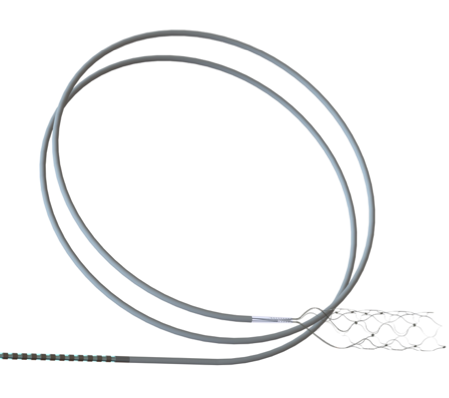
Taking a trip down memory lane, we see Synchron’s progression from 2019 to the present day. In 2020, the FDA granted Synchron Breakthrough Designation for their Stentrode device. This was followed by a $40 million Series B round led by Khosla Ventures in 2021. The year 2022 saw Synchron take significant steps towards establishing BCI as more than just a concept, with the initiation of early feasibility studies and a $75 million Series C funding round.
Over the past couple of years, Synchron has focused on publishing safety results, expanding their executive team, and forming strategic partnerships with industry giants like Apple, Amazon, OpenAI, and NVIDIA. Their efforts have laid the groundwork for the advancement of brain-computer interface technology.
The recent Series D funding round has brought Synchron’s total funding to $345 million, with a reported valuation of around a billion dollars. New investors in this round include Double Point Ventures, the Australian National Reconstruction Fund, T.Rx Capital, Qatar Investment Authority, K5 Global, Protocol Labs, and IQT. Oxley expressed gratitude for the support of investors who are committed to the long-term success of Synchron.
With a new office in San Diego, Synchron is gearing up to develop their next-generation brain-computer interface system. Industry veterans Andy Rasdal and Mark Brister will lead this effort, focusing on creating a minimally invasive, high-channel count, whole-brain interface. The company plans to set up a vertically integrated manufacturing operation in Southern California to support this initiative.
Looking ahead, Oxley envisions a future where Synchron continues to innovate and iterate on their BCI technology. He emphasized the importance of access at scale, brain coverage without disrupting local architecture, and leveraging data to enhance functionality. Synchron is incubating a new startup within the company to drive advancements in the field of brain-computer interfaces.
In a rapidly evolving industry landscape, Oxley highlighted the need for sustainable growth in BCI funding and the emergence of new trends in neural implants and biohybrid interfaces. He remains optimistic about the future of neuroAI and the potential for multimodal data to drive advancements in cognitive applications.
As Synchron prepares to enter the commercial market, Oxley and his team are doubling down on their commitment to innovation and long-term success. By closing the Series D funding round, Synchron is investing in their future while solidifying their position as a leader in the field of brain-computer interface technology.