Tesla robotaxis involved in 14 crashes since launching in Austin, Texas, in 2025
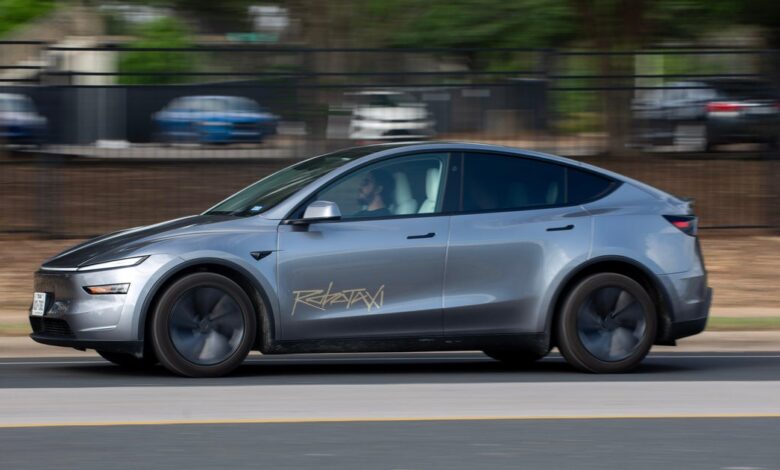
Tesla’s robotaxis have been involved in a total of 14 crashes in Austin, Texas, since the service was launched in the city last summer. Data disclosed by the electric vehicle automaker to federal safety regulators revealed that the five most recent incidents occurred in December and January, with no reported injuries but resulting in property damage as the robotaxis collided with either another vehicle or a fixed object. Two other incidents in July and October last year did result in minor injuries.
The National Highway Traffic Safety Administration (NHTSA) reported these incidents and highlighted the requirement for auto manufacturers like Tesla to submit crash data for vehicles equipped with Automated Driving Systems. If a safety defect is found, the agency has the authority to take action to remove the vehicles from the road.
Tesla introduced its robotaxi service in Austin in June of 2025 as a pilot, allowing a select group of individuals to ride in a fleet of Model Y Robotaxis. The service expanded to enable other residents in the Texas city to hail a self-driving car using Tesla’s Robotaxi app. However, shortly after the service’s launch, NHTSA initiated an investigation into several incidents where the robotaxis were observed driving erratically, such as driving on the wrong side of the road and braking suddenly.
CEO Elon Musk has indicated Tesla’s commitment to investing more in robotics and autonomous vehicles. During the company’s recent earnings call in January, Musk emphasized Tesla’s focus on autonomy and highlighted the development of the Cybercab, another autonomous vehicle in the works. Tesla plans to launch robotaxis in seven U.S. cities in the first half of 2026 and aims to have the service operational in half of U.S. states by year-end.
While Tesla faces challenges with its robotaxi service, it is not alone in encountering issues with autonomous vehicles. Waymo, owned by Google-parent Alphabet, had to recall over 1,200 driverless cars last year due to faulty software causing crashes into barriers. In a separate incident, a Waymo car struck a child in Santa Monica, Calif., although the technology detected the individual and reduced speed before impact, resulting in minor injuries to the child.
As the autonomous vehicle industry continues to evolve, safety concerns remain at the forefront. Both Tesla and Waymo are navigating challenges in ensuring the safe operation of their self-driving vehicles on public roads. It is crucial for regulators, manufacturers, and developers to work together to address and mitigate risks associated with autonomous driving technology.