Tesla to buy $4.3 billion of LG Energy battery cells made in Michigan
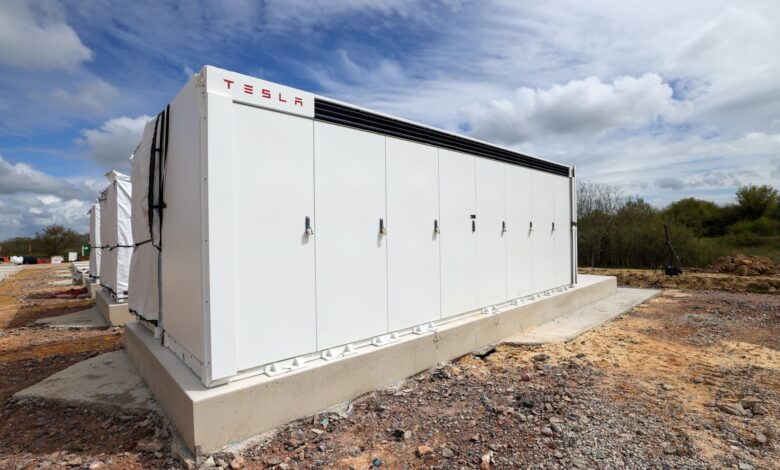
A Tesla Megapack battery at the Harmony Energy Ltd. and Fotowatio Renewable Ventures BV battery energy storage project near Burgess Hill, England, May 11, 2021.
Chris Ratcliffe | Bloomberg | Getty Images
Tesla is strengthening its partnership with LG Energy Solution in South Korea, with a new agreement to purchase $4.3 billion worth of battery cells for energy storage systems to be manufactured in Lansing, Michigan.
The factory, which was originally established as a joint venture between LG and General Motors, is now solely owned by LG following GM’s decision to withdraw from the project in late 2024 as part of its shift away from electric vehicle investments.
While Tesla’s main source of revenue comes from electric vehicles, the company is focusing on its rapidly expanding energy sector due to the increased demand for electricity from data centers. Tesla’s Megapacks are designed to store energy generated from renewable sources like solar and wind, or during non-peak hours, and release it when demand is high.
Tesla currently offers Powerwall backup batteries for residential use alongside its solar installations, as well as larger Megapack and Megablock systems for utility-scale energy storage. The company’s energy segment saw a 27% increase in revenue last year, reaching $12.8 billion, accounting for 13% of total revenue.
Details of the collaboration between Tesla and LG were revealed at the Indo-Pacific Energy Security Summit in Japan, as reported by the U.S. Department of the Interior. The Trump administration announced a total of $56 billion in private sector commitments during the event.
A spokesperson from LG Energy Solution stated that the company will create dedicated production lines at the Lansing facility to fulfill the agreement. LG had previously reconfigured the facility to produce LFP (lithium iron phosphate) prismatic cells, and later secured a $4.3 billion deal with an undisclosed company.
Although GM still maintains a presence near the Lansing battery plant, the company has scaled back its involvement in the electric vehicle market, announcing $7.6 billion in related write-downs.
Tesla’s CEO, Elon Musk, expressed optimism about the future growth of the company’s energy business during the fourth-quarter earnings call in January, foreseeing significant expansion. However, Chief Financial Officer Vaibhav Taneja cautioned about potential margin compression in the energy segment due to increased competition and tariff costs.
Tesla faces competition from companies like BYD in China and climate-tech startups such as Form, which specializes in iron-air batteries, among others.
WATCH: Why the EV factory boom in the U.S. south is suddenly in trouble