Texas redistricting: What’s at stake as Republicans aim to pick up 5 House seats
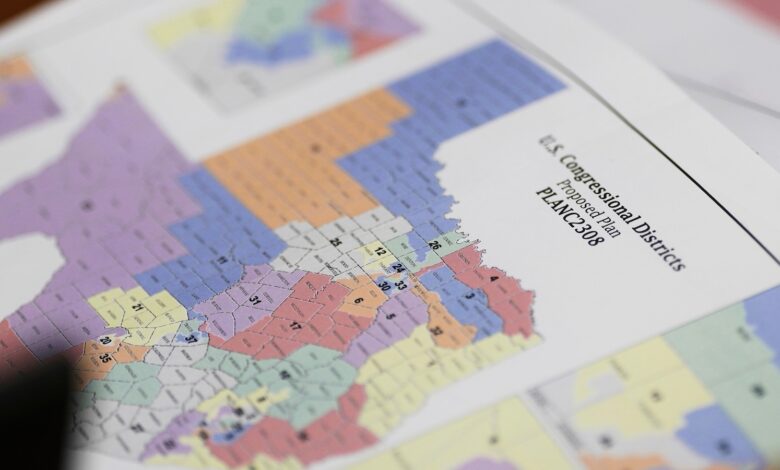
President Donald Trump recently made a bold claim, asserting that Republicans are “entitled to five more seats” in Texas amid an ongoing redistricting battle among state lawmakers. This political showdown in the Lone Star State carries significant national implications, as it could potentially impact control of the U.S. House of Representatives.
At the start of the 119th Congress, Republicans held the smallest House majority in nearly a century, with a narrow 219-212 lead and four vacancies. With Democrats needing to gain just three seats to regain control of the House, the stakes are high heading into the 2026 midterm elections.
House Speaker Mike Johnson finds himself in a challenging position, as he can only afford to lose three Republican votes in any House decision where all members are present. This slim majority has posed challenges in passing key legislation, including Trump’s tax cuts and spending bill, and rewriting cryptocurrency regulations.
In an effort to bolster their majority or possibly expand it, Trump’s political team has been working with Texas Republicans to redraw the state’s congressional map ahead of the upcoming elections. Analysts suggest that the proposed changes could potentially net Republicans between three to five additional seats, primarily impacting districts in Austin, Dallas, and Houston—traditionally Democratic-leaning areas.
The redistricting efforts in Texas have faced strong opposition from Democrats, leading to dramatic developments. Democratic lawmakers staged a protest by fleeing the state to deny Republicans the necessary quorum to vote on the new map. In response, Republican Governor Greg Abbott authorized the Texas Department of Public Safety to arrest the absent Democrats and bring them back to Austin.
Trump defended this move in a recent interview, emphasizing the opportunity for Republicans to gain additional seats in Texas based on his strong performance in the state during the previous election. However, Democratic leaders have vowed to counter the Republican efforts by proposing new maps of their own.
Governors from other states, such as New York and California, have also weighed in on the redistricting battle. New York Governor Kathy Hochul expressed intentions to gerrymander her state’s map in response to Texas’ actions, while California Governor Gavin Newsom threatened to put a redistricting plan before voters if Texas proceeds with its new map.
It is clear that the political landscape is heating up as states grapple with redistricting issues that could shape the balance of power in Congress. As these battles unfold, the outcome will not only impact the representation of various states but also have far-reaching consequences for the national political landscape.