‘The Bear’ Sound Team Breaks Down Anxiety-Inducing Restaurant Noises
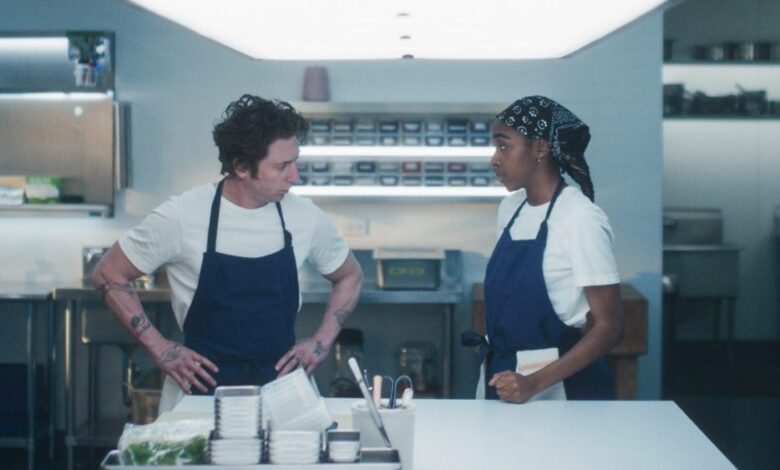
“The Bear” Season 4: A Closer Look at the Immersive Kitchen Soundscape
Since its inception, the television series “The Bear” has been praised by restaurant workers for its authentic depiction of the chaos that often ensues in a kitchen. The show effectively conveys the frenetic pace of back-of-house operations through a sensory overload created by the award-winning sound team. From shouting voices to objects slamming onto countertops to food sizzling on stovetops, the sounds of the kitchen are brought to life in a way that resonates with those familiar with the industry.
In the most recent season, which premiered on June 25, Season 4 continues to deliver an immersive kitchen soundscape, albeit on a slightly more subdued level than previous seasons. As characters like Carmy, Sydney, Richie, and the rest of the staff at The Bear restaurant strive to improve the establishment’s fortunes, the sounds of the kitchen are less abrasive and more measured. According to supervising sound editor and re-recording mixer Steve “Major” Giammaria, there is a rhythmic quality to the chaos this season, with a focus on horizontal sounds like simmering, bubbling, and dishwashing.
Giammaria describes the difference between Season 4’s more subdued approach and the previous season’s more intense vertical sounds, such as forks clinking and pots clanging. However, there are still moments of heightened tension, particularly in fast-paced montages that keep viewers on edge. One such montage in the first episode sees The Bear staff rushing to speed up operations to keep the restaurant running smoothly and financially viable.
The sound team employs various techniques to ramp up the tension in these scenes, including repetitive sounds that accelerate, building anticipation until a climactic moment occurs. Peripheral noise is also intensified gradually, adding to the overall sense of unease. Dialogue plays a crucial role in the show, with production mixer Scott D. Smith capturing the chaotic exchanges on set. Smith notes that the actors rarely rehearse their lines, leading to authentic and unpredictable interactions that keep the energy high on set.
As the series progresses, the team has learned to anticipate the actors’ patterns during these intense scenes, allowing them to capture the dialogue seamlessly. Dialogue editor Evan Benjamin is tasked with cleaning up overlapping conversations to ensure clarity and coherence in the final product. The goal is to create a seamless audio experience that mirrors the frenetic energy of the on-screen chaos.
One standout sound moment from Season 4 involves a delicate dessert tasting scene in Episode 5, where Carmy tries Marcus’s new dessert. The meticulous attention to detail in capturing the sound of the dessert being eaten adds depth and richness to the scene, highlighting the team’s dedication to creating an immersive auditory experience for viewers.
Overall, “The Bear” Season 4 continues to impress with its realistic portrayal of kitchen chaos, showcasing the talent and innovation of the sound team behind the scenes. Through a careful balance of immersive sounds and tension-building techniques, the show delivers an authentic and engaging audio experience that complements the on-screen drama. When it comes to creating the sound design for a TV show, like in the case of a bustling and noisy kitchen set, the process can be quite challenging. The team behind the scenes must carefully consider every sound that is heard on screen, even if it doesn’t necessarily match what was recorded on set.
In a recent interview, sound designer Benjamin shared some insights into the intricate process of creating the sounds for a popular TV show. He mentioned that while on-set recordings can be used as a reference, the final product is often a result of meticulous editing and sound manipulation.
One of the biggest challenges faced by the sound team was setting up the kitchen set in a way that allowed for both functional cooking and clear dialogue. This required coordination with various departments, including HVAC and the studio, to ensure that the sound quality was not compromised.
Even scenes with minimal dialogue can pose difficulties for the sound artisans. Benjamin highlighted a particular scene between characters Carmy and Donna that proved to be challenging due to their constant movement and use of props. Every sound, no matter how small, carries emotional weight and must be carefully considered in the editing process.
The attention to detail and precision that goes into creating the show’s atmosphere is what sets it apart and evokes strong reactions from viewers. Benjamin mentioned that feedback from individuals who have worked in restaurants has been particularly positive, with many noting the show’s accurate portrayal of the stressful environment.
Overall, the sound design process for a TV show is a meticulous and complex task that requires careful consideration of every sound that is heard on screen. By paying attention to even the smallest details, the sound team is able to create a truly immersive experience for viewers.