The Man Who Would Be King of Saudi Arabia (with Karen Elliott House)
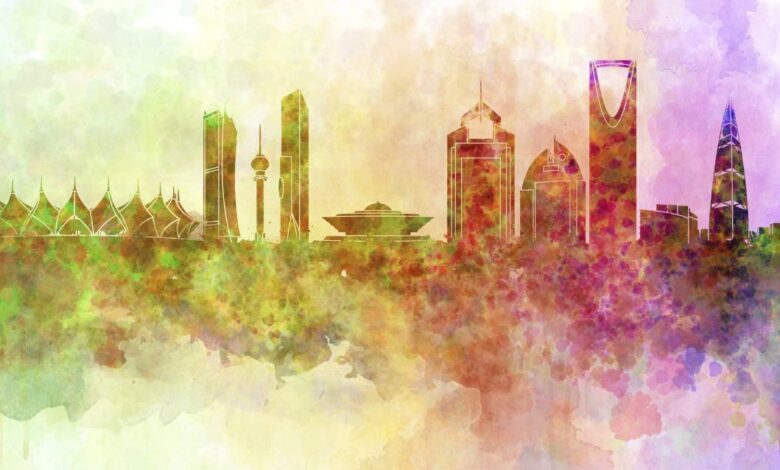
Saudi Arabia, a country with a rich and storied history dating back to the 18th century, stands apart from many of its Middle Eastern counterparts due to its lack of colonization and its strong sense of national pride. Karen Elliott House, author of The Man Who Would Be King: Mohammed bin Salman and the Transformation of Saudi Arabia, sheds light on the complexities of Saudi Arabia’s ruling family, the Al Sauds, and the intricate political landscape that has shaped the nation.
The Al Sauds, who founded the Kingdom of Saudi Arabia in 1727 or 1744 (depending on the historical account), have a long history of power struggles and violent transitions of leadership. With kings often having multiple wives and children, the line of succession can be convoluted and fraught with internal conflicts. However, despite these challenges, the Al Sauds have managed to maintain their rule over the centuries.
One of the key figures in Saudi Arabia’s current political landscape is Mohammed bin Salman, commonly known as MBS, the 39-year-old Crown Prince who is poised to become the future king. Unlike previous crown princes who were merely placeholders waiting for their turn to ascend the throne, MBS has taken an active role in shaping the kingdom’s future.
MBS’s father, King Salman, ascended to the throne in 2015 after the death of King Abdullah, triggering a series of changes within the government. MBS, who had previously served as his father’s assistant at the Defense Ministry, wasted no time in implementing reforms and modernizing Saudi Arabia’s economy and society.
The transition of power within the Al Saud family has been marked by violence and internal strife, with past kings and crown princes being removed from power through various means. Despite these challenges, the Al Sauds have managed to maintain their grip on power and navigate the turbulent waters of Middle Eastern politics.
Unlike other countries in the region that have had their borders redrawn and ruling groups dismantled in the aftermath of World War II, Saudi Arabia’s strong sense of national identity and pride stems from its long and uninterrupted history as a sovereign nation. The Al Sauds’ ability to unite the various tribes and factions within the country under their rule has contributed to the nation’s sense of unity and cohesion.
While Saudi Arabia may face criticism from other Arab nations for its tribal roots and perceived lack of education, the Saudis themselves take pride in their heritage and identity as a strong and independent nation. As MBS continues to chart the course for Saudi Arabia’s future, the country’s historical legacy and unique political landscape will continue to shape its path forward. Karen Elliott House’s detailed account of her interactions with Saudi Crown Prince Mohammed bin Salman (MBS) sheds light on the ambitious and transformative leadership style of the young ruler. Over the course of several interviews, House spent approximately 18 hours speaking with MBS, gaining insights into his character, motivations, and the changes he has implemented in Saudi Arabia.
MBS’s rise to power began when his father, King Salman, ascended to the throne in 2015. Despite not holding an official title at the time, MBS immediately started reorganizing the government, demonstrating his proactive approach to governance. He swiftly dismantled bureaucratic councils that hindered decision-making and set the tone for his tenure as a reformist leader.
In 2016, MBS unveiled his ambitious Vision 2030 Reform Agenda, aiming to reduce Saudi Arabia’s dependence on oil and diversify the economy. This agenda included controversial measures such as sidelining the religious police, who enforced strict Islamic laws in public spaces. Additionally, MBS initiated a crackdown on corruption by detaining high-profile individuals, including senior business figures and princes, at the luxurious Ritz-Carlton Hotel in Riyadh.
The Ritz-Carlton episode sent shockwaves through Saudi society, signaling a departure from the status quo of unchecked corruption and impunity enjoyed by the elite. MBS’s bold actions garnered both praise and criticism, with some viewing it as a necessary step towards accountability and others questioning the motives behind the arrests.
Despite facing backlash and skepticism, MBS continued to push forward with his reform agenda, undeterred by the challenges and resistance he encountered. His reputation as a man in a hurry, determined to modernize Saudi Arabia and shape its future, was solidified by his bold decisions and swift implementation of transformative policies.
As House reflects on her interviews with MBS and the changes he has brought to Saudi Arabia, she underscores the complexity of his character and the multifaceted nature of his leadership style. While some applaud his efforts to modernize the kingdom and combat corruption, others remain wary of the implications of his authoritarian tendencies and ambitious vision for the country’s future. Ultimately, MBS’s legacy is still unfolding, with the full extent of his impact on Saudi Arabia and its people yet to be determined. Religion has always played a significant role in shaping the public sphere in Saudi Arabia. From the strict enforcement of dress codes by religious police to the closure of businesses for prayer times, the influence of religion is deeply embedded in the daily lives of the people. However, with the rise of Crown Prince Mohammed bin Salman (MBS), there has been a notable shift in the status quo.
MBS has made bold moves to challenge the power of the religious establishment in the country. One of the most significant changes has been the curbing of the religious police’s authority to arrest people for violating religious codes. This move was met with resistance from senior clerics who wield power over the population. Some of them found themselves in prison or quietly removed from their positions as the top senior clerics, appointed by the King, began to align themselves with MBS’s vision for a more moderate Islam.
The motivation behind MBS’s actions on the religious front can be seen as twofold. Firstly, he aimed to revamp the economy through initiatives like Vision 2030, which required the loosening of restrictions on women’s rights. For instance, allowing women to drive and work in various sectors was crucial for economic growth. The religious authorities had long imposed limitations on women’s participation in the workforce, hindering the country’s progress.
Secondly, MBS sought to reduce the power of the religious establishment to strengthen his own position. By challenging the religious norms that restricted women’s rights and imposed strict dress codes, he aimed to modernize the country and attract foreign investment. The economic benefits of empowering women and promoting a more moderate form of Islam were clear to MBS, who saw these changes as essential for Saudi Arabia’s future prosperity.
As someone who has been visiting Saudi Arabia for almost five decades, Karen Elliott House has witnessed firsthand the evolution of the country’s religious landscape. She recalls a time when the country was conservative but not as rigidly religious as it is today. Dress codes were more relaxed, and women were able to socialize with men at public events without facing scrutiny.
The transformation of Saudi Arabia under MBS’s leadership has been dramatic, with women now able to work alongside men in offices and public spaces. The once strict dress codes have been relaxed, allowing for greater freedom of expression and movement. These changes reflect MBS’s vision for a more open and inclusive society, where religious restrictions are no longer a barrier to progress.
Overall, the role of religion in the public square in Saudi Arabia has shifted significantly in recent years, thanks to the bold reforms implemented by Crown Prince Mohammed bin Salman. While there has been resistance from conservative elements within the religious establishment, the country is gradually moving towards a more modern and inclusive society that prioritizes economic growth and social development. The transformation of Saudi Arabia in recent years has been nothing short of remarkable. From the strict religious fundamentalism of the late 1970s to the more liberal and Westernized culture of today, the changes have been swift and dramatic.
In a recent interview, Karen Elliott House, a seasoned journalist and author, shared her experiences of witnessing these changes firsthand. She recalled a time in 1978 when she first visited Saudi Arabia and was required to wear a black abaya, a traditional robe worn by women in the country. However, when she met the Crown Prince in 2016, he told her she didn’t have to wear it, signaling a shift in societal norms.
House explained that two key events in 1979 had a significant impact on the country’s trajectory. The fall of the Shah in Iran led the Saudi royal family to accommodate the demands of religious officials, leading to a more conservative approach to women’s rights and public appearances. Additionally, a group of insurgents took over the Mecca Mosque, causing widespread fear and prompting a crackdown on perceived threats to the ruling family.
The following year, House visited Prince Turki, who instructed her to cover up with a large piece of black silk and a scarf to conceal her face. Since then, she has worn an abaya whenever visiting Saudi Arabia. This strict dress code was reflective of the growing influence of religious conservatism in the country at the time.
However, in recent years, Saudi Arabia has undergone a rapid transformation under the leadership of Crown Prince Mohammed bin Salman (MBS). The religious police have been neutralized, and women have been granted more freedoms, including the right to drive. The culture has become increasingly Westernized, with rock concerts, amusement parks, and sporting events becoming more prevalent.
The younger generation, in particular, has embraced these changes, having grown up with access to the internet and exposure to global trends. While some older Saudis may be more conservative in their views, criticizing the ruler openly is not socially acceptable.
Despite the visible changes in the country’s public life, House notes that there is still a conservative undercurrent in Saudi society. While many women have embraced more colorful and relaxed abayas, some are returning to wearing black robes in recent years. The country’s transformation is ongoing, with a delicate balance between tradition and modernization.
Overall, the changes in Saudi Arabia over the past few decades have been profound and reflect a shifting societal landscape. The country’s future direction remains uncertain, but one thing is clear: the winds of change are blowing strong in the Kingdom. Saudi Arabia is a country undergoing rapid transformation, with changes in societal norms, economic diversification, and geopolitical tensions all playing a role in shaping its future. Walking through public places in Saudi Arabia, one can observe a diverse array of individuals, each representing different facets of the country’s evolving culture. From young women with tightly covered heads to those donning glamorous scarves, the variety in attire reflects the changing attitudes towards tradition and modernity.
The natural conservatism inherent in Saudi society is becoming more visible, with a shift towards embracing personal freedoms while still adhering to certain cultural norms. The younger generation, in particular, is seeking greater autonomy and economic opportunities, with aspirations for personal growth and financial stability. However, the challenges of finding suitable employment in a rapidly evolving economy pose a dilemma for many young Saudis.
The government’s Vision 2030 initiative, aimed at reducing the country’s reliance on oil and diversifying its economy, has made some progress, particularly in the tourism sector. Projects such as the development of historical sites like Hegra in Al-‘Ula and entertainment venues like Riyadh Boulevard and Qiddiya have aimed to attract both locals and tourists. However, ambitious projects like Neom, a futuristic city concept, have faced setbacks due to environmental concerns and cost considerations.
The fluctuating price of oil, geopolitical tensions in the region, and the looming threat of Iranian retaliation pose additional challenges for Saudi Arabia. The government must navigate a delicate balance between economic reform, social change, and regional stability, all while managing internal and external pressures. The future of Saudi Arabia remains uncertain, with various factors influencing its trajectory in the coming years.
As the country grapples with these complex issues, there is a sense of anticipation and apprehension among the population. The younger generation, in particular, faces a precarious future, with concerns about job prospects, income inequality, and political stability. The government’s ability to address these challenges and steer the country towards a more prosperous and stable future will determine Saudi Arabia’s fate in the years to come. The recent history of Iran and Saudi Arabia has been marked by political instability, power struggles, and human rights violations. In a recent conversation between Russ Roberts and Karen Elliott House, the topic of stability in Iran and the murder of journalist Jamal Khashoggi by Saudi Crown Prince Mohammed bin Salman (MBS) were discussed.
Stability in Iran has been a top priority for those in power, according to House. The desire to reduce Iran’s power in the region is also a goal, but a revolution is not the desired outcome. The recent protests in Iran have raised concerns about the potential for a regime change, and the outcome remains uncertain.
The conversation then shifted to the murder of Jamal Khashoggi, a journalist who was killed in the Saudi Consulate in Istanbul in 2018. Khashoggi, who had previously worked for the Saudi government, had become critical of MBS and had moved to Washington, D.C. prior to his death. The CIA’s report implicated the Saudi government in his murder, leading to a sharp decline in MBS’s reputation.
The murder of Khashoggi had far-reaching consequences for MBS, who had been hailed as a modernizing force in Saudi Arabia. The contrast between his progressive reforms and the brutal murder of Khashoggi was stark, leading to international condemnation and calls for accountability.
During a visit to the United States, MBS faced tough questions about Khashoggi’s murder, with President Trump defending him and emphasizing that he did not know about the murder. MBS, on the other hand, acknowledged the tragedy and took responsibility for it, stating that it happened on his watch.
The murder of Khashoggi derailed MBS’s efforts to modernize Saudi Arabia and improve its reputation on the world stage. The incident highlighted the challenges of balancing progressive reforms with human rights abuses and political repression.
Overall, the conversations between Roberts and House shed light on the complex dynamics of power, stability, and accountability in the Middle East, and the impact of high-profile incidents like the murder of Jamal Khashoggi on regional politics and international relations. The recent events surrounding the murder of journalist Jamal Khashoggi have shed light on the dark and oppressive regime that exists in Saudi Arabia. Karen Elliott House, a renowned journalist and author, has provided valuable insights into the motives behind the brutal killing and the broader political landscape in the Middle East.
House suggests that Khashoggi was targeted because he was perceived as a threat to the Saudi regime. The Saudi authorities viewed him as a supporter of the Muslim Brotherhood and believed that he was taking money from Qatar, a country with a vested interest in the region. The Saudis saw Khashoggi’s connections as a danger to their rule and sought to silence him, either by kidnapping him and bringing him back to Saudi Arabia or by eliminating him altogether.
The botched operation to abduct Khashoggi and the subsequent murder have exposed the ruthless tactics employed by the Saudi government to silence dissent. The brazen act of dismembering Khashoggi’s body and disposing of it in suitcases shocked the world and drew widespread condemnation. The Saudis may have miscalculated how the West would view their actions, expecting a lesser backlash if Khashoggi had simply disappeared into a Saudi prison.
House also touches on the complex geopolitics of the region, particularly in relation to Israel. Before the Hamas attack in 2023, there was optimism about Saudi Arabia joining the Abraham Accords and normalizing relations with Israel. However, the attack derailed these efforts, and Saudi Arabia has since maintained a public stance of not normalizing ties with Israel until the Palestinian issue is resolved.
Despite this public stance, House believes that the Saudi Crown Prince still harbors ambitions of establishing relations with Israel. The economic benefits of a potential partnership, particularly in terms of trade routes and bypassing Iran and the Suez Canal, make it an attractive proposition for the Saudis. However, House acknowledges that any progress towards normalization is likely to be slow and contingent on various political factors.
In conclusion, Karen Elliott House’s analysis offers valuable insights into the complex dynamics of the Middle East and the motivations behind Saudi Arabia’s actions. The brutal murder of Jamal Khashoggi has laid bare the authoritarian nature of the Saudi regime and highlighted the challenges of navigating the volatile political landscape of the region. As the world watches, the future of Saudi Arabia and its relations with its neighbors remains uncertain. Karen Elliott House’s insights into the Crown Prince of Saudi Arabia shed light on his cautious approach to leadership and decision-making. Despite the widespread prediction that he is eager to establish his legacy by making bold moves such as recognizing Israel, House argues that the Crown Prince is likely to proceed with caution in the coming year. She highlights the influence of his father, King Salman, as a respected elder whose passing could leave the Crown Prince more vulnerable until he establishes himself as a respected ruler.
House also points to the attitudes of young Saudis towards Israel, with polls suggesting strong opposition to recognition. She suggests that the Crown Prince may be hesitant to take such a controversial step, especially given the current tensions with Iran and the potential risks involved. By prioritizing stability and avoiding unnecessary conflicts, the Crown Prince may choose a more cautious approach in the near future.
In discussing the Crown Prince’s education and influences, House reveals that he did not attend prestigious Western universities like Oxford or Wharton, unlike some of his older siblings. Instead, he received a more traditional upbringing, with his mother pushing him to excel and prove himself among his siblings. This sense of competition and determination to stand out may have shaped his ambitious and data-driven approach to leadership.
Overall, House’s analysis offers valuable insights into the complex dynamics of Saudi politics and the factors influencing the Crown Prince’s decision-making. By understanding his background, motivations, and challenges, we can gain a deeper understanding of the future direction of Saudi Arabia under his leadership. The discussion between the speaker and the minister highlighted the importance of analyzing data to address issues of recidivism in the criminal justice system. The minister emphasized the need to focus on reducing repeat offenses by understanding that it was the same individuals being arrested repeatedly. The emphasis on data-driven decision-making and key performance indicators reflected a shift in the mindset of the current government officials, who were highly educated and dedicated to their work.
The speaker noted the significant differences in the work ethic and dedication of the current ministers compared to their predecessors. The ministers, including those with prestigious educational backgrounds from institutions like MIT and Harvard, were known for their long working hours and commitment to their responsibilities. Meetings with the ministers often extended late into the night, showcasing their dedication to their roles and the country’s development.
One interesting aspect of the minister’s background was his childhood spent playing video games, leading him to believe that anything achievable in a video game could be replicated in real life. This mindset reflected his expansive imagination and willingness to explore unconventional ideas. His active imagination and focus on innovation seemed to set him apart from traditional religious authorities, who emphasized a more conservative approach to life.
The conversation also touched upon the ongoing liberalization efforts in Saudi Arabia, including advancements in women’s rights, reduced influence of religious police, and increased exposure to Western culture. Despite these positive changes, the speaker acknowledged that political liberalization had not accompanied these developments. The minister’s autocratic leadership style and suppression of dissent raised questions about his legacy as a transformative historical figure or just another Arab tyrant.
In conclusion, the speaker expressed optimism about the minister’s potential to be transformative if he heeded the advice of those around him. However, challenges such as economic constraints and declining foreign investment posed obstacles to the country’s progress. The next few years would be crucial in determining whether the minister could successfully execute his plans and steer the country towards economic stability and growth. The speaker emphasized the importance of transitioning from ambitious plans to practical execution and financial sustainability in order to secure the country’s future.