The U.S. dollar just fell to its lowest level in 4 years. Here’s why.
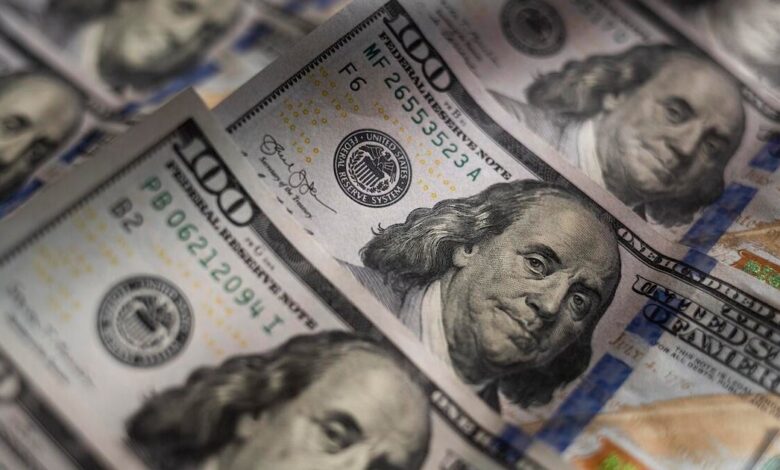
The U.S. dollar is currently facing a significant decline, reaching a four-year low according to the ICE U.S. Dollar Index. This decline has been ongoing for the past year, with the dollar sliding more than 3% since mid-January. The weakening dollar has wide-ranging implications, affecting financial markets, overseas travel plans, and increasing costs for American companies importing goods manufactured outside the U.S.
The recent drop in the dollar’s value is attributed to various destabilizing factors, including tariff threats by President Trump and the potential for another government shutdown. According to economists, investors are also shifting away from the dollar and towards hard assets like gold, contributing to the currency’s decline.
Chief market analyst Alex Kuptsikevich pointed out that Trump’s promotion of tariff policies and pressure on the Federal Reserve to lower interest rates have played a significant role in the dollar’s recent downward trend. The looming threat of a government shutdown adds to the uncertainty surrounding the currency.
Nigel Green, CEO of de Vere Group, noted that the current political instability weakens the dollar’s strength, as institutional stability, fiscal credibility, and policy predictability are crucial for the currency’s value. The uncertainty surrounding the government shutdown deadline has made some investors cautious about the dollar’s future performance.
President Trump’s comments on the dollar during a recent appearance in Iowa fueled speculation among investors that the White House may prefer a weaker dollar to boost exports. However, Treasury Secretary Scott Bessent emphasized in an interview that the U.S. government is not intervening in the currency market and continues to support a strong dollar.
Despite the recent decline, the U.S. dollar remains the world’s dominant reserve currency, with global central banks holding a significant portion of their reserves in dollars. However, concerns about the U.S. government’s debts and trade policies have led to periodic shifts in global investor sentiment, known as the “Sell America” trade, where investors move towards safe-haven assets like gold.
The ongoing turmoil surrounding the Federal Reserve, including President Trump’s criticism of Fed Chair Jerome Powell, adds to investor unease. The possibility of rate cuts and the appointment of a new Fed chair aligned with Trump’s views could further impact the dollar’s value in the coming months.
In conclusion, the U.S. dollar’s decline is influenced by a combination of political, economic, and global factors. The currency’s future trajectory will depend on how these factors evolve in the coming months.