The U.S.-Iran war is already hitting consumers’ pocketbooks. Here’s how
The recent escalation in tensions between the U.S. and Iran has not only caused geopolitical turmoil but has also had significant financial implications for American consumers. The U.S.-Israeli strikes on Iran have resulted in volatile markets, soaring mortgage rates, and higher gas prices, all of which are impacting the average consumer.
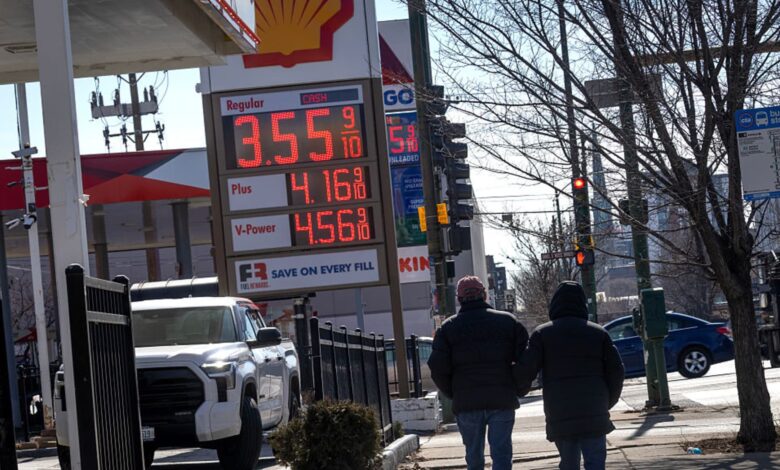
Gas prices in the U.S. have surged to an average of $3.25 per gallon, a 27-cent increase in just one week. This rapid spike is reminiscent of the price hikes seen during the Russian invasion of Ukraine in 2022. Additionally, gasoline futures trading in New York have increased by 2%, indicating that prices at the pump are likely to climb even higher in the coming days.
The jump in gas prices, an 8.5% increase over three days, is the most significant since Hurricane Katrina devastated New Orleans in 2005. This surge in prices comes after a period of relief for consumers, with gas prices reaching their lowest levels since 2021 late last year.
In addition to rising gas prices, mortgage rates have also seen a sharp increase. The 30-year fixed-rate mortgage has surpassed 6.1%, a significant jump from the multiyear lows it was trading at previously. This increase is attributed to the rise in the 10-year Treasury yield, which surpassed 4% following the attack on Iran. Concerns about inflation have driven bond yields higher, contributing to the spike in mortgage rates.
Stock markets have experienced volatility as well, further adding to consumer uncertainty. The Dow Jones Industrial Average fell nearly 800 points as U.S. crude oil prices exceeded $80 per barrel, reigniting fears about the impact of the conflict on the markets. The S&P 500 also saw a decline of 0.7% amid the market turbulence.
Despite the financial challenges posed by the conflict with Iran, experts believe that a global recession is unlikely if U.S. crude prices surpass $100 per barrel. Dan Niles of Niles Investment Management anticipates that the conflict will be relatively short-lived, lasting about a month.
Overall, the financial ripple effects of the U.S.-Iran conflict are exacerbating the economic challenges facing Americans, including high inflation and growing economic inequality. As consumers continue to grapple with these issues, affordability remains a key concern in the lead-up to the midterm elections.
In conclusion, the impact of the conflict with Iran on American consumers underscores the interconnected nature of geopolitics and economics. As consumers navigate higher gas prices, mortgage rates, and market volatility, the need for stability and economic security becomes more pressing than ever.