This Haiti-Born Doctor Built A $6 Billion Business Developing Drugs For Depression And Alzheimer’s
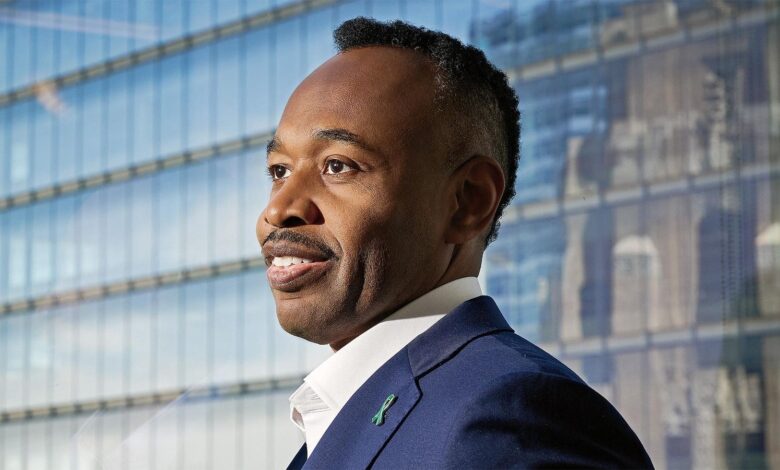
With Axsome’s success in the market, Tabuteau is now focused on expanding the company’s pipeline to address even more brain disorders. The five drugs in development include treatments for migraine, agitation in Alzheimer’s patients, and chronic pain. These conditions affect millions of Americans and are currently underserved by existing treatments.
Axsome’s approach to drug development continues to set it apart from other biotech companies. By keeping costs low and focusing on building a diverse portfolio of treatments, Tabuteau has positioned the company for continued success. With a strong track record of bringing drugs to market and a deep understanding of the complexities of brain disorders, Axsome is well-positioned to make a significant impact on the lives of patients.
As Axsome continues to grow and innovate, Tabuteau remains committed to his vision of creating a company that stands apart in the biotech industry. With three drugs on the market and five in the pipeline, Axsome Therapeutics is poised to become a leader in the treatment of brain disorders, ultimately helping millions of Americans live healthier, happier lives.
Sunosi, a drug developed by Axsome Therapeutics, has been making waves in the pharmaceutical industry with its annual revenue now exceeding $100 million. Analysts are praising the company’s financial strategy, calling it a “shrewd financial transaction.” The success of Sunosi has also reflected positively on the company’s stock performance, with shares climbing 35% over the past year to reach $122, outperforming the Nasdaq Biotech Index.
The next big development to watch from Axsome Therapeutics is a drug aimed at treating the agitation that often accompanies Alzheimer’s disease. Currently, antipsychotic medications are the only treatment available, but they come with serious risks, including death. Axsome’s drug offers a safer alternative, although Phase III clinical trials have reported mixed results. Despite this, the company plans to file for approval before the end of September.
While there is a possibility that the FDA may not approve the new drug, analysts believe that the urgent need for an alternative to antipsychotics makes approval likely. Axsome’s CEO, Herriot Tabuteau, is optimistic about the company’s future prospects, projecting sales of $1 billion to $3 billion for Sunosi and $1.5 billion to $3 billion from the Alzheimer’s agitation drug annually at their peak. Tabuteau emphasizes the company’s commitment to addressing the needs of patients and its ambitious growth plans.
In the rapidly evolving landscape of biotechnology, companies like Axsome Therapeutics are at the forefront of innovation, tapping into untapped markets and driving growth through cutting-edge treatments. Vertex Pharmaceuticals is another standout in the industry, known for its cystic fibrosis drugs and groundbreaking partnerships with companies like Moderna. With strong sales performance and a focus on future demand, Vertex is well-positioned for continued success, with potential for its shares to climb to $520 within 18 months.
As the pharmaceutical industry continues to push boundaries and explore new frontiers, companies like Axsome Therapeutics and Vertex Pharmaceuticals are leading the way in revolutionizing healthcare and improving patient outcomes. With a relentless focus on innovation and a commitment to addressing unmet medical needs, these companies are poised for long-term success in a rapidly evolving market. The fast-paced world of technology is constantly evolving, with new innovations and advancements being made every day. One of the most exciting developments in recent years is the rise of artificial intelligence (AI). AI has the potential to revolutionize industries across the board, from healthcare to finance to transportation.
At its core, AI is the ability for machines to perform tasks that typically require human intelligence, such as learning, reasoning, problem-solving, and language understanding. This technology has already been integrated into many aspects of our daily lives, from virtual assistants like Siri and Alexa to self-driving cars and personalized recommendations on streaming platforms.
One of the key benefits of AI is its ability to process vast amounts of data quickly and accurately. This can lead to more efficient decision-making and improved outcomes in a wide range of industries. For example, in healthcare, AI-powered algorithms can analyze medical images and patient data to assist doctors in diagnosing diseases and developing treatment plans. In finance, AI can be used to detect fraudulent activity and optimize investment strategies.
However, as with any new technology, there are also concerns about the potential risks and ethical implications of AI. One major issue is the potential for bias in AI algorithms, which can lead to unfair treatment of certain groups of people. For example, if an AI algorithm is trained on data that is not representative of the population as a whole, it may make inaccurate or discriminatory decisions.
Another concern is the impact of AI on the job market. While AI has the potential to increase productivity and create new job opportunities, it also has the potential to automate tasks that are currently performed by humans. This could lead to job displacement and economic inequality if not managed properly.
Despite these challenges, the potential benefits of AI are vast. By harnessing the power of AI, we have the opportunity to solve some of the most pressing challenges facing our society, from climate change to healthcare to education. As we continue to develop and refine this technology, it will be crucial to prioritize transparency, accountability, and ethical considerations to ensure that AI is used responsibly and ethically.
In conclusion, artificial intelligence has the potential to transform our world in ways we have never imagined. By embracing this technology and harnessing its power for good, we can create a more efficient, equitable, and sustainable future for all.