This Startup Aims To Grow New Mini-Organs In Patients
The United Kingdom has reached a significant milestone in its space industry with Glasgow-based company Skyrora securing the country’s first space launch license. This achievement marks a new era for the U.K., which has typically focused on satellite development and manufacturing. Skyrora, known for its innovative 3D-printed rocket engines, plans to use its suborbital Skylark L rockets to carry payloads for customers following the issuance of the license.
Looking ahead, Skyrora’s CEO and founder, Volodymyr Levykin, has set his sights on obtaining an orbital launch license. This would enable the company to deploy its Skylark XL rocket to deliver satellites into Earth orbit, with the inaugural launch expected in the second half of 2026. In the meantime, Skyrora is leveraging its large 3D printing facility to generate revenue by manufacturing aerospace components for other customers. Levykin envisions these revenue streams as a way to potentially self-finance the company’s space program, reducing reliance on external investors.
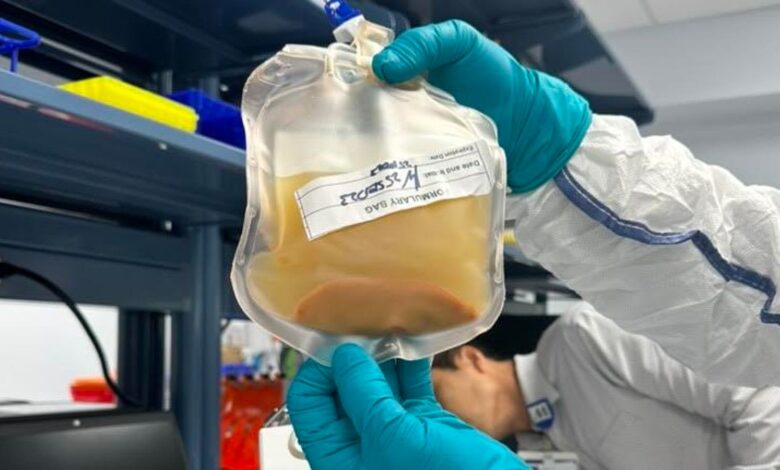
In a groundbreaking development in the field of organ transplantation, Pittsburgh-based company Lygenesis is pioneering a technology that enables patients in need of transplants to grow new mini-organs. With over 50,000 patients succumbing to liver disease in the U.S. annually, the demand for viable donor livers often exceeds supply. Lygenesis’ innovative approach involves inducing a patient’s lymph nodes to grow miniature livers using hepatocytes extracted from donor organs. This process holds promise for treating end-stage liver disease and could potentially expand to include other organs like kidneys, pancreas, and thymus.
On the astronomical front, recent observations from the Webb Space Telescope suggest the presence of a gas giant orbiting Alpha Centauri A, the closest Sun-like star to Earth. Direct imaging of a planet in such close proximity to its star would be a significant milestone in astronomical research. The gas giant, similar in size to Saturn, could potentially harbor life on its moons if they exist.
In a bold move towards sustainable lunar habitation, NASA plans to deploy a nuclear fission reactor on the Moon by the end of the decade. This initiative aims to provide continuous power during the Moon’s extended nighttime periods, making nuclear energy a more practical option than solar power.
With a myriad of exciting developments in space exploration, medical technology, and scientific research, the future promises to be filled with groundbreaking discoveries and innovations. Stay tuned for more updates on these fascinating advancements and their potential impact on our world.