Times Square billboard proclaiming ‘Jesus is Palestinian’ slammed by holiday tourists: ‘A divisive message’
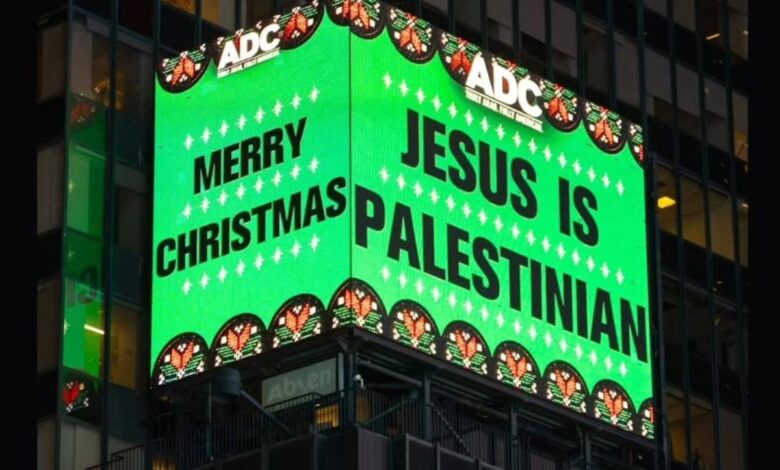
A controversial billboard that recently appeared in Times Square declaring “Jesus is Palestinian” has sparked debate and controversy among onlookers during the holiday season. The digital ad, funded by the American-Arab Anti-Discrimination Committee (ADC), features the message “JESUS IS PALESTINIAN” in bold black lettering on a bright green background, with “MERRY CHRISTMAS” on the other side.
Holiday tourists in Times Square have expressed mixed reactions to the billboard, with some calling it divisive and inflammatory. One visitor from England described the message as stirring the pot and potentially offensive to some. Others argued that Jesus is for everyone and that it is not necessary to specify his nationality.
Adeb Ayoub, National Executive Director of the ADC, explained that the organization has been renting ad space in Times Square with rotating messages, with the current theme being “America First.” The goal of the billboard is to highlight common ground between Arab and Muslim communities and Christians in the US, particularly during the busy holiday season in New York City.
Ayoub emphasized that the billboard aims to spark debate and conversation about shared cultural and religious similarities, rather than silencing voices. He also mentioned that the subject of Jesus being Palestinian is open to interpretation, as Jesus lives within all of us.
Despite the backlash from some onlookers, there were also supporters of the ADC’s message. Tourists from Italy and France expressed their views that everyone is entitled to their own beliefs and that Jesus belongs to everyone.
In response to the controversy, the ADC has put up a new billboard in Times Square declaring “Jesus would say ‘tear down that wall,’” in reference to former President Ronald Reagan. Ayoub mentioned that a new billboard will appear in Times Square for New Year’s Eve, continuing the organization’s efforts to spark important conversations and promote understanding among diverse communities.