Top Use Cases and Real-World Examples of AI in Healthcare
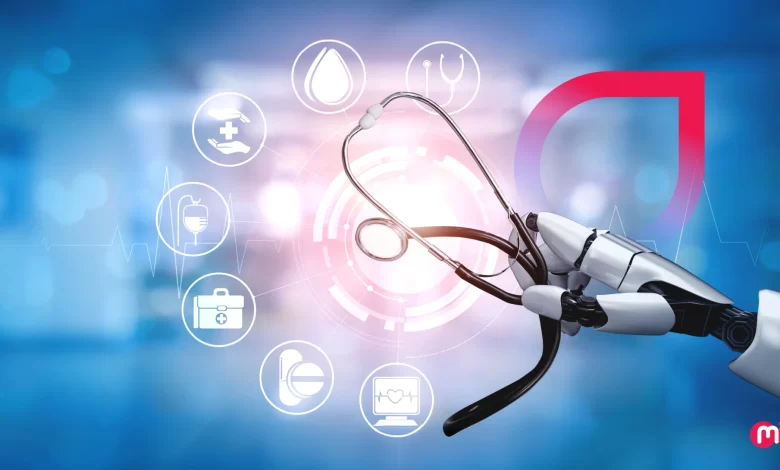
They can provide personalized health advice, appointment scheduling, medication reminders, and even emergency assistance. Virtual health assistants can be integrated into hospital websites, mobile apps, or even smart speakers to provide 24/7 support to patients.
This AI use case is particularly beneficial in areas such as:
- Telemedicine for remote patient monitoring
- Primary care for initial symptom assessment
- Emergency care for triaging patients
- Post-discharge follow-ups for medication adherence
By incorporating virtual health assistants into your healthcare services, you can:
- Improve patient engagement and satisfaction
- Provide round-the-clock support without increasing staff overhead
- Enhance operational efficiency by automating routine tasks
4. AI-Powered Drug Discovery for Accelerated Research
Traditional drug discovery processes are time-consuming, expensive, and often result in high failure rates. It takes an average of 10-15 years and billions of dollars to bring a new drug to market. With the rising prevalence of diseases like cancer, Alzheimer’s, and rare genetic disorders, there is a pressing need to accelerate drug discovery.
AI has emerged as a game-changer in pharmaceutical research by speeding up the drug discovery process through machine learning algorithms, predictive analytics, and data mining techniques. AI models can analyze vast amounts of chemical, biological, and clinical data to identify potential drug candidates, predict their efficacy, and optimize their molecular structures.
Pharmaceutical companies and research institutions are leveraging AI-powered drug discovery in areas like:
- Target identification and validation
- Compound screening and lead optimization
- Clinical trial design and patient recruitment
- Drug repurposing and combination therapy
By utilizing AI in drug discovery, organizations can:
- Reduce time and costs associated with developing new drugs
- Discover novel treatments for complex diseases more efficiently
- Personalize medicine based on genetic and molecular profiles
5. AI-Driven Precision Medicine for Personalized Treatment
One-size-fits-all approaches to healthcare often result in suboptimal outcomes for patients. Precision medicine aims to tailor medical treatment and prevention strategies to individual characteristics, such as genetics, lifestyle, and environment. AI plays a crucial role in implementing precision medicine by analyzing patient data to identify optimal treatment options.
AI algorithms can process genomic data, clinical records, and lifestyle information to create personalized treatment plans for patients. These plans may include targeted therapies, dosage adjustments, and lifestyle recommendations based on individual risk factors and responses to treatment.
Healthcare providers are using AI-driven precision medicine in various specialties, including:
- Oncology for targeted cancer therapies
- Cardiology for personalized risk assessment and prevention
- Endocrinology for diabetes management
- Pharmacogenomics for drug response prediction
By adopting AI-driven precision medicine, healthcare organizations can:
- Improve treatment outcomes and patient satisfaction
- Reduce adverse drug reactions and treatment failures
- Enhance preventive care and disease management
6. AI-Assisted Robotic Surgery for Enhanced Precision
Surgical procedures require a high level of precision and accuracy to ensure optimal patient outcomes. Robotic surgery systems equipped with AI capabilities can assist surgeons in performing complex procedures with enhanced precision and control.
AI algorithms analyze pre-operative imaging data to create 3D models of the patient’s anatomy and assist the surgeon in planning the procedure. During surgery, the robotic system uses real-time feedback and machine learning to guide surgical instruments with sub-millimeter accuracy.
AI-assisted robotic surgery is being used in various specialties, including:
- Urology for prostatectomy and nephrectomy
- Cardiothoracic surgery for mitral valve repair and coronary artery bypass
- Neurosurgery for tumor resection and epilepsy treatment
- Orthopedics for joint replacement and spine surgery
By incorporating AI-assisted robotic surgery into their practice, surgeons can:
- Enhance surgical precision and accuracy
- Reduce complications and recovery times
- Expand access to minimally invasive procedures
7. AI-Powered Predictive Analytics for Population Health
Population health management aims to improve the health outcomes of a group of individuals by analyzing and addressing their unique healthcare needs. AI-powered predictive analytics can help healthcare organizations identify at-risk populations, predict disease outbreaks, and optimize resource allocation.
AI algorithms analyze electronic health records, claims data, social determinants of health, and environmental factors to identify patterns and trends. These insights enable healthcare providers to proactively intervene, implement preventive measures, and allocate resources effectively.
Healthcare organizations are using AI-powered predictive analytics in areas like:
- Public health for disease surveillance and response
- Health insurance for risk stratification and cost containment
- Community health for targeted interventions and health promotion
- Healthcare systems for capacity planning and resource allocation
By leveraging AI-powered predictive analytics for population health, organizations can:
- Improve health outcomes and reduce healthcare disparities
- Enhance care coordination and patient engagement
- Lower costs and optimize resource utilization
8. AI-Enabled Remote Monitoring for Chronic Disease Management
Chronic diseases, such as diabetes, hypertension, and asthma, require ongoing monitoring and management to prevent complications and improve quality of life. AI-enabled remote monitoring solutions allow patients to track their vital signs, symptoms, and medication adherence from the comfort of their homes.
AI algorithms analyze the data collected from wearable devices, smart sensors, and mobile apps to detect changes in health status and alert healthcare providers to potential issues. Patients receive personalized feedback, reminders, and recommendations based on their individual health data.
Remote monitoring solutions powered by AI are beneficial for patients with chronic conditions in:
- Endocrinology for diabetes management
- Cardiology for hypertension and heart failure monitoring
- Pulmonology for asthma and COPD management
- Nephrology for kidney disease monitoring
By implementing AI-enabled remote monitoring for chronic disease management, healthcare providers can:
- Improve patient compliance and self-management
- Reduce hospital readmissions and emergency room visits
- Enhance patient outcomes and quality of life
9. AI-Enhanced Cybersecurity for Data Protection
The healthcare industry is a prime target for cyberattacks due to the sensitive nature of patient data and the interconnectedness of healthcare systems. AI-enhanced cybersecurity solutions can help healthcare organizations protect their data, prevent breaches, and respond to security incidents effectively.
AI algorithms analyze network traffic, user behavior, and system logs to detect anomalies, identify threats, and mitigate risks in real-time. These AI-powered cybersecurity solutions can automatically respond to security incidents, isolate compromised systems, and strengthen defenses against future attacks.
Healthcare organizations are leveraging AI-enhanced cybersecurity solutions for:
- Data encryption and secure communication
- Threat detection and incident response
- User authentication and access control
- Compliance monitoring and audit trails
By incorporating AI-enhanced cybersecurity into their IT infrastructure, healthcare organizations can:
- Protect patient data and privacy
- Prevent ransomware attacks and data breaches
- Ensure regulatory compliance and data integrity
Conclusion
AI is revolutionizing the healthcare industry by enabling advanced capabilities in disease detection, patient outcomes prediction, virtual assistance, drug discovery, precision medicine, robotic surgery, population health management, remote monitoring, and cybersecurity. By leveraging AI technologies, healthcare providers can enhance patient care, optimize operations, and improve outcomes across the healthcare continuum.
As AI continues to evolve and mature, its impact on healthcare practices will only grow stronger, leading to more personalized, efficient, and secure healthcare services for patients worldwide.
Moreover, AI can analyze a patient’s electronic health records (EHR) and medical history to identify potential risks and recommend preventive measures. This approach is known as precision medicine, and it is revolutionizing the way healthcare providers deliver care to their patients.
By integrating AI into precision medicine, healthcare providers can create personalized treatment plans that take into account each patient’s unique characteristics and medical history. This can lead to better treatment outcomes, reduced side effects, and improved patient satisfaction.
Some of the key benefits of using AI in precision medicine include:
1. Tailored treatment plans: AI algorithms can analyze vast amounts of data to identify the most effective treatment options for each patient based on their specific characteristics.
2. Predictive analytics: AI can predict how a patient will respond to a particular treatment based on their genetic makeup, lifestyle factors, and medical history.
3. Early detection: AI algorithms can help healthcare providers identify patients at risk of developing certain conditions based on their genetic predispositions, allowing for early intervention and preventive measures.
4. Improved patient outcomes: By tailoring treatment plans to each patient’s unique characteristics, healthcare providers can improve treatment outcomes and reduce the likelihood of adverse reactions.
Overall, integrating AI into precision medicine can help healthcare providers deliver more personalized and effective care to their patients. By leveraging AI-powered tools and algorithms, healthcare providers can improve patient outcomes, reduce costs, and enhance the overall quality of care. AI in healthcare is revolutionizing the way medical professionals provide care to patients. One of the key areas where AI is making a significant impact is in precision medicine and personalized care plans. This integration of AI with pharmacogenomics and Electronic Health Record (EHR) systems allows for more tailored treatment plans for patients.
AI in precision medicine and personalized care plans is particularly beneficial in various areas such as clinical trials, oncology for targeted therapies and immunotherapies, cardiology for hypertension and cholesterol management, mental health for genetic responses to antidepressants, and rare and genetic disorders. By leveraging AI-powered personalized treatment plans, patients can experience higher treatment efficacy with fewer side effects, a reduction in trial-and-error prescribing, and better clinical outcomes leading to increased patient trust.
Another area where AI is proving to be beneficial in healthcare is in robotic surgery and assistance. Medical errors, including surgical errors, have been a significant issue in healthcare, leading to preventable harm and even deaths. The emergence of AI-led robotic surgery systems offers enhanced control and accuracy for surgeons, allowing them to perform minimally invasive procedures with precision. These AI-guided robotic systems provide real-time feedback, movement stabilization, and enhanced visualizations, making them ideal for surgeries in urology, gynecology, orthopedics, cardiothoracic, ophthalmic, and neuro procedures. Hospitals that have adopted AI-powered robotic surgery systems have seen reduced surgical errors, faster recovery times, shorter hospital stays, and less postoperative pain.
Remote patient monitoring with AI and IoT devices is another area where AI is transforming healthcare operations. The shortage of nursing staff in healthcare settings can lead to inefficient patient care and poor patient experience. By integrating AI and IoT-enabled remote patient monitoring systems, healthcare providers can monitor patients in real-time, flag early warning signs, and trigger alerts for doctors or caregivers. Wearables like smartwatches and healthcare IoT devices send continuous data to AI systems, enabling proactive management of chronic conditions and reduced hospital readmissions.
Overall, AI is being leveraged in real-world healthcare settings to improve patient care and outcomes. Examples include Mayo Clinic using AI to detect heart disease from ECGs, Mass General Hospital utilizing AI for early lung cancer detection via LDCT scans, and Stanford Medicine using AI for drug repurposing research. These real-world applications of AI in healthcare demonstrate the potential for AI to revolutionize the way healthcare is delivered and improve patient outcomes. Advancements in artificial intelligence (AI) are revolutionizing the healthcare industry in ways never seen before. One of the most recent breakthroughs involves the training of a model on 130,000 molecular building blocks and a set of validated chemical reactions. This model, known as SyntheMol, leverages training data and advanced algorithms to generate around 25,000 possible antibiotics with their corresponding manufacturing processes in less than 9 hours.
SyntheMol’s capabilities were put to the test, resulting in the generation of approximately 70 molecular candidates. Out of these candidates, 58 were successfully synthesized, with six demonstrating strong activity against Acinetobacter baumannii, a deadly, drug-resistant bacterium. Notably, two of these compounds not only exhibited effectiveness but were also water-soluble and passed toxicity tests in mice. Some of the compounds also showed promise against other dangerous pathogens such as E. coli, Klebsiella pneumoniae, and MRSA.
This groundbreaking technology accelerates early-stage drug discovery, offering a powerful alternative when traditional drug repurposing strategies fall short. By harnessing the power of AI and machine learning, researchers and scientists are able to rapidly identify potential drug candidates and streamline the drug development process.
The integration of AI in healthcare is not limited to drug discovery. In the United Kingdom, the National Health Service (NHS) has implemented AI-powered virtual assistants for patient triage and appointments. This move aims to address the inconsistencies and inefficiencies in the healthcare system, improving patient experiences and optimizing resource allocation.
Additionally, Blue Cross Blue Shield has utilized AI for claims review and fraud detection, leading to significant cost savings and enhanced fraud prevention measures. By leveraging AI algorithms, the organization can quickly identify fraudulent claims and take proactive measures to combat healthcare fraud.
In the realm of cancer treatment, MD Anderson Cancer Center is leveraging AI to personalize treatment plans and enhance patient care. From generative AI for transcription to predictive analytics for risk assessment, AI-driven initiatives are transforming oncology care and improving clinical outcomes.
Furthermore, Kaiser Permanente is utilizing AI and remote monitoring technology to track chronic patients and provide personalized care from the comfort of their homes. By implementing advanced telemedicine solutions, healthcare providers can monitor patients with chronic conditions and detect early warning signs of health issues.
Overall, the integration of AI in healthcare is revolutionizing the industry, offering new possibilities for drug discovery, patient care, and fraud prevention. As technology continues to advance, the potential for AI to transform healthcare and improve patient outcomes is limitless. Artificial Intelligence (AI) is revolutionizing the healthcare industry in ways we never thought possible. What’s interesting is that it’s not just happening in labs or R&D teams; hospitals, clinics, and care teams are using AI in very real, practical ways.
From diagnostics to remote monitoring, AI is making a significant impact on healthcare operations. The use of AI in healthcare is not just a trend; it’s a necessity in today’s fast-paced world. It’s worth exploring what AI could look like inside your organization on your terms.
If you’ve been contemplating integrating AI into your healthcare operations but don’t know where to start, you’re not alone. Many healthcare teams are in the same boat. AI is no longer a distant, complex technology. It’s already solving real problems in hospitals just like yours, and the longer you wait, the wider the gap gets.
MindInventory, as a leading AI development company, doesn’t just build AI tools but helps healthcare organizations understand what’s worth building and why. Whether it’s automating small tasks that slow your team down or implementing a full solution that changes how care is delivered, MindInventory can help you navigate the world of AI in healthcare.
Some powerful examples of AI in healthcare include diagnostics, patient monitoring, workflow automation, virtual assistants, and predictive analytics. AI enhances clinical efficiency and patient outcomes, but it’s important to note that AI is a support tool and does not replace human judgment or empathy.
When developed ethically and with proper regulations, such as HIPAA compliance, AI in healthcare is safe and can reduce human error. The applications of AI in healthcare are vast and include medical imaging, predictive care, drug discovery, admin automation, fraud detection, and personalized treatment.
AI is set to change healthcare in profound ways, making it more precise, predictive, and accessible. By reducing costs and improving outcomes across the board, AI is shaping the future of healthcare.
In conclusion, integrating AI into your healthcare operations is not just a smart move; it’s a necessary one. With the help of experts like MindInventory, you can make your healthcare operations AI-powered and stay ahead of the curve in this rapidly evolving industry. The Evolution of Technology: From the Wheel to Artificial Intelligence
Throughout history, humans have always strived to improve their way of life through the use of technology. From the invention of the wheel to the development of artificial intelligence, technology has played a crucial role in shaping the world we live in today.
One of the earliest and most fundamental technological advancements was the invention of the wheel. It is believed to have been first used by ancient Mesopotamians around 3500 BC. The wheel revolutionized transportation and enabled humans to travel greater distances with ease. It also led to the development of more advanced forms of transportation, such as chariots and carts, which played a significant role in the expansion of empires and trade networks.
As societies progressed, so did their technology. The invention of the printing press in the 15th century by Johannes Gutenberg revolutionized the way information was disseminated. Books, pamphlets, and newspapers could now be produced in large quantities, leading to a more educated populace and the spread of ideas and knowledge.
The Industrial Revolution of the 18th and 19th centuries brought about a wave of technological advancements that transformed society. The invention of the steam engine, the telegraph, and the spinning jenny revolutionized industry and transportation. Factories sprung up, mass production became the norm, and urbanization soared as people flocked to cities in search of work.
The 20th century saw even more rapid advancements in technology with the invention of the telephone, radio, television, and the computer. The invention of the internet in the late 20th century revolutionized communication and connected people from all corners of the globe. The rise of smartphones and social media platforms further changed the way we interact and consume information.
In recent years, the development of artificial intelligence (AI) has been one of the most significant technological advancements. AI refers to machines that can perform tasks that typically require human intelligence, such as speech recognition, decision-making, and visual perception. AI has the potential to revolutionize industries such as healthcare, finance, and transportation, and has already made significant strides in areas such as autonomous vehicles and virtual assistants.
As we look to the future, it is clear that technology will continue to evolve at a rapid pace. With advancements in fields such as nanotechnology, biotechnology, and quantum computing, the possibilities for innovation are endless. However, with these advancements also come ethical and societal considerations that must be carefully navigated.
In conclusion, the evolution of technology has been a driving force in shaping human history and will continue to do so in the future. From the invention of the wheel to the development of artificial intelligence, technology has transformed the way we live, work, and interact with the world around us. It is up to us to harness the power of technology for the greater good and ensure that it is used responsibly and ethically.