Trump administration moves to roll back fuel economy standards set under Biden
The Trump administration has recently unveiled a new proposal for fuel economy standards for vehicles, aiming to roll back the efficiency rules put in place by former President Biden. This proposal, presented at a White House event, would require automakers to meet less stringent vehicle mileage requirements.
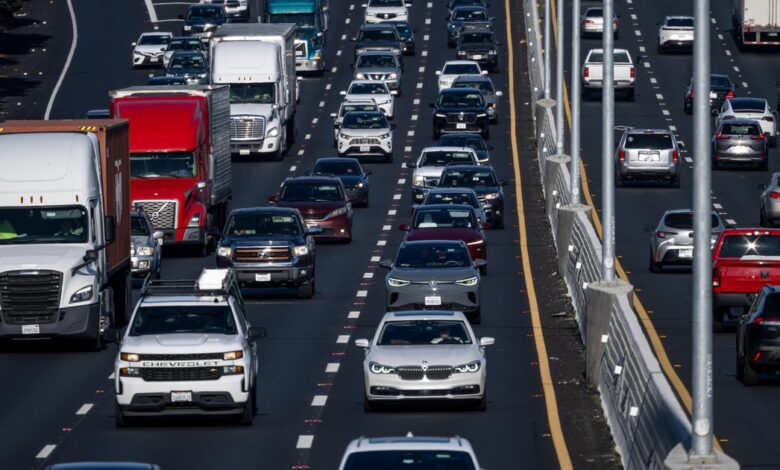
The current fuel economy standards are overseen by the National Highway Traffic Safety Administration (NHTSA) under the Corporate Average Fuel Economy (CAFE) Standards, which were established by Congress in 1975. These regulations mandate the number of miles vehicles must be able to drive on a gallon of fuel, with specific standards for various types of vehicles.
The purpose of these rules is to reduce greenhouse gas emissions and help consumers save money on gas, according to the Transportation Department. Critics of the fuel standards argue that they are costly for automakers, as they are required to invest in technological improvements to reduce fuel usage, ultimately raising vehicle prices.
The proposed fuel standards would reverse a policy implemented during the Biden administration, which, according to Mr. Trump, forced automakers to use expensive technologies that drove up costs and prices, ultimately making cars less affordable for consumers.
If finalized, the new plan would relax fuel economy standards by setting the industry average for light-duty vehicles at around 34.5 miles per gallon through the 2031 model year, significantly lower than the 50 miles per gallon outlined by the previous Biden-era rule. Transportation Secretary Sean Duffy believes that the previous rules were unattainable for automakers and drove up the cost of new cars.
The Transportation Department estimates that the proposed changes could save American families $1,000 on the average cost of a new vehicle and a total of $109 billion over the next five years. NHTSA Administrator Jonathan Morrison also believes that easing the mileage standards would make the nation’s roads safer, as newer vehicles are generally safer.
Industry executives, including Stellantis CEO Antonioa Filosa and General Motors, have expressed support for the proposed fuel efficiency rules, as they believe it would align the CAFE standards with real-world market conditions and provide stability to the auto industry.
However, not everyone is in favor of the proposed changes. The Center for Biological Diversity has raised concerns that the new proposal could increase the country’s oil consumption and hinder the competitiveness of U.S. automakers in the global green tech race.
Overall, the Trump administration’s proposal represents a shift away from the Biden-era policies that aimed to encourage automakers to produce cleaner-running vehicles, including electric cars. This move is part of a broader effort by the administration to reverse initiatives such as EV tax credits and gas emission regulations.
In conclusion, while the proposed fuel economy standards may benefit automakers in the long run, consumers may not see immediate reductions in car prices. The effects of these changes will likely be felt in the coming years as automakers adjust their product development strategies.