Trump Celebrates Congress Approving NPR, PBS Rescission Package
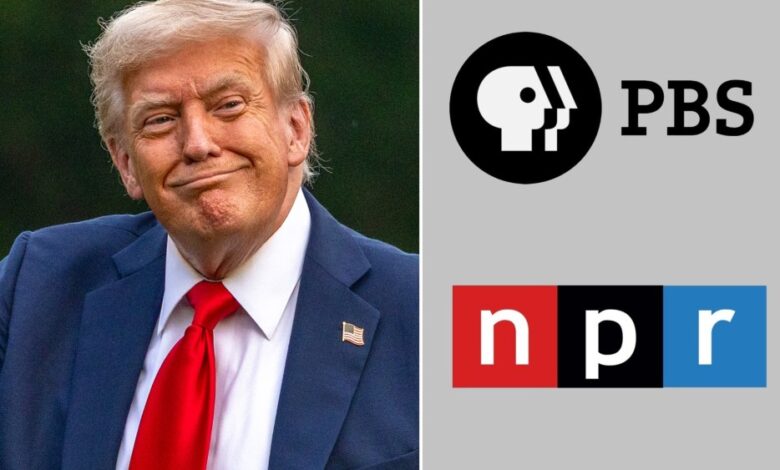
President Donald Trump celebrated a major win as Congress officially approved his proposal to rescind $9 billion in previously allocated funding, including $1.1 billion for PBS and NPR. This move has sparked concerns among public media executives who fear that numerous local stations may be forced to shut down as a result.
The House gave final approval to Trump’s rescission package with a vote of 216-213, following the Senate’s 51-48 vote in favor of the measure. The bill targets approximately $8 billion in foreign aid and $1.1 billion for the Corporation for Public Broadcasting, which provides funding to NPR and PBS, over the next two years. The bill now awaits Trump’s signature to become effective.
Trump proudly highlighted his efforts to eliminate federal funding for PBS and NPR, a goal that conservative lawmakers have been pursuing for decades. The White House has accused these public media outlets of spreading what they describe as “radical, woke propaganda disguised as ‘news'” and of having a bias against non-leftist viewpoints.
In a post on his Truth Social platform, Trump expressed his satisfaction with the approval of the cuts package, emphasizing the elimination of funding for NPR and public broadcasting, which he described as wasteful expenditures that Republicans have been trying to address for 40 years.
Cost-cutting has been cited as the primary reason for defunding PBS and NPR by Trump and other Republicans. However, it is worth noting that the recently approved Trump-backed spending bill is projected to increase federal deficits by at least $3.4 trillion over the next decade, according to the Congressional Budget Office.
Despite the push to defund public media, surveys show that a majority of Americans support publicly funded media. A poll conducted by Peak Insights found that 53% of U.S. voters oppose eliminating federal funding for public media, with 44% in favor of defunding. Additionally, respondents indicated a higher level of trust in public media outlets compared to the media in general.
The rescission package includes a substantial annual cut of $535 million for the CPB over a two-year period, starting in October. PBS CEO Paula Kerger expressed concerns about the impact of these cuts on stations, especially smaller ones serving rural areas. Similarly, NPR CEO Katherine Maher criticized the defunding as a disregard for the public’s interests, highlighting the negative consequences on various communities.
While PBS and NPR receive a portion of their revenue from federal funds, smaller local stations heavily rely on this funding for their operations. It is estimated that a significant number of these stations could be forced to shut down if federal funding is withdrawn, affecting access to NPR programming for many Americans.
Critics of PBS and NPR have pointed to a perceived left-wing bias in their programming. Senator Eric Schmitt criticized the use of taxpayer dollars to support content that promotes radical ideologies or calls for defunding the police. However, supporters of public media argue that these outlets provide valuable programming, especially for children and underserved communities.
The establishment of CPB through the Public Broadcasting Act of 1967 underscores the importance of ensuring universal access to non-commercial, high-quality content and telecommunications services. Despite the ongoing debate over federal funding for public media, the impact of these cuts on local stations and the communities they serve remains a pressing concern.