Trump credit card rate cap has unclear path, ‘devastating’ risks
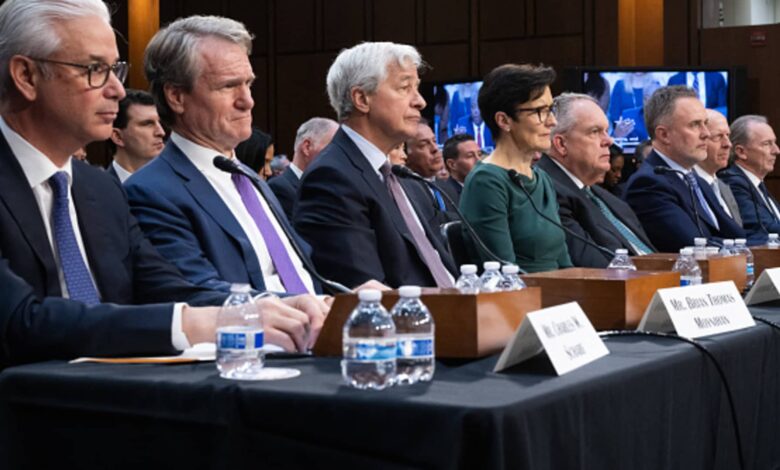
Bank executives were caught off guard over the weekend when President Donald Trump announced a 10% cap on interest rates for American credit card companies. This unexpected move caused stocks of major banks like Citigroup, JPMorgan Chase, Wells Fargo, and Bank of America to drop between 1% and 4% in early trading on Monday. Companies closely tied to the credit card industry, such as Visa, Mastercard, and American Express, also saw a decline. Capital One, whose loan portfolio is predominantly credit cards, experienced a nearly 7% decrease in its stock price.
Trump’s proposal outlined a one-year cap on interest rates starting on January 20th. While the exact details of how this cap would be enforced remain unclear, the banking industry is concerned about the potential negative impact on consumers and the economy as a whole.
Industry experts believe that implementing a 10% interest rate cap would render a significant portion of the credit card industry unprofitable, particularly for customers with less-than-perfect credit scores. Banks and analysts predict that rather than offering unprofitable products to consumers, the industry may opt to stop providing access to customers with subprime credit, resulting in changes to card programs such as reducing rewards.
Consumers may find themselves spending less or turning to other forms of unsecured debt with even higher interest rates than credit cards. The industry argues that they cannot afford to offer products at a loss and warn that the economy could suffer as a result of decreased consumer spending.
The potential repercussions of a lower spending capacity could have a more pronounced impact on industries such as airlines, retailers, and restaurants, which may need to offset lost card revenues by increasing prices on their services, according to analysts.
While the industry’s trade groups have issued a joint statement expressing concerns about the proposed interest rate cap, it is not the first time the industry has faced potential price controls. A bill introduced last year by Senators Josh Hawley and Bernie Sanders sought to limit card APRs at 10% for five years. However, the bill has not made progress in Congress.
The exact mechanism for enforcing Trump’s interest rate cap remains uncertain. While legislative action in Congress by the proposed start date seems unlikely, other enforcement avenues through banking regulators like the Consumer Financial Protection Bureau are possible. Nonetheless, the industry is skeptical about the feasibility of implementing a rate cap in such a short timeframe.
As the industry grapples with the uncertainty of potential rate reductions, analysts speculate whether the 10% cap is merely an opening bid in negotiations with the government. The current average credit card rate stands at 19.7%, significantly higher than the proposed cap. With Americans collectively holding $1.23 trillion in credit card debt as of last year, any changes to interest rates could have far-reaching implications for consumers and the economy.
In conclusion, the banking industry is closely monitoring the situation as they navigate the challenges posed by the proposed interest rate cap. With potential impacts on consumer access to credit, spending habits, and the overall economy, finding a balance between consumer protection and industry viability will be crucial in the coming months.