Trump cuts fentanyl tariffs on China to 10% as Beijing delays rare earth curbs
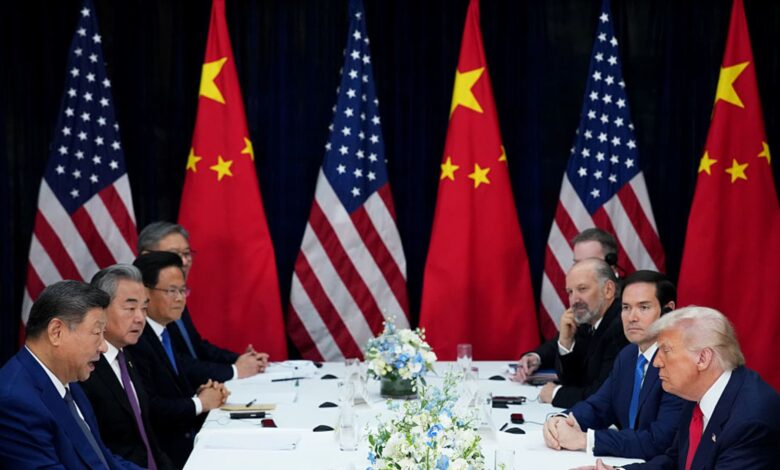
The recent high-stakes meeting between U.S. President Donald Trump and Chinese President Xi Jinping in South Korea has led to significant developments in the trade relationship between the two countries. Following the meeting, Beijing announced a pause on export controls for rare earths, while Washington reduced fentanyl-linked tariffs.
The Chinese Ministry of Commerce stated that the export controls on rare earths, which were initially announced on October 9, will be postponed for a year. In return, the U.S. will delay the implementation of measures announced on September 29, which included blacklisting majority-owned subsidiaries of Chinese companies on the U.S. entity list.
President Trump described the meeting as “amazing,” indicating that many decisions were made. He specifically mentioned that the rare earths issue has been resolved through a one-year agreement that will be renegotiated annually. However, it’s important to note that Beijing’s restrictions on rare earths announced in April are still in place.
Rare earths are crucial for various products, from semiconductors to missiles, and Chinese companies dominate the global supply chain for these minerals. Beijing has been tightening restrictions on the exports of critical minerals, particularly for military purposes by other countries.
In addition to the rare earths agreement, the U.S. has reduced fentanyl-linked tariffs on Chinese exports from 20% to 10%, effective immediately. This move aims to address Chinese grievances and promote cooperation on fentanyl and agricultural trade. The two countries have also agreed to work on resolving TikTok-related issues.
The meeting also touched upon the sale of Nvidia’s chips to China, with discussions centered on various chip technologies. President Trump mentioned that Taiwan was not part of the discussion. The overall results of the meeting have been praised for exceeding expectations, thanks to the personal diplomacy between the two leaders.
While the trade truce is a positive development, concerns remain about addressing underlying structural issues in the U.S.-China relationship. The truce may be fragile, and tensions could resurface if these core issues are not adequately addressed.
Before the meeting, both President Trump and President Xi emphasized the importance of dialogue over confrontation and expressed a desire to strengthen collaboration in various areas. Despite the conciliatory tone of the meeting, challenges persist in the U.S.-China relationship, and the true test will be in addressing these challenges in the long term.
Overall, the meeting between President Trump and President Xi marks a significant step towards de-escalating trade tensions between the two countries. It remains to be seen how the agreements reached during the meeting will impact the broader U.S.-China relationship in the coming months.