Trump heads to UN General Assembly as future of Palestinian state and Gaza likely to dominate
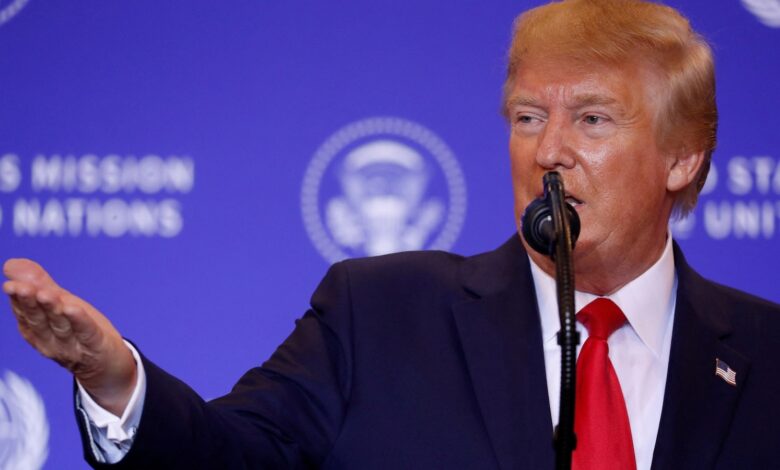
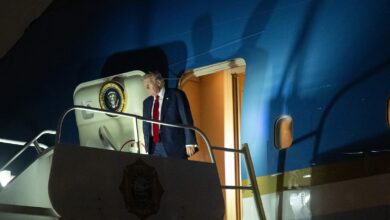
President Donald Trump is gearing up to address the United Nations General Assembly this week, marking the first address of his second term. However, Trump will face isolation from many member nations and key allies due to the ongoing conflict in Gaza.
In recent months, Trump has made significant cuts to U.S. foreign aid, withdrawing support for U.N. agencies and aid efforts amidst growing humanitarian crises worldwide. This has raised concerns among global leaders about the U.S.’s commitment to international cooperation.
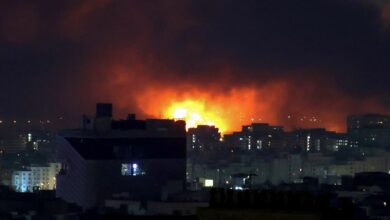
At the 80th session of the U.N. General Assembly, several world leaders are expected to formally recognize Palestinian statehood in response to the escalating war and humanitarian crisis in Gaza. France and Saudi Arabia are hosting an international peace conference to support a two-state solution, with over 140 countries already recognizing Palestinian statehood.
Leaders from the UK, France, and Canada are pushing for an end to the conflict in Gaza and the release of hostages, while Israel has threatened retaliation against countries recognizing Palestinian statehood. Israeli Prime Minister Benjamin Netanyahu has vehemently rejected the planned international conference, warning against rewarding terrorism.
The U.S. has opposed the recognition of Palestinian statehood, viewing it as counterproductive to peace efforts and a move that emboldens Hamas. The Trump administration has taken steps to deny visas to Palestinian delegates and prevent Palestinian President Mahmoud Abbas from attending the conference.
Despite opposition from the U.S. and Israel, the U.N. General Assembly voted overwhelmingly to allow Abbas to address the gathering virtually. This decision reflects the international community’s support for Palestinian statehood and the need for dialogue to resolve the conflict.
In addition to the Palestinian-Israeli conflict, Trump will also address other pressing issues at the UNGA, including meetings with world leaders like Syrian President Ahmed al-Sharaa and Ukrainian President Volodymyr Zelenskyy. The Iranian nuclear program and Russia-Ukraine war are expected to be top agenda items for discussions at the assembly.
As Trump navigates a complex global landscape at the UNGA, his interactions with foreign leaders and approach to international challenges will shape the direction of U.S. foreign policy in the coming years.