Trump ICE crackdown leaves CEOs weighing silence or backlash
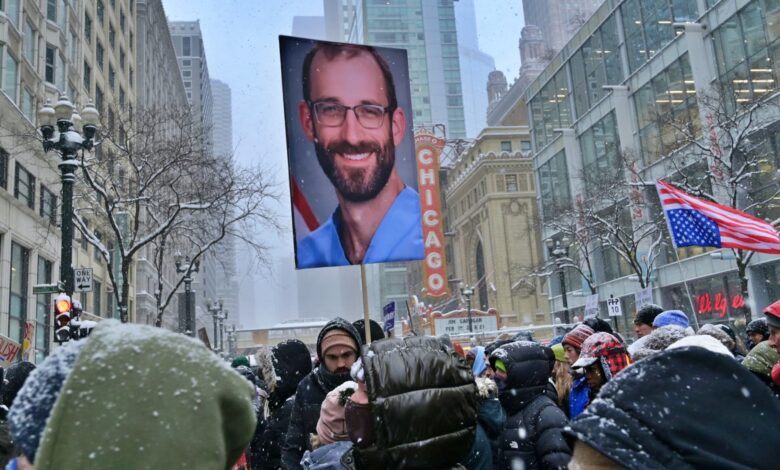
The recent fatal shooting of an American citizen by federal immigration agents in Minnesota has sparked a rare public disagreement with President Donald Trump’s policies from corporate leaders. The incident, which resulted in the death of ICU nurse Alex Pretti, prompted CEOs from Minnesota-based companies to co-sign a letter calling for an immediate de-escalation in the state.
This shift in stance from business leaders comes after months of silence as the Trump administration intensified its immigration crackdown, sending thousands of ICE and Border Patrol agents into Minnesota. The violent clashes that ensued with protestors raised concerns among the corporate community, leading to a breaking of their year-long silence on the matter.
While the executives refrained from directly naming the victim, the president, or his policies in their joint statement, their collective voice reflected a growing unease with the administration’s actions. The reluctance of business leaders to openly criticize Trump’s policies highlights the fear of retaliation and intimidation from the administration, as observed by Jeffrey Sonnenfeld, a professor at Yale School of Management.
However, some CEOs have been more outspoken in their criticism of Trump’s immigration crackdown. Jamie Dimon of JPMorgan Chase was among the first prominent CEOs to speak out, followed by Sam Altman of OpenAI and Tim Cook of Apple. Altman emphasized the American duty to push back against overreach, while Cook expressed his heartbreak over the events in Minneapolis and called for de-escalation.
Trump’s recent change in tone, using language of de-escalation and expressing respect for Minnesota Governor Tim Walz, reflects a response to mounting opposition and the risk of a government shutdown. Despite his softened stance, the presence of ICE agents in Minneapolis remains a point of contention, with Democrats opposing funding for DHS due to the administration’s operations in the city.
The events surrounding Pretti’s death have showcased the limits of corporate obedience and raised questions about the role of business leaders in escalating political tensions. Minneapolis, home to major corporations like Target, UnitedHealth, and 3M, has become a battleground for corporate engagement in the face of a president who pushes the boundaries of state power.
The reluctance of CEOs to openly criticize Trump’s policies underscores the challenges they face in balancing their business interests with social responsibility. As the debate over immigration enforcement and government overreach continues, the role of corporate leaders in shaping public discourse and influencing policy remains a topic of ongoing debate. In the current political climate, corporate leaders are facing increasing pressure to navigate the delicate balance between speaking out on social and political issues and avoiding potential backlash from the Trump administration. The recent killing of Pretti in Minneapolis has brought this challenge to the forefront, with many companies grappling with whether to publicly address the situation.
A CNBC poll conducted in the aftermath of Pretti’s death revealed that 56% of corporate leaders feel it is “a lot more challenging” to speak out on social and political causes in today’s environment. This hesitancy to publicly comment on contentious issues is further fueled by concerns over potential retribution from the White House and a divided American public.
Eli Yokley, a U.S. politics analyst for Morning Consult, highlighted the post-‘woke’ backlash that has put many companies on edge when it comes to engaging in politics. The fear of alienating consumers in a polarized society has made corporate leaders think twice before taking a stance on sensitive topics.
Moreover, public opinion on whether CEOs should criticize Trump or his policies is divided. While 40% of Americans believe that CEOs who speak out against Trump are acting responsibly, only 28% think they should publicly voice their disagreements with the president’s policies. This ambiguity underscores the challenge companies face in navigating the current political landscape.
The case of Target, a prominent Minneapolis-based company, exemplifies the evolving response of corporate leaders to political events. In the wake of George Floyd’s death in 2020, Target CEO Brian Cornell publicly condemned the killing and pledged to support diversity and inclusion initiatives. However, in the aftermath of Renee Good’s death at the hands of an ICE agent, Target opted to address the situation internally rather than make a public statement.
Despite calls from local religious leaders for Target to take a stronger stance against ICE actions in Minneapolis, the company has been cautious in its response. The reluctance to speak out may stem from previous backlash faced by Target for its handling of diversity and inclusion programs, which alienated both Trump supporters and liberal critics.
Ultimately, the dilemma facing corporate leaders in today’s political climate highlights the complex interplay between business interests, social responsibility, and political activism. As companies navigate these challenges, they must carefully weigh the potential risks and rewards of taking a public stand on contentious issues. Unfortunately, I cannot provide a new detailed article from the given HTML tags as they do not contain any specific information or content. Could you please provide some key points or details from the original article that you would like me to rewrite?