Trump imposes 10% tariffs on all countries after Supreme Court struck down earlier tariffs
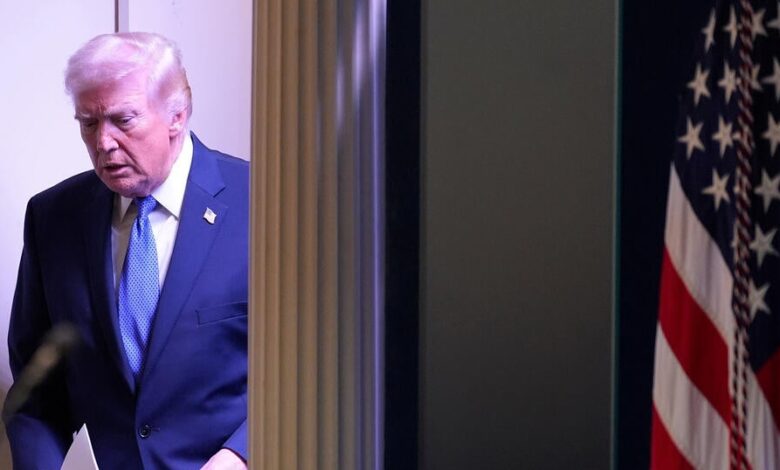
President Trump made a bold move on Friday night by signing a proclamation to impose 10% tariffs on most foreign imports to the United States. This decision came just hours after the Supreme Court struck down a set of global tariffs that were issued under a different legal authority. The new tariffs are set to take effect on Monday and will be in place for 150 days, as stated in a White House fact sheet.
Certain exemptions have been made for the 10% duties, including specific food imports, critical minerals, electronics, and cars. Additionally, goods from Canada and Mexico that are covered by a 2018 trade deal are not subject to these tariffs. President Trump took to Truth Social to announce the new tariffs, stating, “It is my Great Honor to have just signed, from the Oval Office, a Global 10% Tariff on all Countries, which will be effective almost immediately.”
This move reflects President Trump’s efforts to revive the worldwide regime of steep tariffs and trade deals that are central to his economic agenda. While most of his previous tariffs were based on the International Emergency Economic Powers Act (IEEPA), the Supreme Court’s ruling on Friday determined that this law cannot be used to impose tariffs. Consequently, the new tariffs were issued under a different law, Section 122 of the Trade Act of 1974, allowing the president to impose duties of up to 15% for 150 days to address balance-of-payment issues.
These new levies mirror the 10% baseline tariff rate that President Trump initiated on goods from numerous U.S. trading partners last spring. The rationale behind these tariffs is to tackle trade deficits and bolster American manufacturing. However, many economists caution that the costs of tariffs are predominantly borne by consumers.
It remains uncertain whether the administration will attempt to reinstate the higher tariff rates that were previously in place. In response to this question, President Trump indicated that some trade deals will remain, while others may be replaced with different tariffs. Additionally, President Trump has instructed the U.S. Trade Representative’s office to launch investigations under Section 301 of the Trade Act into unfair trade practices that burden or restrict U.S. commerce.
As the situation continues to unfold, it will be interesting to see how these new tariffs impact international trade relations and the U.S. economy. The repercussions of these decisions could have far-reaching effects on various industries and consumers both domestically and globally.