Trump insists trade deals will hold after Supreme Court ruling, but partners aren’t so sure
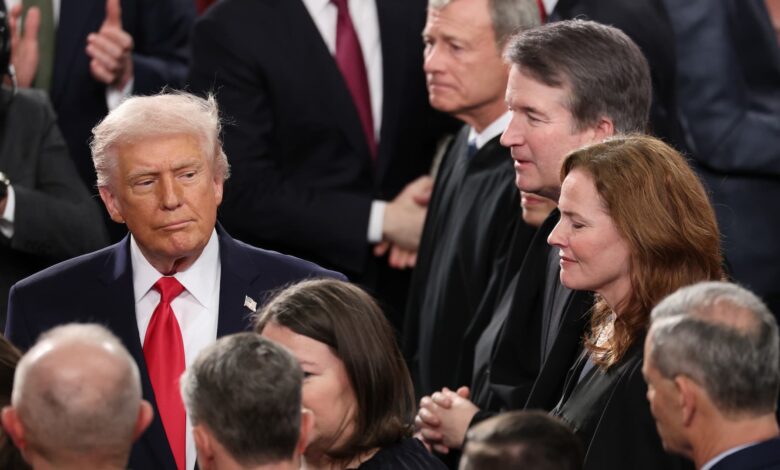
The State of the Union address delivered by President Donald Trump on Feb. 24, 2026, in Washington, D.C., highlighted his defense of his tariff agenda despite a recent Supreme Court ruling that struck down his emergency tariffs. The ruling deemed that the president had overstepped his authority by imposing tariffs on goods from almost every country under the International Emergency Economic Powers Act (IEEPA). Trump responded by replacing the tariffs with a 10% tariff under Section 122 of the Trade Act of 1974, with potential plans to increase it to 15% in the future.
This ruling has sparked uncertainty and prompted foreign governments to reevaluate their trade agreements structured around IEEPA tariff rates. The future of these deals remains unclear as the administration explores other legal avenues like Section 301 of the Trade Act of 1974, which requires a formal trade investigation into unfair trade practices before imposing tariffs.
The aftermath of the court ruling has left countries that previously negotiated deals with the U.S. in a state of uncertainty. Some countries may benefit from not agreeing to tariff reductions, as seen with Japan’s situation where they now face universal tariffs despite securing a trade deal last year.
The impact of the ruling extends globally, with countries pausing trade talks and postponing trade deals with the U.S. due to the uncertainty surrounding tariffs. European officials have expressed concerns about the trade deal signed last summer, while Canada has welcomed the ruling as a positive step.
President Trump has warned countries against backing away from previous agreements, hinting at potential higher duties and license fees on trading partners. This has put foreign leaders in a cautious position, prompting them to reassess their positions and renegotiate terms of agreements in light of the changing tariff landscape. Mexican President Claudia Sheinbaum has stated that her administration will carefully assess the court’s decision to determine its implications. Meanwhile, a spokesperson from the Chinese Ministry of Commerce has expressed willingness to engage in honest negotiations during the upcoming bilateral talks with President Trump.
Beijing has also mentioned that it will thoroughly evaluate any developments from Washington and decide whether to make adjustments to its countermeasures against the reciprocal and fentanyl-related tariffs imposed by the U.S.
As foreign governments consider their responses, focus is shifting towards the White House’s potential ‘Plan B’ following the striking down of tariffs under the IEEPA. The administration is exploring alternative legal avenues to uphold its trade agenda, but this process may take time, leading to continued uncertainty in the global economy.
According to trade and international political economy expert Jennifer Hillman, the Trump administration has negotiated several agreements related to trade and tariffs with eighteen countries. However, the tariff landscape remains uncertain, with the administration indicating intentions to utilize Section 301 investigations and Section 232 of the Trade Expansion Act of 1962 for imposing new duties on trading partners.
Any modifications to existing agreements are expected to unfold gradually, as none of them are fully finalized or approved by Congress. It remains to be seen how these developments will impact global trade dynamics.
— This article was contributed by CNBC’s Lim Hui Jie.