Trump invokes Pearl Harbor in front of Japanese prime minister to defend Iran attack secrecy
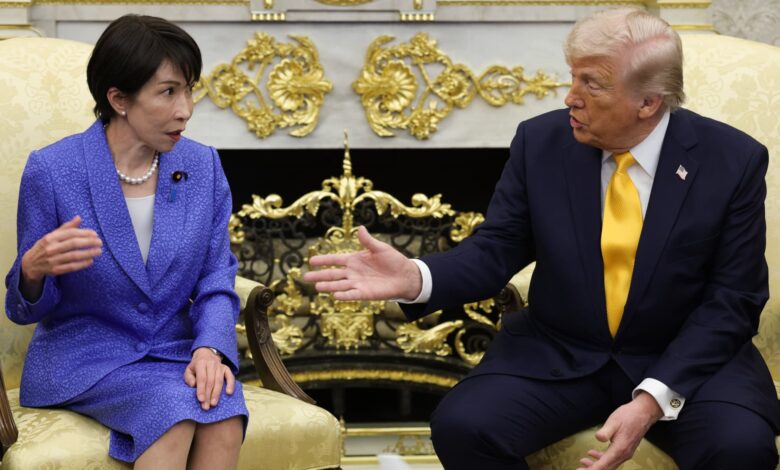
Prime Minister of Japan Sanae Takaichi (L) meets with U.S. President Donald Trump during a bilateral meeting in the Oval Office of the White House on March 19, 2026 in Washington, DC.
Alex Wong | Getty Images
In an unexpected moment at the Oval Office, President Donald Trump made a reference to Pearl Harbor during his first meeting with Japan’s Prime Minister Sanae Takaichi after her recent electoral win.
When questioned by a Japanese journalist about why the U.S. did not inform allies like Japan before the attacks on Iran, Trump responded that it was to maintain the element of surprise.
“Who understands surprise better than Japan? Why didn’t you inform me about Pearl Harbor? You have a stronger belief in surprise than I do,” remarked Trump.
He was alluding to the surprise Japanese attack on the U.S. Pacific Fleet in 1941, which resulted in the loss of over 2,400 lives and led the U.S. into World War II.
Takaichi appeared visibly taken aback, taking a deep breath and leaning back in her seat with a troubled expression.
“Who understands surprise better than Japan? Why didn’t you inform me about Pearl Harbor? You have a stronger belief in surprise than I do,” remarked Trump.
Donald Trump
U.S. President
Trump stated that the surprise attack on Iran had been advantageous for the U.S., claiming that it had achieved half of their anticipated objectives within the first two days.
During the meeting, Trump commended Japan for their proactive involvement in securing the Strait of Hormuz, contrasting it with NATO’s response.
Prior to the meeting, Japan, along with other nations, released a joint statement expressing their commitment to ensuring safe passage through the Strait.
Despite Trump’s call for assistance in securing the Strait of Hormuz, Takaichi had previously stated that there were no plans to dispatch naval vessels for escort missions in the region.
Japan’s prime minister disclosed that the government was exploring possibilities within the constraints of the country’s pacifist constitution, which renounces war and the use of force in international disputes.
Trump’s criticism of NATO allies for not engaging in the conflict was met with responses from German and French leaders asserting that the war was not theirs to participate in.
Germany’s Chancellor later declared that they would refrain from military involvement in ensuring freedom of navigation in the Strait of Hormuz as long as the conflict persisted.