Trump plans to hike tariffs on Canadian goods to 35%
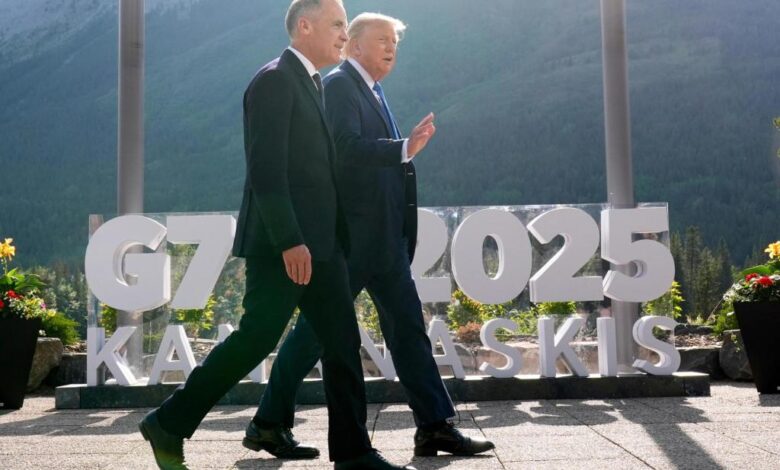
By JOSH BOAK, Associated Press
WASHINGTON (AP) — President Donald Trump has announced plans to increase taxes on many imported goods from Canada to 35%, further straining the relationship between the two North American countries. This decision comes as a result of a deepening divide in their long-standing alliance.
In a letter addressed to Canadian Prime Minister Mark Carney, Trump stated his intention to raise tariff rates to 35%, up from the initial 25% imposed in March. The move follows months of threats aimed at pressuring Canada to address issues such as fentanyl smuggling and trade imbalances.
Trump’s letter highlighted concerns beyond fentanyl smuggling, pointing to various tariff policies and trade barriers imposed by Canada. The increased tariffs are set to take effect on August 1, causing uncertainty in the global economy.
Canadian Prime Minister Carney responded to Trump’s announcement by reaffirming Canada’s commitment to negotiating a new trade framework with the U.S. and addressing the issue of fentanyl smuggling. He emphasized Canada’s efforts to protect its workers and businesses during the ongoing trade negotiations.
While several countries have received tariff letters from the Trump administration, Canada has emerged as a focal point due to its retaliatory measures and strained relations with the U.S. Carney’s recent interactions with other global leaders, such as British Prime Minister Keir Starmer, indicate a shift towards strengthening ties with other economic partners.
Experts suggest that Trump’s latest tariff escalation could complicate future trade negotiations between Canada and the U.S. The ongoing trade disputes and tariff threats have raised concerns among investors and trading partners.
Trump’s tariff strategy, aimed at isolating China, has faced backlash from countries like Brazil and China, who view the tariffs as coercive and interfering with internal affairs. The unpredictability of Trump’s trade policies has led to uncertainty in global markets.
Despite recent trade agreements with some countries, Trump’s aggressive tariff tactics continue to impact international trade relations. The future of trade frameworks, including the USMCA agreement, remains uncertain amidst escalating tensions between the U.S. and its trading partners.
Jim Morris contributed to this report from Vancouver, British Columbia.
Originally Published: