Trump raises China stakes with Section 301 trade probe before Beijing Xi meeting
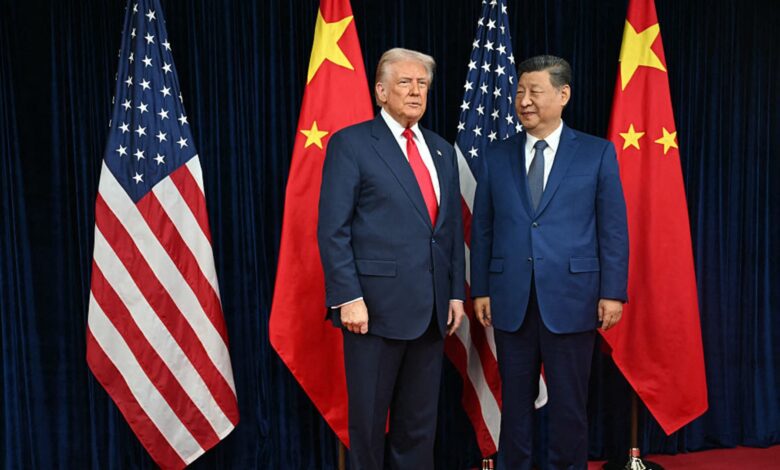
The United States and China are gearing up for a high-stakes summit in Beijing, with tensions escalating as the U.S. launches sweeping trade investigations targeting China’s unfair trade practices. These investigations, conducted under Section 301 of the Trade Act of 1974, are focused on identifying structural excess capacity and production issues in China’s manufacturing sectors.
Dan Wang, China director at the Eurasia Group, notes that the probes are a clear indication of the U.S.’s focus on China, given the country’s well-known problems with overcapacity and forced labor. The timing of these investigations comes as President Trump’s negotiating position has been weakened by military actions in Iran, prompting the U.S. to establish tariffs as a key pressure tool in trade negotiations.
The U.S. Supreme Court recently struck down Trump’s “reciprocal” tariffs, limiting his ability to impose tariffs at will and giving China more leverage ahead of the summit. Despite global criticism, China’s export machine continues to run at full capacity, with exports surging and trade surplus reaching record highs.
The trade probes have added a new layer of uncertainty to the already complicated diplomatic relationship between the two countries. With the summit fast approaching, there is uncertainty over the agenda for the meeting, with both sides seemingly far apart in their priorities.
Deborah Elms, head of trade policy at the Hinrich Foundation, warns that further investigations targeting forced labor practices could aggravate China and hinder potential deal-making. The investigations come at a time when U.S. actions against Iran risk China’s energy supplies, adding to the complexity of the bilateral talks.
Amidst these challenges, both sides are expected to seek limited breakthroughs during the summit. Chinese Foreign Minister Wang Yi emphasized the need to create a conducive environment for the meeting and remove unnecessary disruptions. Analysts predict that the focus will be on agricultural purchases and technology export restrictions, with both countries framing the summit as the start of a longer conversation throughout the year.
As tensions rise and uncertainties loom, the upcoming summit between the U.S. and China will be closely watched for any signs of progress or further escalation in their already complex relationship. The anticipation of American executives joining President Trump on his upcoming trip to Beijing seems to be dwindling, indicating a lower level of expectations for the summit. Han Lin, the China Country Director at The Asia Group, expressed to CNBC on Thursday that the likelihood of a formal CEO delegation accompanying the president is diminishing as each day passes. “Few CEOs have received invitations, and even fewer have likely accepted, given the limited time left before the trip,” Lin stated.
This shift in expectations suggests a more subdued approach to the summit, with a reduced emphasis on high-level corporate engagement. The absence of a significant CEO delegation could impact the depth and scope of discussions between American and Chinese officials during the visit.
As preparations for the trip continue, it appears that the focus may be more on diplomatic and political discussions rather than extensive business engagements. The evolving dynamics surrounding the summit highlight the complexities and uncertainties of U.S.-China relations, particularly in the current global geopolitical landscape.
Despite the potential absence of American executives, the trip remains significant in terms of its potential impact on bilateral relations and key policy issues. President Trump’s visit to Beijing is expected to address a range of economic, trade, and security matters, with the aim of strengthening ties and addressing areas of contention.
As the summit approaches, the shifting landscape of expectations underscores the importance of flexibility and adaptability in navigating complex international relationships. The outcome of the trip will likely have far-reaching implications for both countries and the broader global community.
Stay updated on the latest developments and analysis from Asia’s largest economy by subscribing to our weekly newsletter. Receive valuable insights and updates directly in your inbox to stay informed on the latest trends and developments in the region.
Choose CNBC as your preferred source for business news on Google to ensure you never miss a moment of the most trusted coverage and analysis in the industry. Stay informed and up-to-date with the latest news and insights from CNBC, the leading source for business and financial information.