Trump threatens to jack up tariffs on China over its new rare-earth controls
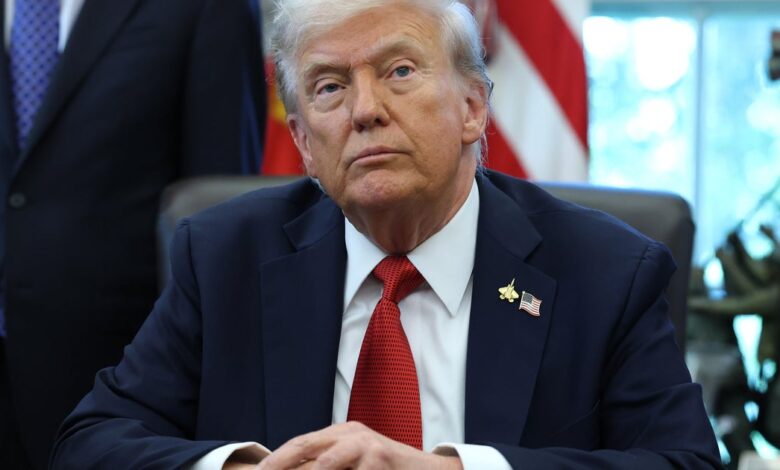
President Trump issued a stern warning on Friday, indicating that he may increase tariffs on Chinese imports in response to China’s recent restrictions on rare-earth elements. In a post on his social media platform, Truth Social, Trump accused China of becoming increasingly hostile by threatening to impose export controls on various elements of production related to rare earths and other products.
China’s move to tighten restrictions on the export of rare earths, essential minerals used in the production of semiconductors, electric car batteries, jet engines, and defense weapons, has raised concerns globally. With China being the dominant producer of rare earth magnets, accounting for up to 95% of the world’s supply, access to these materials has been a contentious issue in trade negotiations between the United States and China.
The new export controls implemented by China’s Ministry of Commerce require companies to obtain special approval for exporting products containing even minimal amounts of rare earths sourced from China, even if those products were manufactured overseas by non-Chinese companies. The specifics of potential penalties for non-compliance with these controls have not been clearly outlined.
Trump expressed surprise and dismay at China’s actions, labeling them as hostile and threatening to retaliate by imposing higher tariffs on Chinese imports into the United States. He also hinted at the possibility of canceling a planned meeting with Chinese President Xi Jinping at the upcoming Asia-Pacific Economic Cooperation summit in South Korea.
In June, both the U.S. and China had reached a preliminary agreement aimed at easing tensions over trade disputes, rare earths, and other contentious issues. However, the recent escalation in tensions has rattled financial markets, with major stock indexes experiencing significant declines. The S&P 500, Dow Jones Industrial Average, and Nasdaq Composite all saw substantial losses, reflecting investor concerns over the potential impact of a renewed trade conflict between the two economic giants.
Analysts have noted the heightened uncertainty in the markets, particularly for tech stocks, which have been under pressure following the latest developments in U.S.-China relations. While financial markets had been reaching record highs earlier in the week, the recent shift in sentiment has raised fears of a possible market correction, particularly in sectors driven by advancements in artificial intelligence.
As investors brace for potential volatility amid escalating trade tensions, the implications of Trump’s tariff threats and China’s export controls on rare earths remain uncertain. The evolving situation underscores the complex dynamics of international trade and the challenges of navigating diplomatic relations between major economic powers.